
Home Appliances: A First-Time Buyer's Orientation
Setting up your first home? This plain-language guide walks you through what to prioritise, what to skip, and what questions to ask before buying.
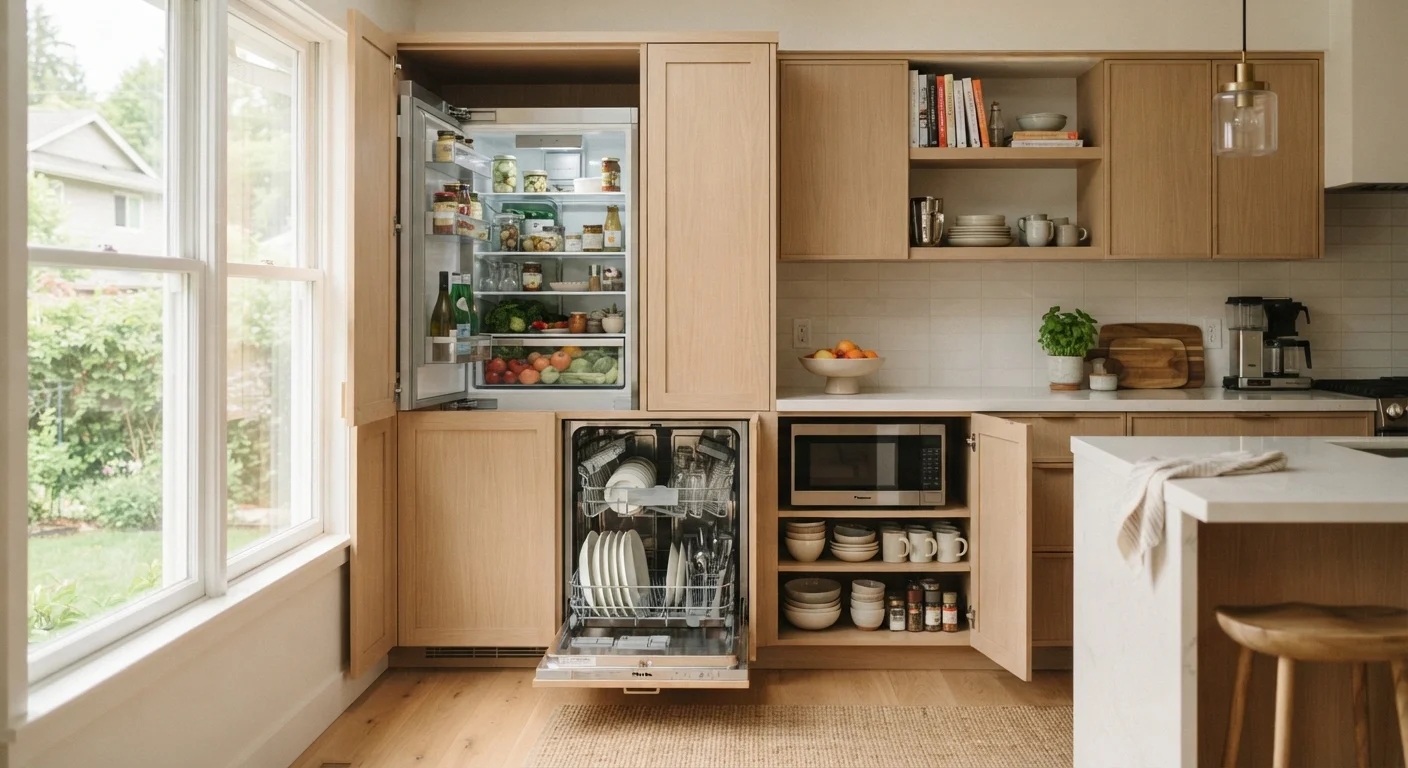
Photo: SummarizedReads.net | Just Read It! editorial
—— In This Article
Key Takeaways
- Prioritise major appliances - refrigerator, stove, and washer - before spending on convenience items.
- Fit, installation requirements, and running costs matter just as much as the purchase price.
- Energy efficiency ratings can meaningfully reduce your monthly utility bills over an appliance's lifetime.
- Warranties and parts availability are often overlooked but critical to long-term value.
- Good habits from day one extend appliance lifespan and prevent costly early failures.
What Counts as a Home Appliance (and What Doesn't)
The term home appliance covers a wide range - from a refrigerator that anchors your kitchen to a hand blender that lives in a drawer. For first-time buyers, it helps to think in tiers.
Major appliance
A large household machine - such as a refrigerator, washer, or range - that is typically fixed in place and requires dedicated installation, electrical, or plumbing connections.
EnergyGuide label
A standardised yellow label required by U.S. law on most major appliances, showing estimated annual energy use and operating cost to help consumers compare models.
Energy Star
A U.S. Environmental Protection Agency certification indicating that an appliance meets efficiency standards that exceed federal minimums, typically resulting in lower energy or water use.
Manufacturer warranty
A written promise from the appliance maker to repair or replace defective parts within a set period - usually one year - under specified conditions.
Countertop appliance
A small, portable appliance - such as a toaster or blender - that sits on a surface, runs from a standard outlet, and does not require permanent installation.
Major appliances (sometimes called white goods) are large, fixed, or semi-permanent machines: refrigerators, dishwashers, washing machines, dryers, ranges, and HVAC units. These typically require installation, dedicated electrical circuits or gas lines, and significant investment. Small or countertop appliances - toasters, coffee makers, air fryers - are portable, lower cost, and far easier to replace. They should not drive your early budget decisions.
This distinction matters because major appliances set real constraints on your space, wiring, and plumbing. Getting them right requires more homework than simply choosing a colour or a feature set.
Needs vs. Wants: Building Your Priority List
Before shopping, write down which appliances your space already has, which are genuinely necessary for daily life, and which would simply be convenient. For most households, the non-negotiable tier looks like this:
- Refrigerator - food safety makes this the highest priority.
- Cooking appliance - a range, cooktop, or oven. If you're unsure which type suits your kitchen and habits, our cooktop comparison guide walks through the practical differences.
- Washer (and likely dryer) - unless your building provides shared laundry.
A dishwasher, microwave, and small appliances sit in the "want" category for most people starting out. Deferring these purchases lets you direct money toward better quality where it counts most.
Test Before You Replace
If appliances came with a rented or purchased home, use them through a full cycle - laundry, cooking, refrigeration - before deciding anything needs upgrading. First-time buyers often replace working appliances unnecessarily. Give yourself at least a month of real use to form an informed opinion.
If your new home came with appliances already installed, resist the urge to immediately replace them. Use them first - you may find they meet your needs perfectly well. Pair this orientation with our guide on home organisation for renters and first-time homeowners to set up your whole space thoughtfully.
Key Questions to Ask Before You Buy
A lower purchase price can easily be offset by high running costs, awkward dimensions, or limited repair support. Before committing, work through these questions:
- Does it fit? Measure the installation space and the route it will travel on delivery day - hallways, stairwells, and doorframes included.
- What does installation require? Some appliances need a 240V outlet, a gas hookup, or a dedicated water line. Know this before you buy, not after.
- What is the warranty, and who services it locally? A warranty is only useful if authorised service technicians are within a reasonable distance.
- Are replacement parts available? Less common models can be difficult or expensive to repair if parts become scarce.
- What are the ongoing running costs? Check the EnergyGuide label - a federally required yellow tag on most major appliances - for estimated annual energy use and cost.
Smart Features: Useful or Just Marketing?
Wi-Fi connectivity and app control sound appealing, but these features add cost and, in some cases, complexity that creates more friction than convenience. For a first-time buyer, it's worth understanding what smart appliances actually do before paying a premium for them. Our dedicated article takes an honest look at the reality behind the marketing.
Smart-connected appliances add a layer of complexity worth understanding before purchase. Our article on what smart appliances actually deliver gives an honest assessment of where Wi-Fi features add genuine value and where they don't.
Understanding Lifespan, Efficiency, and Running Costs
Major appliances are long-term investments. A refrigerator typically lasts 10-15 years; a washing machine, 10-14 years; a dishwasher, 9-12 years. These figures vary based on usage, maintenance, and build quality. Our appliance lifespan reference guide provides a full breakdown by appliance type.
The EnergyGuide label gives you a useful data point for comparing running costs across models. The U.S. Department of Energy's Energy Star program certifies appliances that meet higher efficiency thresholds - certified refrigerators, washing machines, and dishwashers can use substantially less energy and water than non-certified alternatives over their lifespan.
Running costs also depend on how you use an appliance. Washing clothes in cold water, running dishwashers only when full, and keeping refrigerator coils clean all reduce energy consumption without requiring any hardware upgrade. These habits are worth building from day one.
After the Purchase: Getting the Most From What You Own
Many appliance problems that appear in the first few years trace back to improper setup or use, not defects. Register your appliances with the manufacturer immediately - this activates your warranty and ensures you receive recall notices if they are ever issued.
Read the owner's manual, even briefly. Filter cleaning schedules, load capacity limits, and ventilation clearances are not arbitrary - ignoring them accelerates wear. If something stops working as expected, many issues have simple explanations before a technician is needed. Our article on appliance troubleshooting basics covers what to check safely at home first.
For a deeper look at day-to-day habits that extend appliance life and improve performance, see Getting the Most Out of Every Appliance You Own - a practical companion to this guide. And if you're thinking broadly about improving your home, energy efficiency upgrades that actually move the needle on utility bills is worth reading alongside your appliance decisions.
Frequently Asked Questions

Home Editorial Team
Home Editorial Team is the collective byline for our editorial team and contributor network. Articles published under this byline or an editorial pen name are researched, written, and reviewed according to our editorial standards for clarity, consistency, and independence before publication.
View author profile