
Rigid Systems vs. Flexible Systems: Which Approach Fits Your Household?
Strict labelled bins work brilliantly for some households and fall apart in others. Here's how to weigh both approaches before committing.
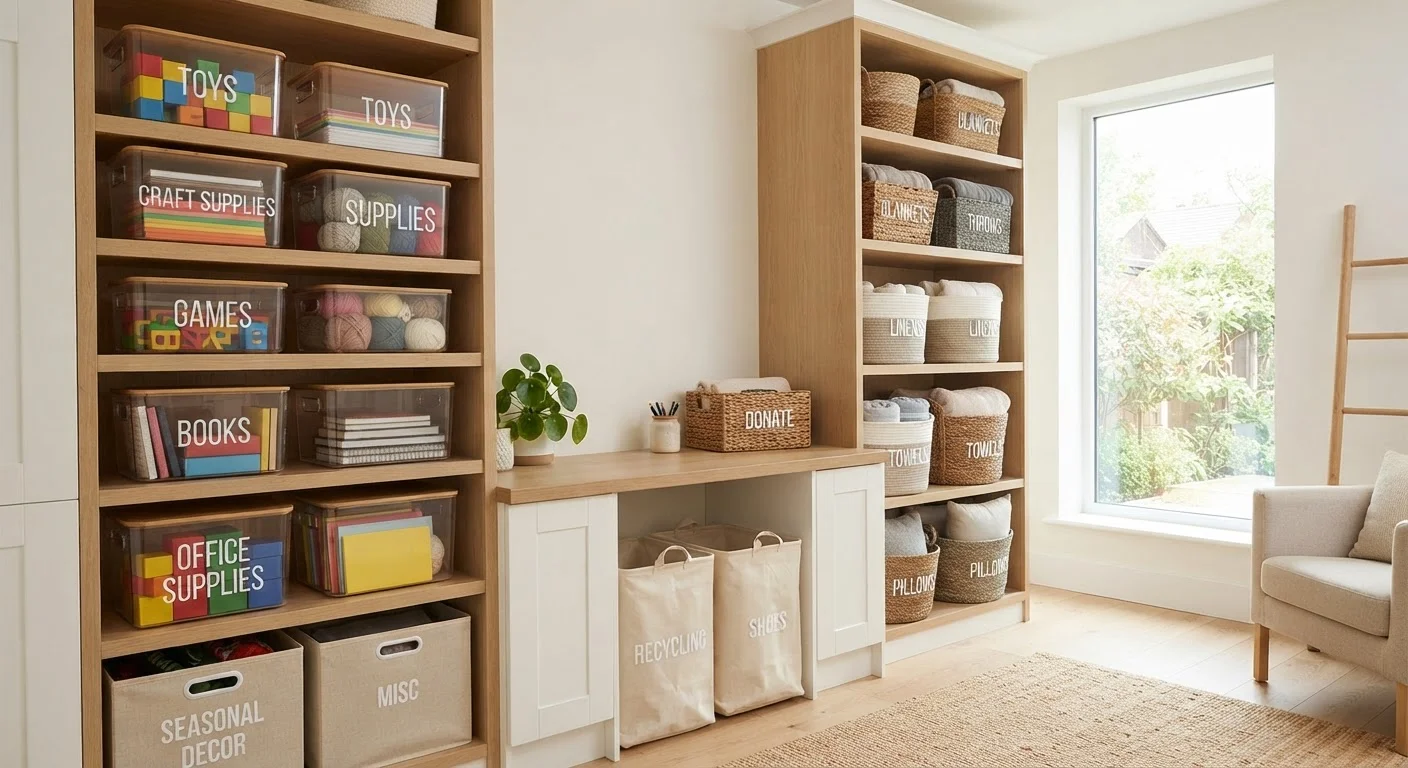
Photo: SummarizedReads.net | Just Read It! editorial
—— In This Article
Key Takeaways
- Rigid systems use fixed categories and labeled containers; flexible systems adapt to shifting household needs.
- Rigid systems work best in single-person or routine-driven households; flexible ones suit families or frequently changing spaces.
- Neither approach requires expensive products - cheap bins, baskets, and labels can support both.
- Hybrid approaches often outperform a pure commitment to either extreme.
- Maintenance habits matter more than which system you choose.
What We Mean by Rigid vs. Flexible
A rigid organization system assigns a fixed, permanent home to every category of item. Think labeled bins for batteries, a dedicated drawer for mail, and a shelf where the extra paper towels always live. Everything has a rule, and the rule doesn't shift much over time.
A flexible organization system relies on general zones rather than strict categories. The hall closet holds cleaning supplies - but whether the spray bottles go left or right doesn't matter. Items move based on what's convenient, and the system adjusts as needs change.
Neither approach is inherently superior. Both solve the core problem of household clutter; they just solve it differently. The question is which one your household will actually maintain. If you're new to thinking about this, our guide for first-time organizers is a useful starting point before you commit to either direction.
Where Rigid Systems Shine
Strict, labeled organization reduces what researchers call decision fatigue - the mental drain of repeatedly choosing where things go. When every category has a permanent spot, restocking and tidying become nearly automatic.
Rigid systems are especially effective in:
- Pantries and kitchens, where consistent labeling prevents duplicate purchases and expired food.
- Bathroom cabinets, where clearly separated medicine, first aid, and toiletry zones reduce morning confusion.
- Home offices, where paper, tech accessories, and supplies benefit from hard categories.
They're also well-suited to households where one person manages most of the organizing - that person sets the rules and maintains them. Before going all-in on labeling, it's worth understanding the upkeep that comes with it.
Start With One Zone, Not the Whole House
Trying to implement a rigid system across every room at once is a common reason organization projects stall. Pick one high-friction area - a junk drawer, a pantry shelf, or a bathroom cabinet - and apply your chosen approach there first. If it holds up after a month of real use, expand from there.
The main risk with rigid systems is over-engineering them at the start. Build category rules only for areas you interact with daily; leave less-used spaces more open until you understand your actual patterns.
Where Flexible Systems Hold Up Better
Flexible systems are more resilient in households where circumstances shift regularly. Children grow out of toys, hobbies change, roommates come and go, and seasonal items rotate in and out. A rigid system under those conditions requires constant re-labeling and reorganizing - which often means it quietly collapses.
General zones with no strict sub-rules allow household members to put things away correctly without memorizing a specific protocol. That matters in shared spaces. For a deeper look at organizing around different tidiness tolerances, see our guide on shared spaces.
Flexible systems also tend to require less upfront investment. Open baskets and general containers cost less than a full set of matching labeled bins - and they can be repurposed easily when your needs change.
| Rigid System | Flexible System | |
|---|---|---|
| Best household type | Solo or couple, stable routines | Families, shared rentals, changing needs |
| Upfront effort | High - planning, labeling, setup | Low - general zones, minimal rules |
| Maintenance demand | High - rules must be followed consistently | Low - zones absorb natural variation |
| Adaptability over time | Low - changes require re-labeling | High - zones shift with needs |
| Works well in shared spaces | Only if all members follow rules | Generally yes - lower barrier to compliance |
| Typical cost | Moderate to higher (labeled containers) | Lower (open baskets, general bins) |
| Reduces decision fatigue | Strong benefit | Moderate benefit |
Choosing the Right Mix for Your Home
Most functional households aren't purely rigid or purely flexible - they apply structure selectively. A practical rule of thumb: apply rigidity where errors are costly (medications, important documents, cleaning chemicals) and allow flexibility where errors are trivial (extra linens, craft supplies, seasonal décor).
Ask yourself three questions before committing to a system for any zone:
- How many people use this space? More users means more variation - lean flexible.
- How often does the contents change? High turnover zones resist rigid rules.
- What's the cost of a misplaced item here? High-stakes areas benefit from labeled, fixed organization.
The same logic applies in other areas of household management. If you've thought through rigid versus flexible spending categories, you'll recognize the same trade-offs: control versus adaptability, clarity versus freedom.
Start small. Choose one zone, test a system for four to six weeks, and assess whether anyone in the household is actually maintaining it. That honest feedback loop matters more than any organizing theory.

Home Editorial Team
Home Editorial Team is the collective byline for our editorial team and contributor network. Articles published under this byline or an editorial pen name are researched, written, and reviewed according to our editorial standards for clarity, consistency, and independence before publication.
View author profile