
Room-by-Room Home Organization: A Complete Walkthrough
From the entryway to the garage, this end-to-end guide covers practical strategies for organizing every room in your home without overspending.
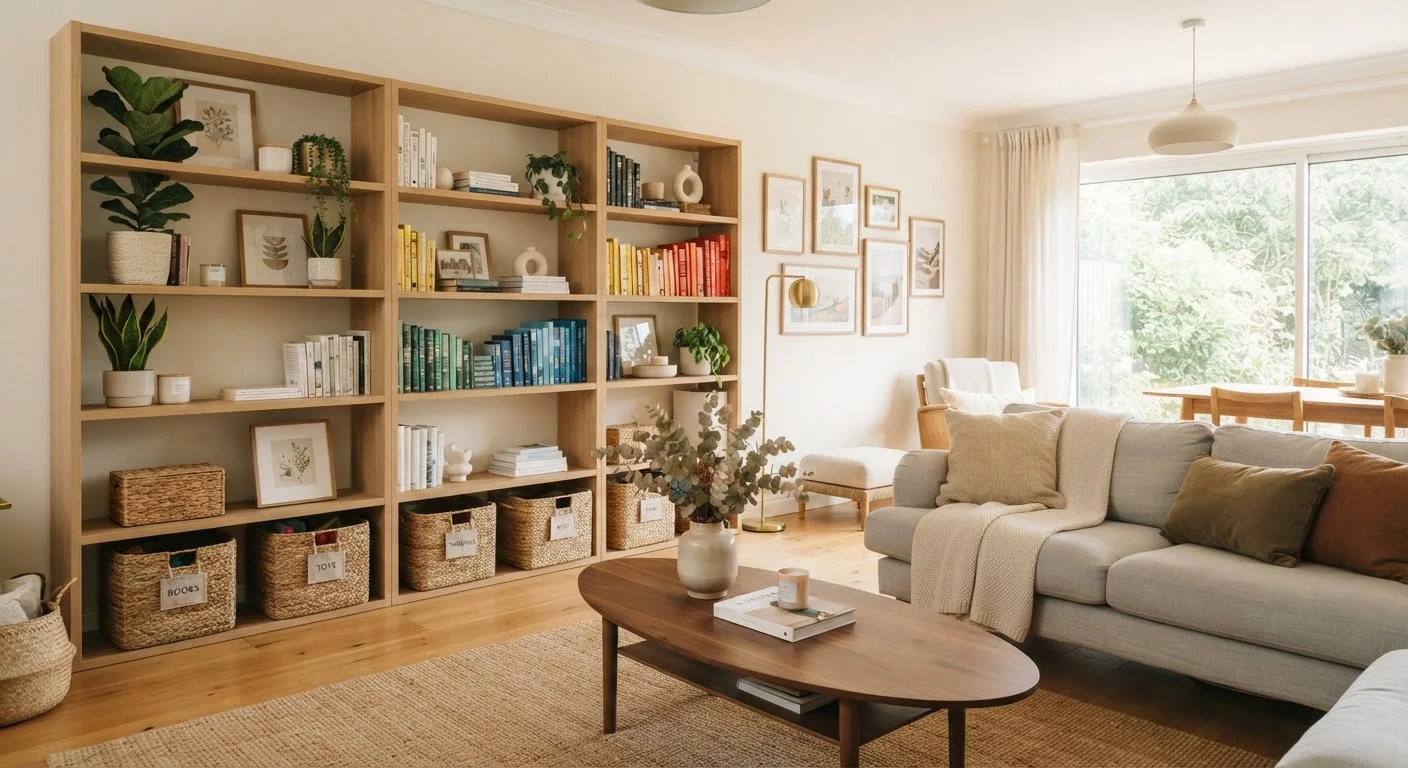
Photo: SummarizedReads.net | Just Read It! editorial
—— In This Article
Key Takeaways
- Decluttering before buying storage prevents wasted money on containers you don't need.
- Every room benefits from a dedicated landing zone for items that come and go daily.
- Grouping like items together and labeling storage reduces the time spent searching for things.
- Shared households need agreed-upon systems - not just one person's preference imposed on others.
- A seasonal check-in keeps organization from quietly unraveling over months.
- Consistent small habits outperform occasional deep overhauls for long-term tidiness.
Start With a Plan, Not a Purchase
The most common organization mistake is buying bins and baskets before taking stock of what you actually own. Storage products can't fix clutter - they often just containerize it. Before touching a single shelf, walk through your home with a notepad and note what's working, what's frustrating, and where things tend to pile up.
If you're new to organizing your own space, the starting-from-scratch guide for renters and first-time homeowners offers a solid foundation before tackling a room-by-room overhaul.
A practical planning framework: sort, then store. For each room, sort items into four categories - keep, donate, relocate (belongs in a different room), and discard. Only after sorting should you measure your space and consider what containers or furniture might help.
Declutter Before You Shop
Resist the urge to buy organizing products during your first pass. Sort and declutter each area first, then measure what remains before purchasing any bins, baskets, or shelving. This single habit prevents the most common (and costly) organizing mistake.
Entryway and Mudroom
The entryway is the first system that gets tested every single day. Without a clear structure, it becomes a dumping ground for shoes, bags, mail, and seasonal gear. The fix: assign a specific home for every category of item that enters here.
- Hooks at different heights handle adults' coats, kids' backpacks, and dog leashes without interference.
- A tray or mat corrals shoes and prevents tracked-in dirt from spreading.
- A small basket or wall pocket near the door captures incoming mail so it doesn't migrate to the kitchen counter.
If your entryway doubles as a mudroom, vertical space is your best asset - a shelf above a bench adds meaningful storage in a compact footprint.
Kitchen and Pantry
Kitchens accumulate clutter in layers: expired pantry items, duplicate tools, gadgets used once. Start by fully emptying one zone at a time - a single drawer or cabinet shelf - rather than the whole kitchen at once.
25%
Of food purchased goes to waste
The USDA estimates roughly 30-40% of the food supply is wasted; household pantry disorganization is a commonly cited contributing factor.
2.5 hrs
Average time lost weekly to clutter
A survey by the National Association of Professional Organizers found Americans spend about 2.5 hours per week searching for misplaced items.
Key principles that tend to work in most kitchens:
- Zone by task: Keep prep tools near the cutting board, baking supplies together, and coffee supplies near the coffee maker.
- Decant dry goods into uniform containers only if you'll actually reseal and label them - otherwise the original packaging is fine.
- Pantry audit quarterly: A quick check every few months catches expired items before they pile up. See the seasonal reset checklist for a repeatable approach.
Before buying any organizer, measure the interior dimensions of your shelf or drawer - not just the outside of the space. A bin that's a half-inch too wide creates more frustration than no bin at all.
A precise fit is what makes storage feel effortless; an ill-fitting container gets abandoned within weeks.
When organizing a pantry, store items you use most often at eye level and things you use rarely at the top or bottom. You'll save time every day without changing a single habit.
Frequency-based placement is a behavioral design principle that reduces the effort of accessing common items.
Living Room and Common Areas
Living rooms serve multiple purposes - entertainment, relaxation, sometimes work - which makes their clutter varied and persistent. The goal isn't a showroom; it's a space where everything has an intentional place.
Furniture with built-in storage (ottomans with lids, media consoles with drawers) does double duty without adding visual bulk. For shared households, shared-space organization strategies help when household members have different tolerances for tidiness.
Remote controls, chargers, and small electronics are the most common living room culprits. A designated tray or drawer - agreed upon by everyone in the household - reduces the daily search.
Bedrooms and Closets
Bedrooms feel chaotic when surfaces become default storage. The fix starts with the closet: a well-organized closet means clothes don't end up on chairs and floors.
Closet organization doesn't require a custom system. Consistent hanger direction (all facing the same way) and grouping by category - work clothes, casual, exercise - makes finding items faster. Add a second hanging rod below short items like jackets to double your hanging space at minimal cost.
For dressers, the fold method matters less than consistency. What reduces friction is knowing exactly which drawer holds which type of item. Under-bed storage works well for seasonal items in flat, lidded bins - label them so you're not guessing in six months.
Don't Over-Organize Small Spaces
Over-stuffing closets with too many dividers, bins, and systems can make them harder to use, not easier. Leave some breathing room - a closet that's 80% full is easier to maintain than one packed to capacity. Perfection in organization often undermines daily usability.
Bathroom
Bathrooms are often the smallest rooms with the highest product turnover. Expired medications, near-empty bottles, and duplicate purchases are the norm. A twice-yearly purge of expired products keeps things manageable.
Vertical storage - over-the-toilet shelving, door-mounted organizers, or a narrow rolling cart - adds usable space without taking up floor area. Group products by person or by routine (morning routine vs. skincare) rather than by product type, which tends to feel more intuitive in practice.
For small wins that don't require a full overhaul, see targeted changes that reduce daily friction.
Home Office and Paperwork
Paper is the silent accumulator of home offices. A simple three-folder system - action required, to file, and to shred - processes incoming paper before it becomes a pile. File anything you need to keep; shred what you don't.
Digital clutter follows the same logic: a consistent folder structure on your computer and a habit of clearing downloads weekly keeps the desktop manageable. Cables are often the most visible source of desk clutter - a few cable clips or a small cable box under the desk costs very little and makes a noticeable difference.
“A place for everything, and everything in its place - the principle sounds simple, but it only works when the 'place' is genuinely convenient for how you actually live.”
— Julie Morgenstern, Professional organizer and author of 'Organizing from the Inside Out'
Garage, Basement, and Storage Areas
Garages and basements become catch-alls because they're out of sight. The organizing principle here is the same as every other room: like items together, frequently used items accessible, rarely used items stored higher or deeper.
Wall-mounted pegboards, shelving units, and labeled bins are the workhorses of garage organization. Before adding shelving, check whether walls are load-bearing or have utility lines running through them - for structural questions, the guide to understanding load-bearing walls explains what to look for. For mounted shelving that involves drilling into masonry or major structural elements, consulting a professional is worth the cost.
Safety First in Garages and Basements
Store flammable liquids (gasoline, paint thinner, propane) away from heat sources and in approved containers, following the manufacturer's safety guidelines. Pesticides, chemicals, and sharp tools should be kept in locked storage if children have access to the space. Never block egress paths or electrical panels with stored items - this is both a safety hazard and a code violation in most jurisdictions.
Maintaining Your Systems Long-Term
Organization isn't a one-time event - it's an ongoing practice. The most functional homes aren't those that were organized perfectly once; they're those where small daily habits prevent accumulation.
A useful minimum: a five-minute reset at the end of each day returns items to their designated places before the pile becomes a project. Seasonal reviews - roughly every three months - catch what's drifted and adjust systems that aren't working. For a structured approach to that review, the seasonal organization audit is a practical starting point.
Your System Doesn't Have to Look Like a Magazine
Matching bins and color-coded labels are optional, not required. A functional system that you and your household actually use consistently is more valuable than an aesthetically perfect one that nobody maintains. Work with what you have before upgrading containers.
Organization is also a household conversation, not just a solo project. If you live with others, systems that work for everyone - even imperfectly - outperform systems that only one person will follow. The shared-space guide addresses this directly.

Home Editorial Team
Home Editorial Team is the collective byline for our editorial team and contributor network. Articles published under this byline or an editorial pen name are researched, written, and reviewed according to our editorial standards for clarity, consistency, and independence before publication.
View author profile