
Vertical Space vs. Floor Space: Choosing the Right Storage Strategy for Small Rooms
Should you build up or spread out? A practical look at when vertical storage wins over floor-level solutions in compact living spaces.
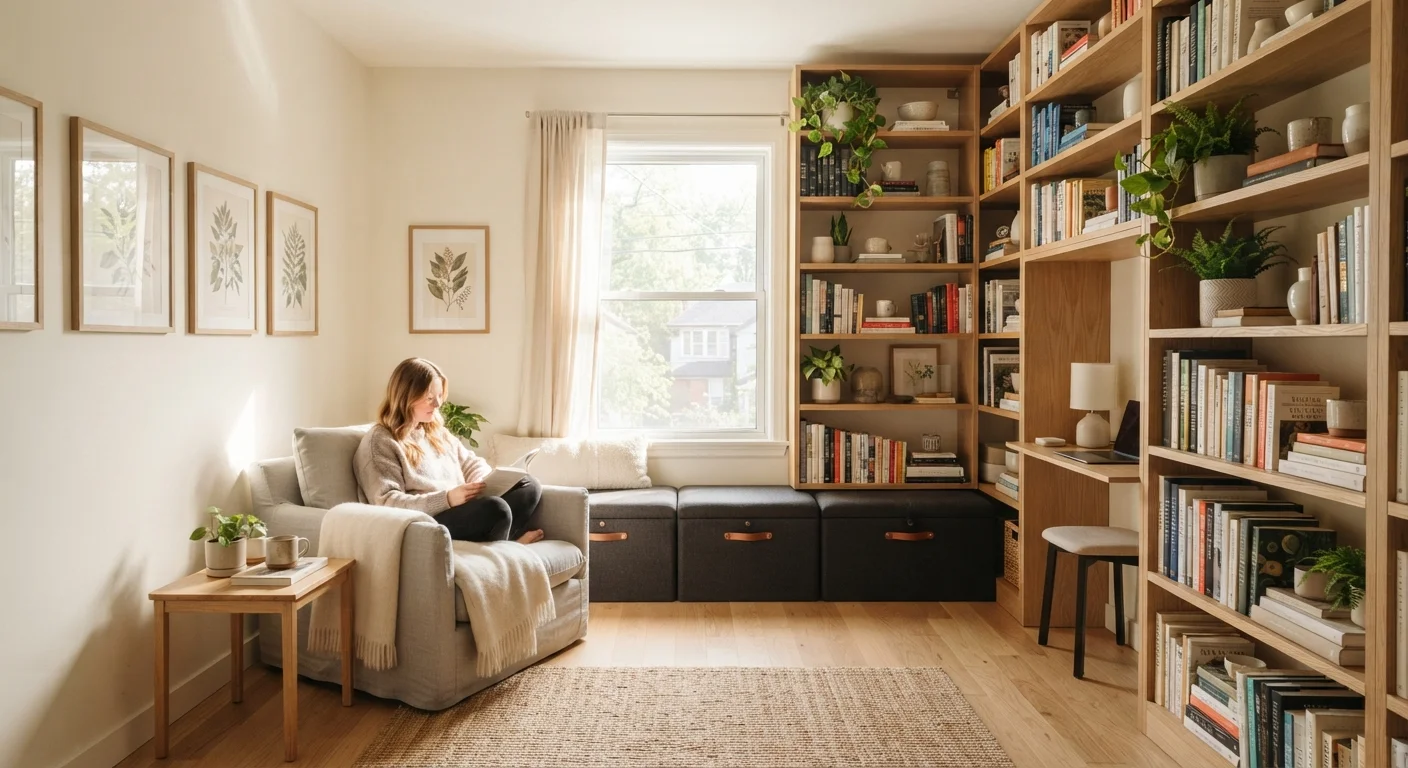
Photo: SummarizedReads.net | Just Read It! editorial
—— In This Article
Key Takeaways
- Vertical storage reclaims wall space and keeps floors clear, making rooms feel larger.
- Floor-level storage prioritizes accessibility and works well for frequently used items.
- Ceiling height, room function, and who uses the space all affect which strategy fits best.
- Most small rooms benefit from a deliberate mix of both approaches rather than one alone.
- Renters should favor freestanding vertical units to avoid wall damage and lease issues.
Why Storage Strategy Matters in Small Rooms
In a compact room, every decision about where things go has a ripple effect on how the space feels and functions. Poor storage placement can make even a reasonably sized room feel suffocating, while a thoughtful approach can make a small room feel genuinely livable. The core trade-off is simple: do you build up toward the ceiling, or spread out across the floor?
Both approaches have real merit, and neither is universally superior. The goal of this comparison is to help you understand the conditions under which each strategy works well - so you can stop guessing and start organizing with intention. For a broader look at how this fits into whole-home organization, see our room-by-room organization walkthrough.
| Criterion | Vertical Storage | Floor-Level Storage |
|---|---|---|
| Floor space used | Minimal | Moderate to significant |
| Item accessibility | Lower for high shelves | High - within easy reach |
| Best ceiling height | 8 ft or higher | Any ceiling height |
| Renter-friendly options | Yes, with freestanding units | Yes, highly portable |
| Works well for | Infrequent or seasonal items | Daily-use items |
| Safety considerations | Anchoring required for tall units | Low risk; stable base |
| Visual effect on room | Opens floor, adds height drama | Can shrink perceived floor area |
Vertical Storage: Making the Most of Wall Height
Vertical storage - shelving units, wall-mounted cabinets, pegboards, and over-door organizers - works by shifting clutter off the floor and onto walls or upward-stacking frames. In rooms with ceilings of eight feet or more, this can dramatically increase total storage volume without touching the floor plan at all.
The practical advantages are significant. Clear floors make a room easier to clean, visually less cluttered, and physically more navigable. In a bedroom that doubles as a home office, keeping the floor open can be the difference between a space that feels workable and one that feels overwhelming.
~35%
Wall space typically left unused in small rooms
Interior design research generally finds that vertical surfaces - walls above furniture height - are among the most underutilized storage zones in compact homes.
150 sq ft
Average size of a small bedroom in the US
The U.S. Census Bureau's residential survey data shows that many bedrooms in older housing stock fall below 150 square feet, making floor conservation critical.
The main limitations are equally real. Items stored above shoulder height require effort to retrieve, which means vertical storage works best for things you access infrequently - seasonal items, spare linens, reference books, or rarely used kitchen equipment. Safety is also a consideration: tall freestanding units must be anchored to a wall stud to prevent tipping, especially in homes with children. If you're renting, check your lease before drilling - many freestanding ladder shelves provide vertical reach without any wall attachment required. For those just getting started, our guide on home organization for renters and first-time homeowners covers the basics of working within lease constraints.
Floor-Level Storage: Accessibility and Flexibility
Floor-level storage - under-bed bins, storage ottomans, low dressers, rolling carts, and baskets - keeps everything within arm's reach. This accessibility makes it the natural choice for items you use daily: clothing, toiletries, children's toys, or kitchen tools.
Low storage also tends to be more flexible. Bins slide out, ottomans move, and rolling carts relocate without tools. That adaptability matters in shared spaces where needs change, or in rental situations where you may be reorganizing again in a year. See our article on organizing a home with multiple people for strategies when household members have different storage habits.
The downside: floor-level storage consumes square footage. In rooms under 150 square feet, a perimeter of low furniture can make the center of the room feel like a corridor. It also leaves walls - often the most underused surface in a small room - entirely empty. For rooms that already feel tight, relying solely on floor-level solutions tends to amplify the problem rather than solve it.
How to Decide: Key Factors to Weigh
Rather than committing to one approach entirely, most small rooms benefit from a deliberate layering of both. Here's how to think through the decision:
- Ceiling height: Rooms with ceilings under seven and a half feet offer limited vertical gain. Standard shelving units may be a better fit than custom floor-to-ceiling builds.
- Item frequency: Sort your belongings into daily-use, weekly-use, and rarely-used categories. Daily items belong at floor to eye level; infrequent items can go higher.
- Who uses the room: Young children, older adults, or anyone with mobility limitations may find overhead storage impractical or unsafe. Prioritize reachable storage for shared or accessible spaces.
- Renter vs. owner: Owners have more flexibility to install wall-mounted systems. Renters should lean on freestanding vertical units and floor-level furniture that can move with them.
- Visual weight: Low, horizontal furniture can make ceilings feel taller. Tall, narrow shelving can make ceilings feel even higher. Use each intentionally.
Small, targeted changes often produce the biggest perceptible impact. Our article on small wins for cluttered spaces highlights easy adjustments that make a real difference without a full reorganization.
A Note on Wall Anchoring and Safety
Any freestanding shelving unit taller than roughly four feet should be secured to a wall stud to prevent tipping - this is especially important in homes with children or pets. Most furniture anchoring hardware is inexpensive and widely available. If you're renting, speak with your landlord before drilling; many landlords will approve safety anchoring with advance notice. Always verify local building codes for any mounted shelving that involves significant weight loads.

Home Editorial Team
Home Editorial Team is the collective byline for our editorial team and contributor network. Articles published under this byline or an editorial pen name are researched, written, and reviewed according to our editorial standards for clarity, consistency, and independence before publication.
View author profile