
What 'Functional Organization' Actually Means - and Why Aesthetics Alone Won't Cut It
Organized doesn't always mean tidy-looking. Learn what functional organization really means and why it matters more than a perfectly staged shelf.
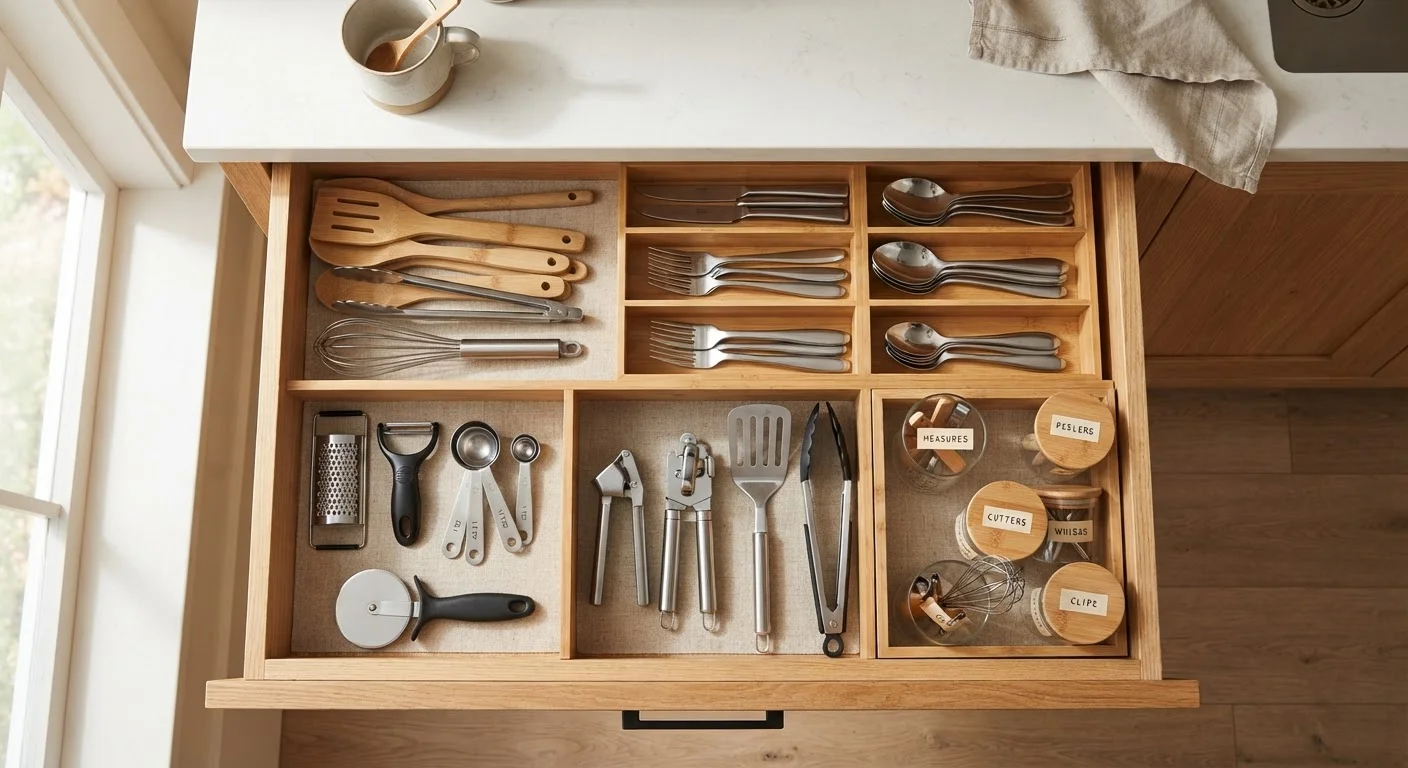
Photo: SummarizedReads.net | Just Read It! editorial
—— In This Article
Key Takeaways
- Functional organization prioritizes usability over appearance.
- A system only works if the people using the space can actually maintain it.
- Storage that's hard to access tends to stay unused or become a dumping ground.
- Aesthetic organization can still be functional - the two aren't mutually exclusive.
- Auditing your systems regularly keeps them from drifting back toward chaos.
The Problem With Organizing for the Photo
Open any home organization account or magazine spread and you'll see the same image: matching containers, color-coded shelves, artfully folded towels. It looks calm and controlled. But for many households, it falls apart within days.
That's because aesthetic organization is designed to be seen, not necessarily used. When form drives every decision - choosing a bin because it looks right, stacking items because it photographs well - the resulting system often creates more work than it saves. Lids that are hard to remove. Shelves too high for kids to reach. Folding techniques that no one in the house actually has time to maintain.
This isn't a criticism of wanting a tidy home. Aesthetics matter, and a visually calm space can reduce stress. The issue is when appearance becomes the primary goal, at the expense of how the space actually functions day to day.
Test Your System Before You Commit
Before buying containers or installing shelving, try living with a rearranged version of your space for a week. Move items to where you think they should go and see if the habit sticks naturally. If it does, then invest in making it permanent and tidy. This approach saves money and avoids organizing solutions that look good in theory but don't hold up in practice.
What Functional Organization Actually Involves
At its core, functional organization asks one question: Does this system make life easier for the people using this space?
That question leads to several practical principles:
- Store things where you use them. Coffee supplies belong near the coffee maker, not in a pantry across the kitchen. Shoes go where people actually take them off, not where you wish they did.
- Make the right choice the easy choice. If returning something to its place requires four steps, most people won't do it. The easier a system is to maintain, the more likely it will be maintained.
- Match the system to real habits, not ideal ones. A system built around who you want to be - rather than who you are - is a system built to fail. Start with your actual routines, then adjust.
- Account for all users. In a shared home, a system only works if every person can navigate it. Organizing a home with multiple people requires honest conversations about access, expectations, and compromise.
Understanding the vocabulary behind these ideas - zones, categories, dead space - helps too. See our guide to the core language of home organization for plain-language definitions.
23 min
Average time lost daily to searching for misplaced items
According to research cited by the American Institute of Stress, disorganization is a consistent source of daily friction and wasted time in households.
80%
Of clutter is caused by disorganization, not lack of space
This figure is commonly referenced in professional organizing literature and points to system design - not square footage - as the primary variable.
How to Audit What You Already Have
Before adding any new storage or rearranging furniture, it's worth diagnosing what isn't working about your current setup. A simple audit takes less than an hour and typically reveals the root cause of most organizational friction.
Walk through each room and ask:
- What do I spend the most time looking for?
- What consistently ends up in the wrong place?
- What areas feel chaotic even right after I tidy them?
- Are there items I avoid putting away because it's inconvenient?
The answers point directly at friction points - the places where your current system conflicts with your actual behavior. Those are the spots to fix first.
If you're starting a space from the ground up - a new apartment, a first home - home organization for renters and first-time homeowners walks through where to begin without overwhelming yourself.
Organization Looks Different for Every Household
There is no universal system that works for everyone. A method that feels effortless for one person may feel burdensome for another with different habits, schedules, or physical needs. Functional organization is always personal - the goal is a system that fits your household, not one that matches a template. If a widely praised method doesn't work for you, that's data, not failure.
Keeping Systems Functional Over Time
Even well-designed systems drift. Households change - new people, new habits, different seasons, different needs. A system that worked beautifully when you were working from home may fail once you're commuting again.
The fix isn't starting over. It's building in small, regular reviews. A seasonal organization audit every few months helps you catch problems before they compound. Look for areas where clutter is accumulating despite your best efforts - that's usually a sign the system needs adjusting, not that you need more willpower.
Functional organization isn't a one-time project. It's an ongoing calibration between your space, your stuff, and the way your household actually lives. When the system fits the life, maintenance stops feeling like a chore - and the space starts working for you instead of against you.
Frequently Asked Questions

Home Editorial Team
Home Editorial Team is the collective byline for our editorial team and contributor network. Articles published under this byline or an editorial pen name are researched, written, and reviewed according to our editorial standards for clarity, consistency, and independence before publication.
View author profile