
Zones, Categories, and Containers: The Core Language of Home Organization
A plain-language reference for the key terms and concepts used in home organization — from zones and categories to the meaning of 'dead space'.
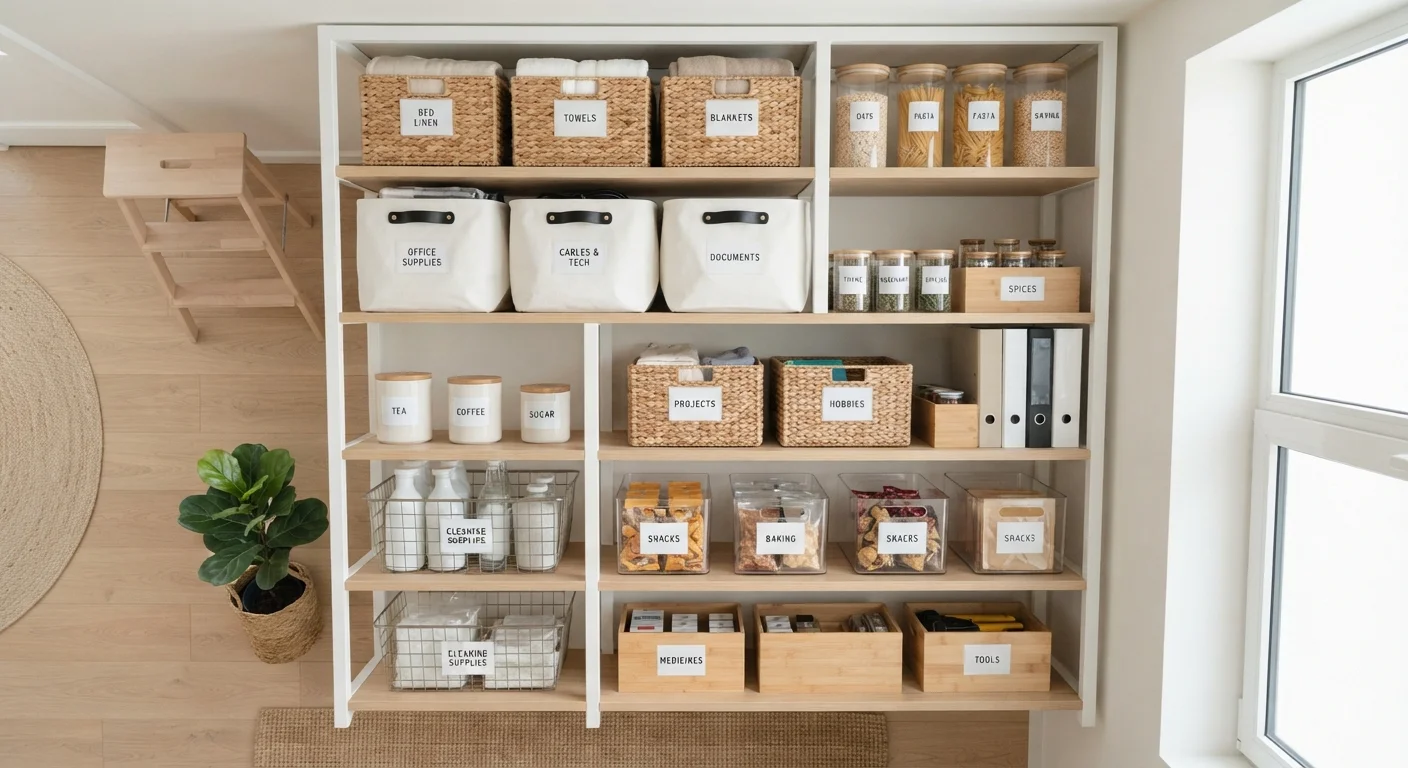
Photo: SummarizedReads.net | Just Read It! editorial
—— In This Article
Why Shared Vocabulary Makes Organization Easier
Home organization has its own shorthand — words like zones, categories, and dead space appear constantly in guides, videos, and conversations about getting your home under control. When you understand what these terms actually mean, you stop second-guessing decisions and start building systems that hold up over time.
This reference covers the core concepts used by professional organizers and experienced homeowners alike. Whether you're setting up a space for the first time or rethinking a system that stopped working, these definitions give you a shared language to work from. See our guide for renters and first-time homeowners for how to apply these ideas from the ground up.
| Primary organizing unit | Zone (area) → Category (grouping) → Container (physical holder) |
| Most common source of 'hidden' storage | Dead space — underutilized vertical height and corner areas |
| When to audit your system | Seasonally, or when a system visibly starts failing |
| Cost of basic organization | Many effective systems require only labeling and rearranging existing containers |
| Container sizing tip | Size containers to the category, not the available space |
Core Terms Defined
The following concepts are the building blocks of almost every organization system, regardless of home size or budget.
Zone
A designated area of a room or home assigned to a specific activity or type of item. For example, a 'bill-paying zone' near a desk keeps paperwork, stamps, and pens together. Zones reduce decision fatigue by creating predictable locations.
Category
A logical grouping of items that share a purpose or are used together. 'Baking supplies' is a category; 'kitchen stuff' is not. Strong categories are narrow enough to be meaningful but broad enough to be sustainable.
Container
Any physical item used to hold, corral, or define a category — bins, baskets, drawer dividers, trays, or even a shelf section. The container's job is to make a category visible and bounded.
Dead Space
Storage volume that exists but isn't being used effectively — typically high shelves, corners, or the space under furniture. Identifying dead space is often the first step toward finding 'free' storage in an existing home.
Decanting
Transferring items from their original packaging into uniform containers. Common for pantry staples, it improves visibility and space efficiency but adds a maintenance step when restocking.
One-In, One-Out Rule
A guideline that says when one item enters a category or zone, another must leave. It's a way of maintaining capacity limits over time rather than repeatedly reorganizing from scratch.
Audit
A deliberate review of a storage area or system to assess what's working, what's accumulating clutter, and what needs to be adjusted. Audits are most useful done on a regular schedule — seasonally, for example.
Prime Real Estate
The most accessible storage locations in any space — typically eye-level shelves, front-of-drawer positions, and countertop spots. High-frequency items belong here; low-frequency items should be stored elsewhere.
Friction
Any physical or mental obstacle that makes it harder to put something away correctly. High friction — lids that are hard to remove, containers stored in inconvenient spots — causes systems to fail gradually.
Like With Like
The organizing principle of grouping items by type or function. Storing all batteries together, all cleaning cloths together, and so on. It reduces searching and prevents duplicate purchases.
One point worth noting: these concepts work at every scale. A single drawer can have zones. A closet shelf can have categories. You don't need a large home or expensive products — you need a consistent mental model and a room-by-room plan to apply it.
How These Concepts Work Together
Organization systems are built in layers. Zones establish where things belong in a room or home. Categories define what goes together within a zone. Containers physically hold each category in place. When all three are aligned, the system becomes largely self-maintaining — things naturally return to the right spot because there's an obvious place for them.
Friction enters when these layers conflict. A zone that's inconvenient to reach, a category that mixes unrelated items, or a container that's the wrong size for what it holds — any one of these can cause a system to unravel over time. Periodic review helps catch these mismatches early. Our seasonal reset guide walks through how to audit your systems before they break down.
You Don't Need to Label Everything
Labels are a useful tool, but they're not the foundation of a good system — logical zones and well-defined categories are. Over-labeling can actually make a system more rigid and harder to adapt as your household's needs change. Start with categories; add labels only where they genuinely help members of your household find and return items.
In shared homes, agreeing on these terms in advance prevents a lot of conflict. When everyone understands what a zone is and respects category boundaries, the system doesn't depend on one person policing it. See how to organize shared spaces for strategies that account for different tidiness standards.
~25%
Average home storage that goes unused or underused
Home organization professionals commonly estimate that a quarter or more of available storage in a typical home is dead space or poorly allocated.
3 layers
Organizational structure: zone, category, container
Most sustainable home organization systems rest on these three aligned layers working together consistently.

Home Editorial Team
Home Editorial Team is the collective byline for our editorial team and contributor network. Articles published under this byline or an editorial pen name are researched, written, and reviewed according to our editorial standards for clarity, consistency, and independence before publication.
View author profile