
Everything Shoppers Should Know About Price Matching
Price matching policies vary widely. This guide explains how they work, what conditions apply, and how to make a successful request.
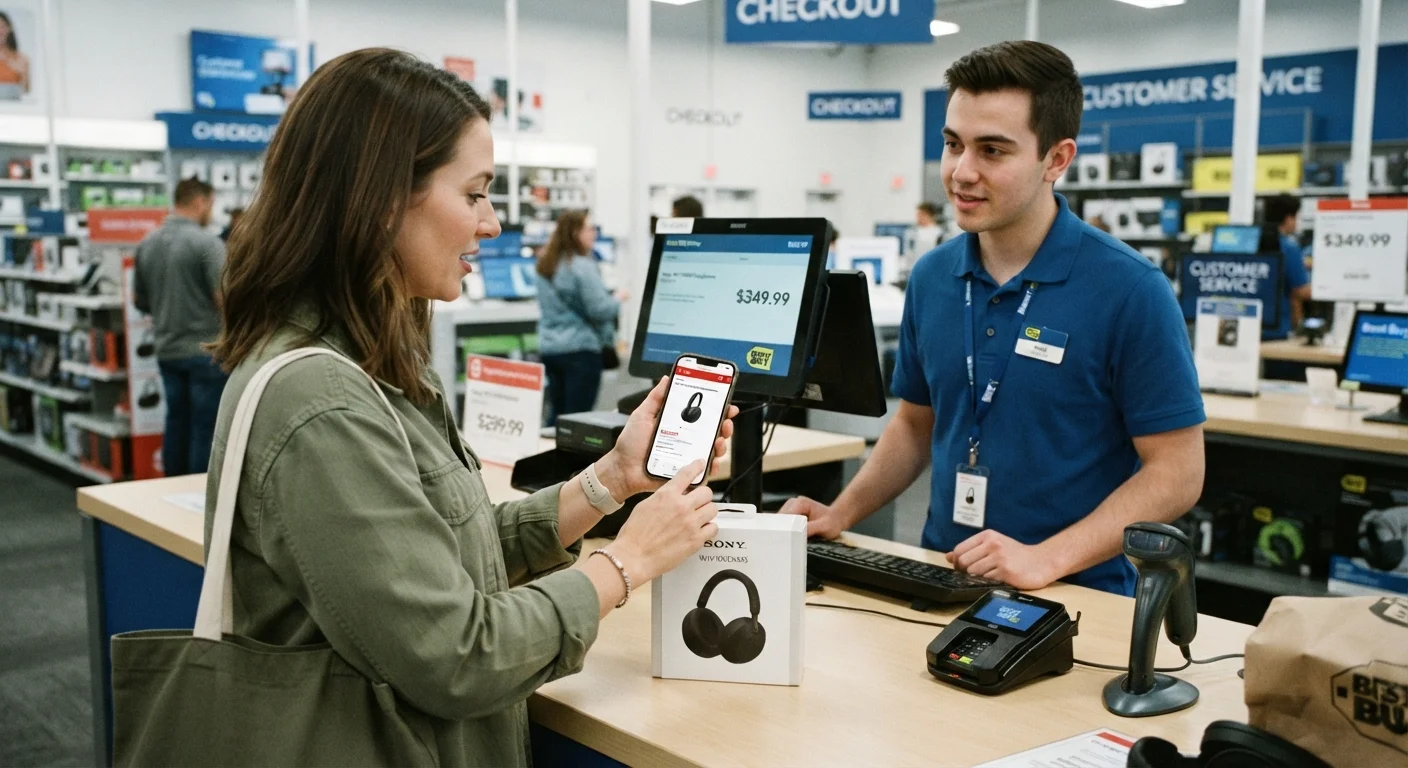
Photo: SummarizedReads.net | Just Read It! editorial
—— In This Article
Key Takeaways
- Price match policies vary significantly between retailers — always read the fine print before requesting one.
- Most stores require the competing item to be identical in brand, model number, and condition.
- Online marketplace listings and third-party sellers are commonly excluded from price match eligibility.
- Having your documentation ready — a URL or printed ad — dramatically increases your success rate.
- Price matching is a complement to, not a replacement for, broader comparison shopping habits.
What Price Matching Actually Means
Price matching is a retail policy in which a store agrees to sell you an item at a lower price advertised by a qualifying competitor. The concept is straightforward: if Store A sells a specific item for $80 and Store B lists the identical item for $65, Store A may adjust its price to $65 upon request — provided its policy permits it.
Retailers offer price matching for competitive reasons. It reduces the incentive for a shopper to leave for a lower price elsewhere. For consumers, it can eliminate the need to make multiple trips or manage returns simply to save money on a single purchase.
Not all retailers participate. Those that do often limit the program to specific categories, competitor types, or time windows. Understanding the structure of these policies — rather than assuming they apply broadly — is where most shoppers gain a practical edge. For a broader look at retail pricing mechanics, see sale pricing myths that mislead even experienced shoppers.
36%
Shoppers who have requested a price match
According to a Consumer Reports survey, roughly one-third of US shoppers have asked a retailer to match a competitor's price at least once.
~80%
Price match success rate when documented
Retail industry observers have noted that documented price match requests — with a clear URL or printed ad — are approved at significantly higher rates than undocumented verbal requests.
7–14 days
Typical post-purchase match window
Many major US retailers allow price match requests within one to two weeks of purchase, though exact terms differ by retailer and can change.
Common Conditions and Exclusions
Price match policies typically come with a list of conditions that determine whether a request qualifies. Being aware of these in advance prevents wasted time at the register.
- Identical item requirement: The product must match exactly — same brand, model number, color, and size. A retailer will generally decline if the competing listing uses a different SKU or bundle configuration. For help decoding product identifiers, the shopper's glossary of common comparison terms is a useful reference.
- Approved competitor list: Most retailers name specific competitors whose prices qualify. A price from an obscure website or an international retailer is rarely accepted.
- In-stock requirement: The competing item usually must be available for purchase at the time of the request — not a sold-out clearance price or a limited-quantity flash sale.
- Exclusions for marketplace sellers: Prices listed by third-party sellers on platforms like Amazon Marketplace are almost universally excluded, even if the platform itself is on the approved list.
- Time limits: Some policies allow price matching only at the point of sale; others extend a window (commonly 7–14 days after purchase) during which you can return with proof of a lower price.
Marketplace Seller Prices Are Usually Excluded
Third-party seller prices on major platforms — even well-known ones — are almost always ineligible for price matching at physical and online retailers. Before building your case around a competing price, confirm it is sold and fulfilled directly by the platform or retailer, not by an independent marketplace seller. Presenting an ineligible price wastes time and may delay your transaction at the register.
Clearance and open-box items introduce additional complexity — a topic explored in depth at common assumptions about clearance sales that cost shoppers money.
How to Make a Successful Request
A price match request is more likely to succeed when you arrive prepared. Stores that offer this policy still expect the shopper to provide documentation — vague claims or verbal references rarely pass review.
- Confirm the policy exists before shopping. Check the retailer's website under its customer service or FAQs section. Note which competitors are named.
- Document the competing price with a direct URL to the product page or a clearly dated printed advertisement. The competing listing should show the item name, price, and availability.
- Make the request calmly and specifically. Reference the policy by name if you can, and present your documentation without pressure. Customer service staff are more responsive when the interaction is straightforward.
- Ask about post-purchase matching if you've already bought the item and later found a lower price. Many retailers handle this quietly at the customer service desk.
Screenshot the competitor's product page — including the price, product name, and date — before heading to the store. Prices can change before staff verify them.
Dynamic pricing means a qualifying price may disappear within hours. A timestamped screenshot provides a record that survives the gap between your research and your request.
For high-ticket items purchased online, check whether the retailer's price match window extends to post-delivery — not just post-purchase — since some policies differ on this point.
Shoppers frequently miss legitimate post-purchase savings because they assume the window closes at checkout. The actual trigger date varies by retailer and is worth confirming explicitly.
For broader strategies on consistent savings, deal-hunting habits that hold up over time covers approaches that complement price matching well.
Where Price Matching Falls Short
Price matching is a useful tool, but it has real limitations worth understanding before you rely on it heavily.
It requires active effort. You have to find the competing price, verify it qualifies, and make the request. That process takes time, and the savings may not always justify the investment — particularly on lower-cost items.
It doesn't apply to services or bundles. Installation, extended warranties, or bundled accessories are rarely included in a price match. You may save on the base product but still pay more overall.
Policies can change without notice. A retailer that offered broad price matching previously may have tightened its terms. Always verify the current policy rather than relying on past experience.
Dynamic pricing complicates comparisons. Online prices change frequently — sometimes by the hour. A competitor's price that qualified at 9 a.m. may no longer exist when a customer service agent checks at noon.
Price matching is most reliably useful on stable, name-brand products with consistent pricing. It functions less predictably for seasonal goods, rapidly-moving electronics, or categories where the deals and coupons landscape shifts constantly.
Building Price Matching Into Your Shopping Habits
The shoppers who benefit most from price matching treat it as one layer of a broader approach — not as a standalone strategy. A few consistent habits make it easier to use effectively.
- Check competitor prices before you buy, not after. Knowing the price landscape ahead of time means you can make a request at the point of sale rather than managing a post-purchase adjustment.
- Keep receipts and order confirmations accessible within the post-purchase window. If a store offers a 14-day price match guarantee, a calendar reminder can prevent you from missing it.
- Use comparison tools for research, then apply price matching at a preferred retailer for the convenience of purchasing in one place — useful if you value same-day availability or familiar return policies.
- Understand that negotiating price at retail is different from negotiating in other contexts. Unlike purchasing a vehicle — where direct negotiation plays a larger role (see negotiating a car price) — retail price matching operates within a defined, policy-driven framework. You're referencing a rule, not bargaining.
Used consistently, price matching can reduce the frequency of buyer's remorse and remove the impulse to buy something immediately out of fear it won't be available later. That alone makes it worth understanding in full.
For broader context on how to compare products and identify genuinely useful smart comparison strategies, the hub covers foundational research methods worth building into your routine.

Shopping Editorial Team
Shopping Editorial Team is the collective byline for our editorial team and contributor network. Articles published under this byline or an editorial pen name are researched, written, and reviewed according to our editorial standards for clarity, consistency, and independence before publication.
View author profile