
Loyalty Programmes Decoded: Rewards, Trade-offs, and What You're Actually Signing Up For
Retailer loyalty schemes promise perks, but they come with data-sharing and spending nudges. Understand what you're exchanging before enrolling.
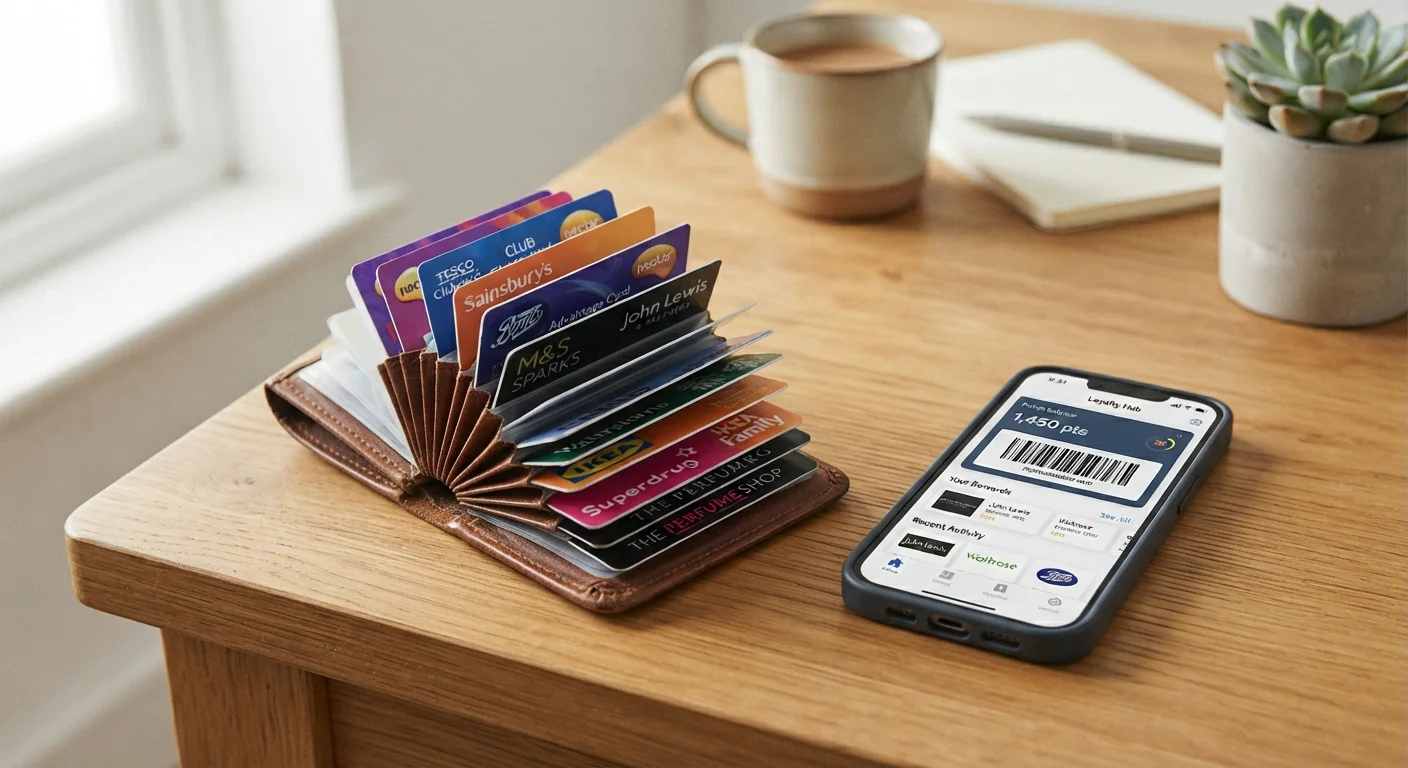
Photo: SummarizedReads.net | Just Read It! editorial
—— In This Article
Key Takeaways
- Loyalty programmes can deliver real savings, but they're designed to increase your visit frequency and spending.
- Enrolling typically means sharing purchase history and personal data with the retailer.
- Points often expire, and reward thresholds can shift without much notice.
- The programmes most worth joining are those aligned with stores you'd already visit regularly.
- Reading the terms before signing up helps you avoid unpleasant surprises around data use and reward redemption.
Tangible savings on regular purchases
For shoppers who already frequent a retailer, accrued points or member discounts can offset a meaningful share of routine spending — particularly in grocery and pharmacy programmes where margins on staple items are thin.
Access to member-only pricing and early sales
Many programmes offer enrolled members price tiers or sale access not available to the general public, which can represent genuine savings on planned purchases.
Personalised offers based on purchase history
Targeted coupons on items you already buy can be more immediately useful than blanket promotions, though this benefit depends on whether you'd have bought those items regardless.
Free to join in most cases
Unlike subscription services, most retail loyalty programmes have no direct membership cost, meaning the downside of joining is primarily data-sharing rather than an upfront financial commitment.
Simplified tracking of spending categories
Some programmes provide purchase history summaries that can serve as a lightweight spending record, useful for budgeting without a dedicated finance app.
Extensive data collection on purchase behaviour
Enrolment typically requires consent to track every transaction, often linked to personal identifiers. This data may be used for internal marketing, shared with advertising partners, or sold — terms that vary by retailer and are buried in privacy policies.
Designed to increase spending frequency
The structural goal of a loyalty programme is to raise visit frequency and basket size, not to reward existing habits. Bonus point events, tier thresholds, and expiry deadlines are deliberate nudges toward additional spending.
Points can expire or be devalued
Retailers retain the right to change point values, introduce redemption minimums, or shorten expiry windows — sometimes with minimal advance notice. Accumulated balances can lose value without a clear alert to the member.
Reward rates are often lower than they appear
A programme offering '5 points per dollar' sounds generous until the conversion rate reveals that 500 points equals $1 in redemption value — meaning the actual return is 1%, comparable to many standard payment methods.
Programme terms are complex and frequently updated
Loyalty schemes often run to lengthy terms and conditions, and material changes — such as reward category shifts or partner exclusions — may be communicated only through email updates that most members don't read carefully.
What Loyalty Programmes Actually Are
Retailer loyalty programmes — sometimes called rewards schemes, members clubs, or points programmes — are structured systems that track your purchases and return a portion of that value in the form of points, discounts, or exclusive access. They're offered by grocery chains, pharmacies, department stores, airlines, and an expanding range of online retailers.
At their core, these programmes serve two simultaneous purposes: they give enrolled shoppers an incentive to return, and they give retailers a detailed, longitudinal view of individual spending behaviour. That exchange — your data for your discount — is the foundation worth understanding before you hand over your email address.
For a look at how retailers use similar mechanics in other promotional contexts, see how coupon codes work behind the scenes.
Tangible savings on regular purchases
For shoppers who already frequent a retailer, accrued points or member discounts can offset a meaningful share of routine spending — particularly in grocery and pharmacy programmes where margins on staple items are thin.
Access to member-only pricing and early sales
Many programmes offer enrolled members price tiers or sale access not available to the general public, which can represent genuine savings on planned purchases.
Personalised offers based on purchase history
Targeted coupons on items you already buy can be more immediately useful than blanket promotions, though this benefit depends on whether you'd have bought those items regardless.
Free to join in most cases
Unlike subscription services, most retail loyalty programmes have no direct membership cost, meaning the downside of joining is primarily data-sharing rather than an upfront financial commitment.
Simplified tracking of spending categories
Some programmes provide purchase history summaries that can serve as a lightweight spending record, useful for budgeting without a dedicated finance app.
The Real Costs: Data, Nudges, and Fine Print
The trade-offs in loyalty programmes are less obvious than the perks, which is precisely why they're worth examining closely.
Extensive data collection on purchase behaviour
Enrolment typically requires consent to track every transaction, often linked to personal identifiers. This data may be used for internal marketing, shared with advertising partners, or sold — terms that vary by retailer and are buried in privacy policies.
Designed to increase spending frequency
The structural goal of a loyalty programme is to raise visit frequency and basket size, not to reward existing habits. Bonus point events, tier thresholds, and expiry deadlines are deliberate nudges toward additional spending.
Points can expire or be devalued
Retailers retain the right to change point values, introduce redemption minimums, or shorten expiry windows — sometimes with minimal advance notice. Accumulated balances can lose value without a clear alert to the member.
Reward rates are often lower than they appear
A programme offering '5 points per dollar' sounds generous until the conversion rate reveals that 500 points equals $1 in redemption value — meaning the actual return is 1%, comparable to many standard payment methods.
Programme terms are complex and frequently updated
Loyalty schemes often run to lengthy terms and conditions, and material changes — such as reward category shifts or partner exclusions — may be communicated only through email updates that most members don't read carefully.
Beyond data sharing, many programmes include terms that limit when and how points can be redeemed. Points may expire after a period of inactivity, redemption minimums may be set higher than casual shoppers reach, and promotional points earned during sales events can carry different expiry rules than standard earned points. It's worth reading the terms before signing up — the same habit recommended in understanding retail fine print generally.
Some programmes also restrict stacking rewards with coupon codes. Discount stacking rules vary significantly by retailer, so checking those terms matters if you plan to combine savings methods.
Your Data Rights May Vary by State
US consumers in states with comprehensive privacy laws — such as California's CCPA — have formal rights to request, correct, or delete personal data held by retailers, including loyalty programme records. Most other states offer more limited protections. If data privacy is a concern, check the programme's privacy policy for your state-specific rights before enrolling, and look for an opt-out mechanism for data sharing with third parties.
How to Evaluate Whether a Programme Is Worth Joining
The question isn't whether loyalty programmes are good or bad — it's whether a specific programme is worth it for your actual habits. A few practical checkpoints help:
- Spending alignment: Do you already shop at this retailer regularly, or would joining the programme change your behaviour to chase points? The latter is a red flag.
- Reward rate: Calculate what percentage of spending the programme actually returns. Many programmes return 1–3% of spend, comparable to a straightforward cash-back card.
- Data scope: Check what information the programme collects and whether it's shared with third parties. Privacy policies vary significantly.
- Redemption friction: How easy is it to actually use your rewards? Complicated portals, short expiry windows, and category restrictions reduce practical value.
~1–3%
Typical effective reward return rate
Consumer finance analysts commonly estimate that most retail points programmes return between 1% and 3% of spending when points are successfully redeemed — a figure worth comparing against cash-back alternatives.
~50%
Points that are earned but never redeemed
Industry estimates have historically suggested that a significant share of loyalty points — sometimes around half — go unredeemed, representing value that accrues to the retailer rather than the consumer.
For a broader view of when recurring commitments like memberships and subscriptions pay off, this breakdown of subscription vs. one-time purchase models applies similar analytical thinking. And if points and miles programmes interest you at the travel level, this plain-language overview of airline and hotel loyalty systems is a useful companion.

Shopping Editorial Team
Shopping Editorial Team is the collective byline for our editorial team and contributor network. Articles published under this byline or an editorial pen name are researched, written, and reviewed according to our editorial standards for clarity, consistency, and independence before publication.
View author profile