
Before You Compare Anything: Building a Baseline for What You Actually Need
Jumping straight to comparisons often leads to buying the wrong thing. A structured approach to clarifying your requirements changes the outcome.
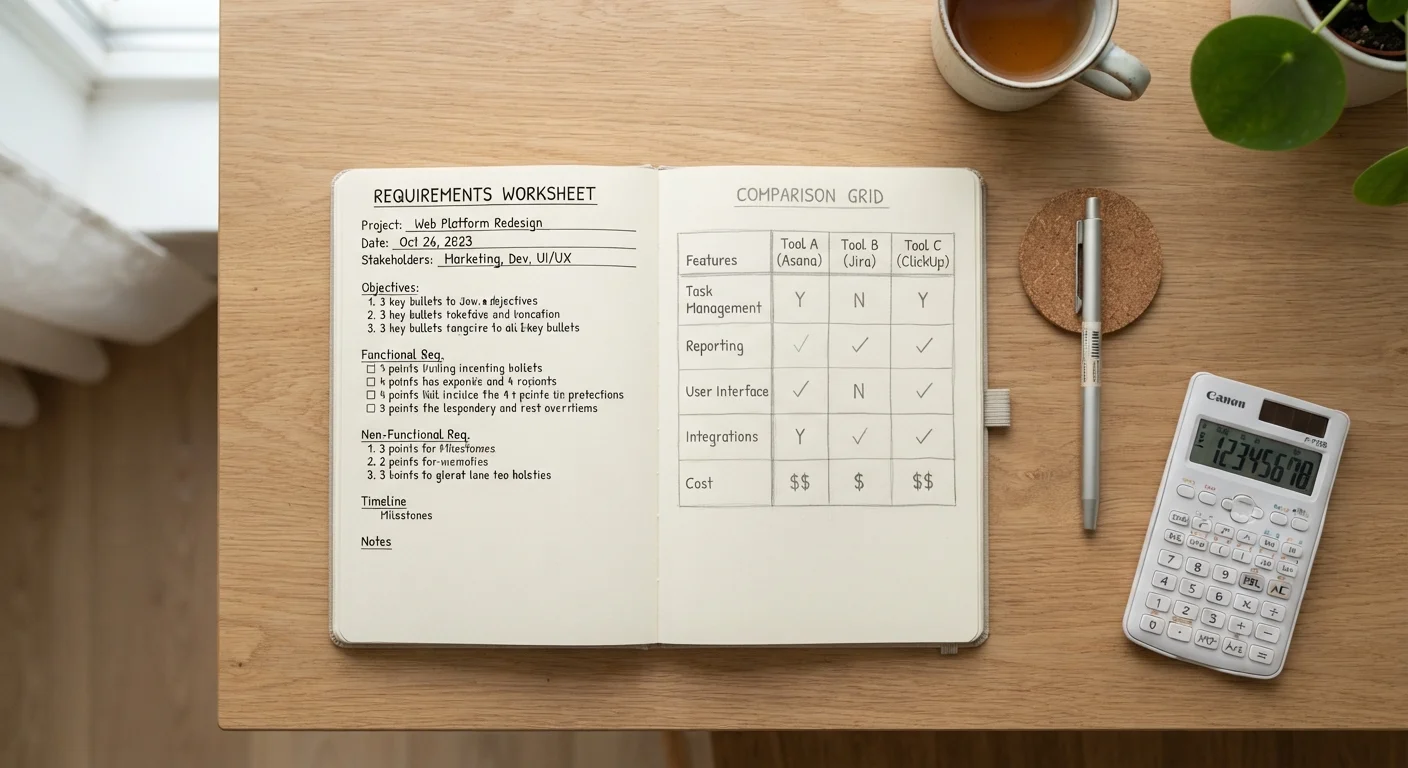
Photo: SummarizedReads.net | Just Read It! editorial
—— In This Article
Key Takeaways
- Comparing options without a personal baseline often leads to buying the most-marketed product, not the most suitable one.
- Separating non-negotiable requirements from preferences prevents scope creep during the research phase.
- A documented baseline lets you evaluate any comparison chart on your terms, not the seller's.
- Budget should be set before — not after — you browse, to avoid anchoring to arbitrary price points.
- Your usage context (frequency, environment, who else uses it) is data that no review site can supply for you.
Why Most Comparisons Start Too Late
Most shoppers jump straight to a comparison chart, review roundup, or search results page before they have a clear picture of their own situation. The result is predictable: the loudest, most-featured, or most-promoted option tends to win — regardless of whether it actually fits the buyer's life.
This checklist is designed to run before you open a single product page. Think of it as a requirements audit — the same kind of structured self-assessment that purchasing managers use before issuing a brief to vendors. You don't need a business background to use it; you just need 20 to 45 minutes and honest answers.
Once completed, this baseline becomes your filter for every comparison that follows. It also helps you spot when a comparison is framed to serve the seller rather than inform you — a problem covered in depth in understanding anchoring and decoy pricing.
Define the Problem, Not the Solution
Set a Firm Budget Before Browsing
Map Your Usage Context
Separate Hard Requirements from Preferences
Identify Compatibility and Integration Constraints
Tools You Will Use During This Process
None of what follows requires paid software. The tools below are either free or things you likely already have. The point is to externalise your thinking — getting requirements out of your head and into a form you can review and revise.
Notebook or word processor
Record your requirements in writing so they are fixed and reviewable rather than vague mental notes.
Spreadsheet application
Create a simple three-column grid (must-have, prefer, optional) that you can update and carry into comparison sessions.
Calculator or budgeting app
Calculate total cost of ownership including recurring costs, not just the sticker price.
Timer
Limit each section of the audit to a fixed window to prevent overthinking and keep the exercise moving.
If you find yourself wanting to shortcut the process by going straight to a comparison site, that impulse is worth pausing on. Review sites rarely match your precise situation — if you need a structured approach for when they fall short, see building your own side-by-side comparison.
Browsing Before You Have a Baseline Anchors You
Research consistently shows that the first price or feature set you encounter shapes all subsequent judgments — a cognitive effect known as anchoring. If you browse before completing this checklist, you risk building your "requirements" around whatever happens to appear first in search results. Complete the baseline with the browser closed.
Using Your Baseline Once It Is Complete
After working through the checklist, you should have a written document with three clear columns: hard requirements, strong preferences, and genuinely optional extras. Bring this document — even a photo of handwritten notes — into every subsequent research session.
When you encounter a product comparison, score each option against your column one (hard requirements) first. Anything that fails here is eliminated regardless of price or features. Only then move to preferences. This sequence prevents a common trap: being seduced by impressive features that solve problems you do not have.
For purchases that involve ongoing costs — subscriptions, consumables, servicing — also note the total cost of ownership estimate you set in the checklist. Many hidden variables only become visible at this stage; the hidden variables that break most product comparisons walks through warranty terms, compatibility, and running costs in detail.
Finally, revisit your baseline if your circumstances change mid-research. A purchase decision that takes several weeks can drift: your budget shifts, a new use case emerges, or you discover a constraint you had not anticipated. Treat the baseline as a living document, not a one-time exercise. For building longer-term habits around purchase decisions, a structured shopping habit that prevents buyer's remorse complements this checklist well.

Shopping Editorial Team
Shopping Editorial Team is the collective byline for our editorial team and contributor network. Articles published under this byline or an editorial pen name are researched, written, and reviewed according to our editorial standards for clarity, consistency, and independence before publication.
View author profile