
Refurbished, Open-Box, and Pre-Owned: What Each Condition Grade Really Means
Condition labels vary by retailer and have no universal standard. Here's what each term typically covers and what to verify before committing.
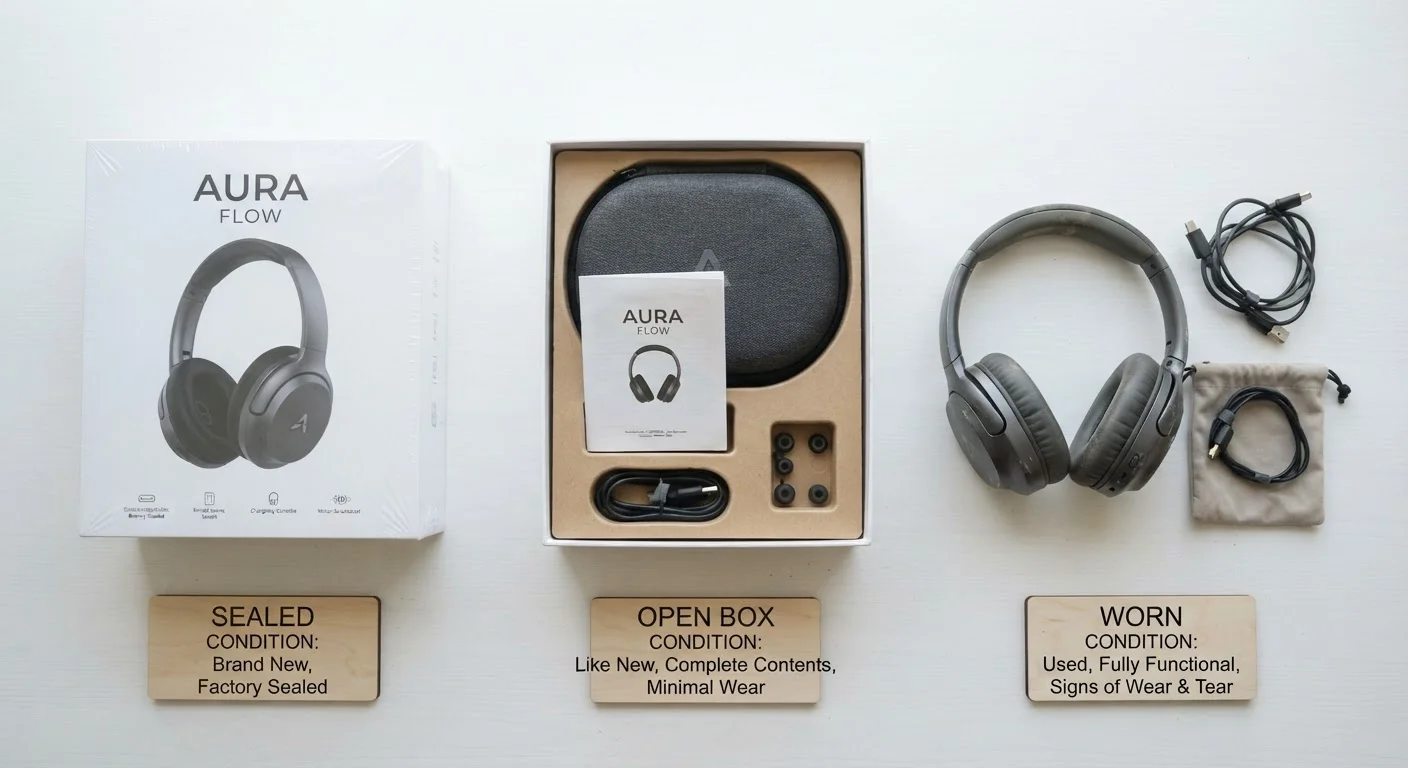
Photo: SummarizedReads.net | Just Read It! editorial
—— In This Article
Why Condition Labels Don't Mean the Same Thing Everywhere
Walk through any major retailer's website and you'll encounter terms like "certified refurbished," "open-box," and "pre-owned" — sometimes within the same product listing. The problem: none of these labels has a legally mandated, universal definition. A product described as "refurbished" at one retailer may have undergone extensive testing and component replacement; at another, it may have simply been repackaged after a customer return.
Understanding what each term typically covers — and which questions to ask before buying — can mean the difference between a smart purchase and an expensive mistake. The definitions below reflect common industry usage, not any single retailer's policy.
| Condition label standardization | No universal legal standard exists |
| Open-box warranty | Often limited or absent; varies by retailer |
| Manufacturer refurbished warranty | Typically 90 days to 1 year |
| Third-party refurbished testing | Self-defined; look for disclosed process |
| Pre-owned / used testing | Not guaranteed unless explicitly stated |
| Key verification checkpoints | Warranty, return policy, included accessories, test documentation |
Breaking Down the Most Common Condition Grades
New / Sealed
The item has never been used and is in original, unopened manufacturer packaging. This is the baseline most shoppers assume when no condition label is present. Full manufacturer warranty typically applies.
Open-Box
The original packaging has been opened — usually because a customer returned the item or a display model was used in-store. The product itself may be completely unused, or it may show minor signs of handling. Retailers often resell open-box items at a modest discount with limited or no warranty. Always confirm whether the original accessories and documentation are included.
Manufacturer Refurbished
The product was returned to the original manufacturer (or an authorized partner), inspected, repaired to meet functional standards, and repackaged. This is generally the most reliable form of refurbishment because it follows the maker's own quality benchmarks. Many manufacturer-refurbished items include a limited warranty, though it is usually shorter than the warranty on new units.
Seller / Third-Party Refurbished
A third party — not the original manufacturer — has inspected, repaired, or reconditioned the item. Quality can vary significantly. Look for sellers who disclose their testing process, list which parts were replaced, and offer a return window. Certifications from the seller (such as a graded scale of A, B, or C) help, but are self-issued and not independently verified unless stated otherwise.
Pre-Owned / Used
The item was previously owned and is sold as-is, with no guarantee that any testing or repair was performed. Condition sub-grades — such as "Like New," "Good," or "Acceptable" — are common on resale marketplaces but are defined by the individual seller. Photos and seller reviews carry more weight here than the label alone.
Open-Box
A product whose original packaging has been opened, typically due to a customer return or in-store display use. The item may be unused or lightly handled; condition varies by retailer.
Manufacturer Refurbished
A product returned to and reconditioned by the original manufacturer or an authorized partner, tested against the maker's own quality standards, and resold — often with a limited warranty.
Third-Party Refurbished
A product inspected and repaired by an independent seller rather than the original manufacturer. Quality and testing standards are self-defined and vary widely between sellers.
Cosmetic Grade
A rating (commonly A, B, or C) that describes the physical appearance of a used or refurbished item — such as scratches or dents — independent of its functional condition.
As-Is
A product sold without any warranty, guarantee of condition, or representation of testing. The buyer accepts the item in its current state, with no recourse for undisclosed defects.
Restocking Fee
A charge deducted from a refund when a customer returns an item. It is common on open-box and refurbished purchases and can range from a small percentage to a flat dollar amount.
What to Verify Before You Buy
Regardless of the condition label, these are the checkpoints that matter most:
- Warranty coverage: Is there any remaining manufacturer warranty? Does the seller offer their own coverage, and for how long?
- Return policy: Can you return the item if it doesn't work as described? Check for restocking fees and time windows. See how return policy fine print works before committing.
- Included accessories: Are the original charger, cables, manual, and packaging present? Missing accessories can add hidden cost.
- Testing documentation: Reputable refurbishers often list the specific tests performed. A vague "fully tested" claim without detail is a yellow flag.
- Cosmetic grade: Many sellers use an A/B/C scale for cosmetic condition. Ask for photos of the actual unit if only stock images are shown.
For large purchases like appliances, also consider long-term operating costs. Energy efficiency labels can indicate whether an older refurbished unit will cost more to run than a newer model would.
If you're evaluating a pre-owned vehicle rather than consumer electronics, the condition grading landscape shifts considerably. New versus used car trade-offs covers the warranty, financing, and reliability dimensions specific to that category.
Marketplace Listings Require Extra Scrutiny
On large third-party marketplaces, condition grades are set by individual sellers — not the platform itself. Two listings both labeled "Good" can represent very different actual states. Prioritize sellers who provide photos of the specific unit, list a verifiable return window, and have a track record of verified reviews. When in doubt, contact the seller directly with specific questions before purchasing.
How to Compare Value Across Condition Grades
A lower sticker price doesn't automatically make a refurbished or pre-owned item the better value. Factor in the full picture:
- Effective warranty period: A new item with a one-year warranty versus a refurbished item with 90 days of coverage represents a real difference in risk exposure.
- Missing items: If the listing omits a $40 accessory you'll need to buy separately, the discount shrinks accordingly.
- Resale value: Used and refurbished items typically depreciate from an already-lower baseline, which matters if you plan to resell.
- Compatibility and software support: Older pre-owned electronics may lose access to software updates sooner than a new unit would.
For a broader reference on shopping terminology you'll encounter while comparing options, the shopper's glossary of product comparison terms covers related concepts including SKU, total cost of ownership, and grade definitions in depth.
This article provides general consumer information and is not a guarantee of any specific product's condition, warranty coverage, or resale value. Policies and definitions vary by retailer. Always review the seller's terms before purchasing.

Shopping Editorial Team
Shopping Editorial Team is the collective byline for our editorial team and contributor network. Articles published under this byline or an editorial pen name are researched, written, and reviewed according to our editorial standards for clarity, consistency, and independence before publication.
View author profile