
Reading a Mechanic's Estimate Without Feeling Lost
Labour hours, parts markups, diagnostic fees—mechanic invoices can be opaque. Learn what each line item means and what questions are reasonable to ask.
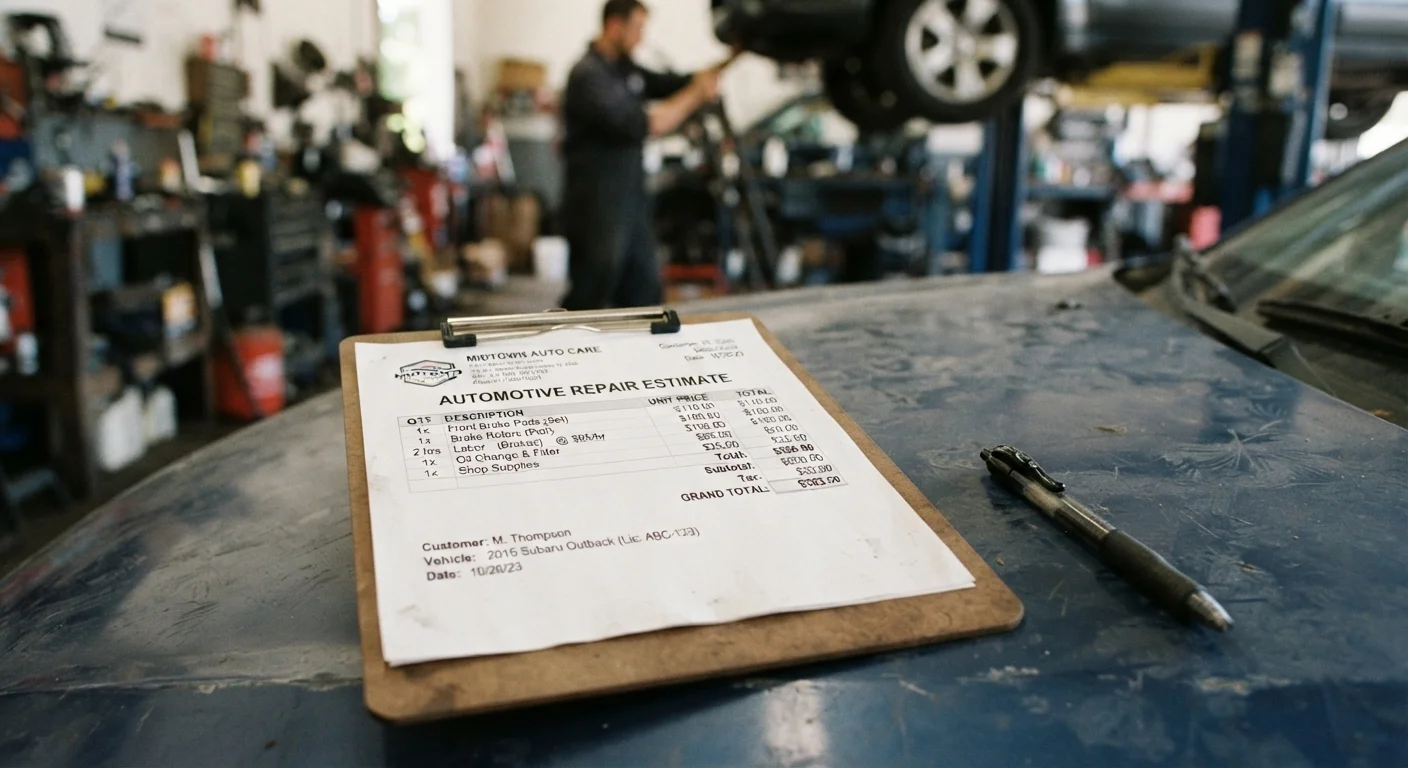
Photo: SummarizedReads.net | Just Read It! editorial
—— In This Article
Key Takeaways
- Labor is usually the largest cost driver on any estimate, billed at the shop's hourly rate times a flat-rate time guide.
- Parts markups are standard practice; the margin between dealer cost and what you pay varies widely by shop.
- Diagnostic fees cover the technician's time to identify the problem and may or may not be applied toward the repair total.
- Asking for a written estimate and authorization requirement protects you legally in most states.
- A second opinion on large repairs is reasonable and can reveal cost differences without being confrontational.
The Three Core Line Items on Every Estimate
Most repair estimates, no matter the shop, are built around three cost categories: labor, parts, and shop fees. Understanding each one prevents sticker shock and gives you a foundation for any follow-up questions.
Labor is billed as a flat-rate hours figure multiplied by the shop's hourly rate. Flat-rate hours come from industry time guides that estimate how long a standardized repair should take - not necessarily how long the technician actually spends. That's why labor can seem expensive even for a job that looked quick.
Parts are listed at the shop's retail price, which includes a markup over what the shop paid for the component. This markup is standard and covers sourcing, stocking, and warranty handling. If you see both an OEM (original equipment manufacturer) and an aftermarket option listed, the estimate should describe the difference - ask if it doesn't.
Shop fees - sometimes labeled hazmat fees, supply fees, or miscellaneous - cover consumables like rags, lubricants, and disposal of fluids. These are legitimate overhead costs, though the amounts can vary significantly. A line showing $15-$45 is typical; amounts that seem disproportionate relative to the repair are worth a polite question.
Written Estimates Are Your Right in Most States
Many states have auto repair consumer protection laws requiring shops to provide a written estimate before beginning work if the cost exceeds a set threshold. The shop must also get your written or recorded verbal authorization before exceeding the estimate by more than a defined margin - often 10%. Check your state's attorney general or consumer protection office website for the exact rules where you live.
Decoding the Diagnostic Fee
When your car acts up, the first step is usually a diagnosis - and that costs money. A diagnostic fee covers the technician's time to run electronic scans, perform tests, and isolate the root cause rather than guess. Shops commonly charge anywhere from $50 to $150 or more for this service, depending on complexity and location.
Two things matter most here. First, ask before authorizing: does the diagnostic fee apply toward the repair if you approve the work? Many shops credit it; some don't. Second, understand that a fault code from an OBD-II scanner (the port under your dashboard) tells a technician where the system flagged a problem, not necessarily what caused it. A proper diagnosis goes deeper, and that's what the fee is for. Paying for a competent diagnosis generally saves money over approving a repair that doesn't fix the actual problem.
If you're weighing whether a repair is worth doing at all, the cost of deferred maintenance article explains how skipping even minor repairs can compound into larger expenses later.
Save the Estimate Before You Authorize Work
Take a photo of the written estimate the moment you receive it. If anything changes between estimate and invoice, you'll have a clear reference point. Some shops provide estimates via email or text - save those too. Having documentation makes any follow-up conversation straightforward and less stressful.
Questions You Can Reasonably Ask Before Signing
A written estimate is the starting point for a conversation, not a take-it-or-leave-it document. These are practical, non-confrontational questions any driver can ask:
- Are these OEM or aftermarket parts? OEM parts are made to factory specifications; aftermarket parts vary widely in quality. Both can be appropriate depending on the repair and vehicle age.
- What's included in the shop fee line? A brief explanation is reasonable to request.
- If additional problems are found, will you contact me before proceeding? This confirms the shop follows proper authorization practice.
- Does the diagnostic fee apply to the repair total? Get the answer before the diagnostic begins.
- Is there a warranty on parts and labor? Reputable shops typically offer a warranty; the length and scope vary.
If the estimate involves a significant dollar amount, a second opinion is always a reasonable step. This is particularly relevant before purchasing a used vehicle - a pre-purchase inspection uses the same kind of documented assessment to surface problems before they become your problem.
$400
Median unexpected car repair cost reported by US drivers
According to survey data from the American Automobile Association (AAA), a significant share of US drivers cannot cover an unexpected $400-$500 repair without financial strain.
~$80-$150/hr
Typical independent shop labor rate range
Labor rates vary by region, shop type, and specialization; dealerships often charge at the higher end or above this range.
20-50%
Common parts markup range at repair shops
Industry observers note that parts markups vary widely by shop and part type; the margin helps cover sourcing, inventory, and parts warranty costs.
When the Final Invoice Differs from the Estimate
Sometimes a repair reveals additional problems that weren't visible until the vehicle was disassembled. This is legitimate - a leaking seal discovered once the transmission is out is a real finding. What matters is the process: the shop should contact you, describe what was found, and get your authorization before adding work or cost. If that call never happened and the final invoice is substantially higher than the estimate, that's a documentation problem worth disputing calmly in writing.
Keep your written estimate, any authorizations you signed, and your final invoice. These documents protect you if a billing dispute arises. Most state consumer protection offices and the Better Business Bureau accept written complaints if a resolution can't be reached directly with the shop.
Understanding estimates also sharpens your judgment about whether a repair is something you could reasonably handle yourself. The DIY vs. mechanic guide lays out which jobs carry real risk if done incorrectly and which are genuinely approachable for a capable home mechanic.
Frequently Asked Questions

Auto Editorial Team
Auto Editorial Team is the collective byline for our editorial team and contributor network. Articles published under this byline or an editorial pen name are researched, written, and reviewed according to our editorial standards for clarity, consistency, and independence before publication.
View author profile