
Tyre Rotation, Balancing, and Alignment: What Each One Actually Does
These three tyre services are often confused—or skipped entirely. Understand what each does, how often you need it, and what happens if you don't.
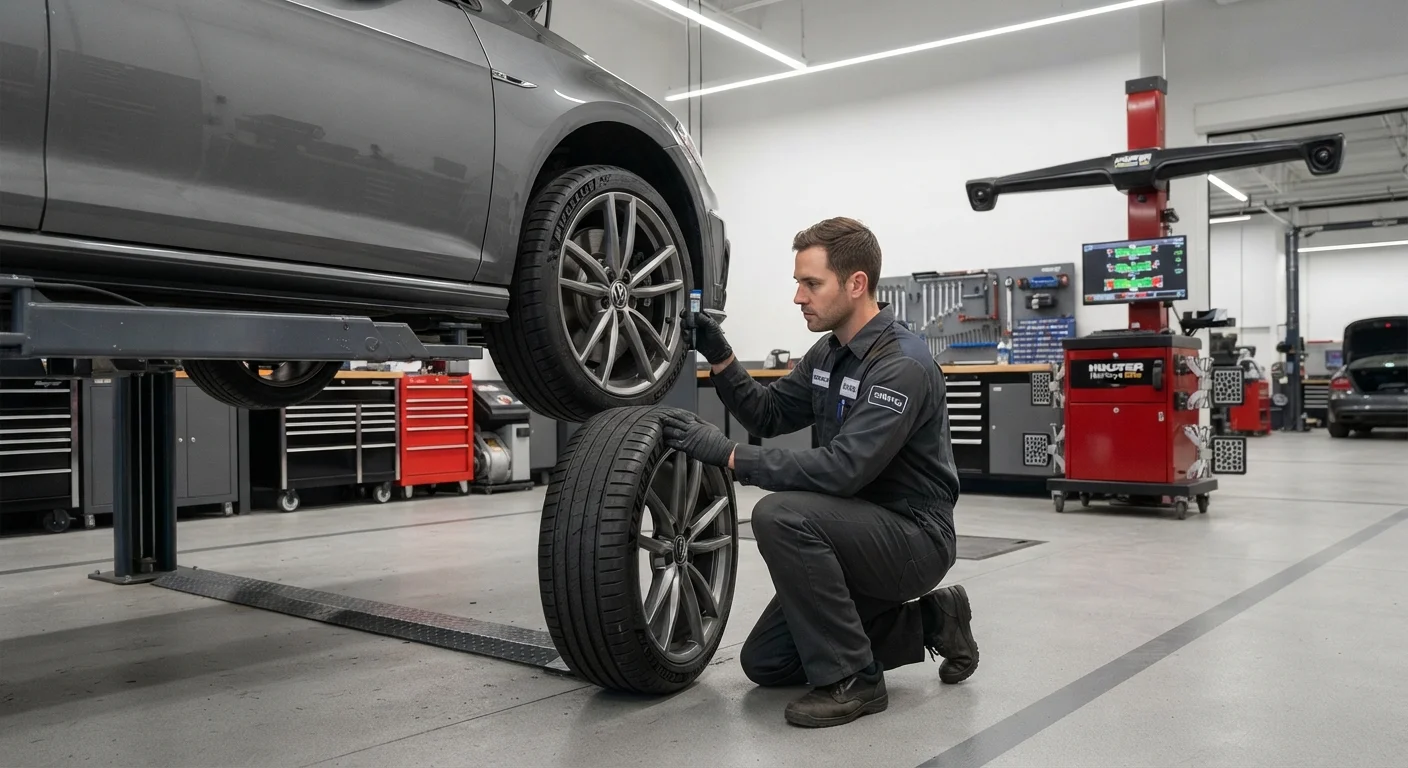
Photo: SummarizedReads.net | Just Read It! editorial
—— In This Article
Key Takeaways
- Rotation, balancing, and alignment are three separate services that address different problems.
- Skipping rotation causes uneven tyre wear that shortens tyre life and costs more over time.
- Balancing prevents vibrations that stress suspension components and reduce ride comfort.
- Alignment issues can cause rapid tread wear and compromise vehicle handling.
- Each service has a different recommended interval - knowing them prevents unnecessary spending.
- A single pothole or kerb strike can knock alignment and balance off simultaneously.
Tyre Rotation: Making Wear Even Across All Four Corners
Every tyre on your car wears differently depending on its position. Front tyres on front-wheel-drive vehicles wear faster because they handle both steering and acceleration forces. Rear tyres on any vehicle carry different loads. Left tyres experience different stress patterns than right tyres due to road camber and turning habits.
Rotation solves this by periodically moving each tyre to a different position - front to rear, side to side, or diagonally - following a pattern suited to your drivetrain. The goal is to equalize wear across all four tyres so they all reach the end of their usable life at roughly the same time.
The practical payoff is significant. A set of tyres that wears evenly will last considerably longer than a set where two tyres wear out early and must be replaced in pairs. Skipping rotation doesn't just shorten tyre life - it can also create handling imbalances when front and rear tread depths diverge substantially.
Tie Rotation to Your Oil Change Schedule
Pairing tyre rotation with oil changes is a practical way to stay consistent without tracking a separate interval. If your oil changes happen every 5,000 to 7,500 miles, the timing aligns well with typical rotation recommendations. Just confirm your owner's manual doesn't specify a different rotation interval for your vehicle.
Most vehicles follow one of several standard rotation patterns (forward cross, X-pattern, rearward cross). Your owner's manual specifies the correct one for your drivetrain. For more on how rotation fits into your broader service schedule, see Your Car's Maintenance Schedule, Decoded.
Wheel Balancing: Eliminating the Vibration You Feel at Speed
When a tyre and wheel assembly is perfectly balanced, its weight is evenly distributed around the axle. In practice, tyres are never perfectly uniform from the factory, and small imperfections in the rubber or the wheel itself create heavier and lighter spots. As the assembly spins at highway speeds, those imbalances produce vibration.
Balancing is done on a specialized machine that spins the tyre-and-wheel assembly and identifies where small counterweights need to be added to the rim. The fix is fast and inexpensive, but the consequences of ignoring it are not. Persistent vibration accelerates wear on suspension components, wheel bearings, and steering parts - all of which cost far more to replace than a balancing service.
Tyres should typically be balanced when first mounted, when rotation reveals a vibration issue, and periodically thereafter. A significant road impact is also reason enough to check balance, since it can shift the weight distribution of the assembly.
~$15-$75
Typical cost for a wheel balance per tyre
According to general industry pricing; costs vary by region and shop type.
~$75-$200
Typical cost for a full four-wheel alignment
Industry-standard range for passenger vehicles at independent shops and dealerships.
Up to 20%
Potential tyre life reduction from skipping rotation
Uneven wear from lack of rotation can meaningfully shorten how long a set of tyres lasts.
Wheel Alignment: Keeping Your Tyres Pointed the Right Way
Alignment refers to the precise angles at which your tyres contact the road. When those angles drift out of specification - through normal wear, road impacts, or suspension aging - tyres no longer roll straight and true. Instead, they scrub against the pavement at a slight angle, accelerating tread wear unevenly and often dramatically.
The most visible symptom is a car that pulls to one side when you release the steering wheel on a flat, straight road. You may also notice uneven tread wear - one edge of a tyre wearing faster than the other - or a steering wheel that sits off-center when driving straight.
Alignment adjustments are made at suspension and steering components, not the tyres themselves. A qualified mechanic uses alignment equipment to measure camber (vertical tilt of the wheel), toe (whether wheels point inward or outward), and caster (the angle of the steering axis), then adjusts them to factory specifications.
The broader picture matters here. Misaligned wheels affect not just tyre life but braking performance and stability. For context on how alignment fits alongside other wear components, see how your braking system works together.
Not All Vehicles Have Adjustable Alignment
Some modern vehicles have fixed suspension geometry with limited or no adjustment range. In those cases, a mechanic may identify an alignment issue that can only be corrected by replacing worn suspension components rather than making a simple adjustment. If your alignment is consistently drifting, mention it to your mechanic so they can inspect the underlying suspension for worn bushings or control arm damage.
Knowing When Each Service Is Actually Due
These three services run on different clocks. Understanding that distinction prevents both overspending and neglect.
- Rotation: Typically every 5,000-7,500 miles. Many drivers schedule it with oil changes.
- Balancing: When mounting new tyres, after any road impact, or when vibration appears. Otherwise, it isn't on a strict mileage schedule.
- Alignment: Annually as a general check, immediately after any significant impact, or whenever pulling or uneven wear is noticed.
Budget-conscious drivers sometimes delay these services to save money in the short term. But tyre replacement - running $150 to $300+ per tyre for most passenger vehicles - is far more expensive than any of these maintenance items. Rotation, balancing, and alignment are investments in the lifespan of tyres you've already paid for.
For a broader view of how these services fit into your vehicle's long-term upkeep, a structured maintenance framework can help you track what's due and when. If you're newer to car ownership, the basics of car maintenance is a practical starting point for building confidence with routine service decisions.
“Tyres are the only part of your vehicle that actually touches the road. Everything else - steering, braking, acceleration - depends on those four contact patches performing as designed. Maintenance that keeps them in good shape is never wasted money.”
— Consumer automotive guidance, General principle cited across vehicle safety education resources
This article is for general informational purposes. Maintenance intervals and service needs vary by vehicle - always consult your owner's manual and a qualified mechanic for guidance specific to your car.
Frequently Asked Questions

Auto Editorial Team
Auto Editorial Team is the collective byline for our editorial team and contributor network. Articles published under this byline or an editorial pen name are researched, written, and reviewed according to our editorial standards for clarity, consistency, and independence before publication.
View author profile