
Brake Pads, Rotors, and Calipers: How the Stopping System Works Together
Understanding your braking system makes it easier to spot warning signs early. Here's how each component contributes—and what wear looks like over time.
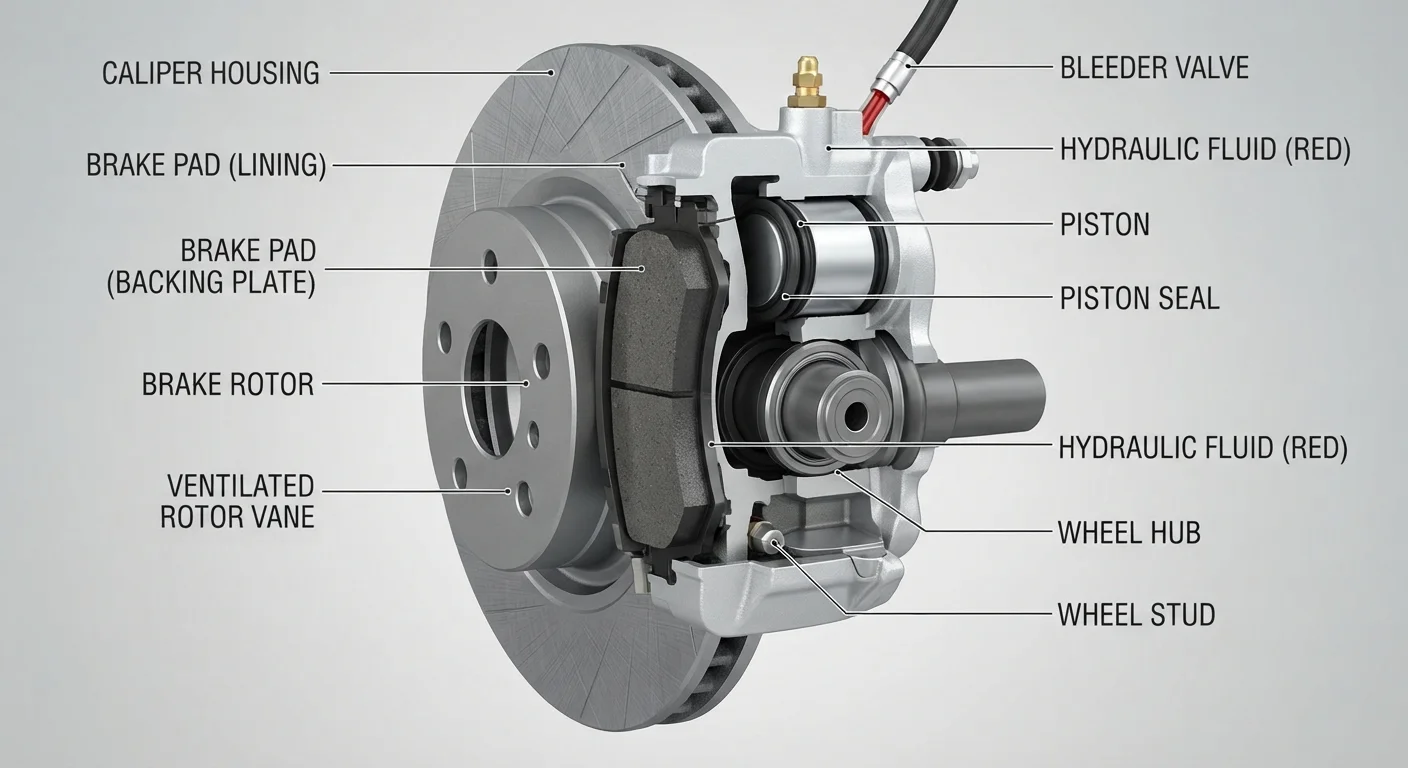
Photo: SummarizedReads.net | Just Read It! editorial
—— In This Article
Key Takeaways
- Brake pads, rotors, and calipers each play a distinct role and wear at different rates.
- Worn pads are the most frequent brake service, typically needed every 25,000-65,000 miles depending on driving habits.
- Ignoring pad wear can cause rotor damage, turning a straightforward pad replacement into a costlier repair.
- Squealing, grinding, or a soft pedal are the most common signals that your brake system needs attention.
- A qualified mechanic should inspect your brakes at least once a year or any time you notice unusual sounds or pedal feel.
Three Components, One Purpose
Your brake system is one of the most safety-critical systems on your vehicle, yet most drivers only think about it when something feels wrong. Understanding how the three primary components-pads, rotors, and calipers-work together helps you recognize early warning signs and avoid the kind of deferred-maintenance spiral described in our guide on how neglected small repairs become large bills.
The process starts the moment your foot touches the brake pedal. That mechanical input is converted into hydraulic pressure through the brake fluid (one of the six critical fluids covered in Checking Your Fluids), which travels through brake lines to the caliper at each wheel.
25K-65K mi
Typical brake pad service interval
Pad lifespan varies widely based on driving style, vehicle weight, and pad material-city stop-and-go driving wears pads faster than highway driving.
~$150-$300
Average pad replacement cost per axle
Industry estimates for parts and labor on a standard passenger vehicle; costs vary significantly by region, vehicle type, and shop.
3mm
Minimum safe brake pad thickness
Most manufacturers and mechanics recommend inspection or replacement when pad material reaches 3mm; below 2mm is considered unsafe.
What Each Component Actually Does
Brake Pads
Brake pads are the friction material that physically contacts the rotor. They're bonded to a metal backing plate and designed to wear down gradually-they are, by design, the sacrificial component in the system. Pad composition varies: organic pads run quieter but wear faster; semi-metallic pads handle heat better and last longer; ceramic pads offer low dust and consistent performance across temperature ranges.
Rotors
The rotor (also called a disc) is the large metal disc that spins with the wheel. When the caliper clamps the pads against it, kinetic energy from the moving vehicle is converted into heat through friction, and the wheel slows down. Rotors need adequate thickness to absorb and dissipate that heat safely-below a minimum thickness, heat management becomes inadequate and they may crack or warp under stress.
Calipers
The caliper is the hydraulic clamp that squeezes the brake pads against the rotor. Most modern vehicles use a floating caliper design, which uses one or two pistons on one side and slides on guide pins to apply even pressure. Fixed calipers, found more often on performance vehicles, have pistons on both sides and provide more consistent clamping force. The caliper also contains rubber seals and boots that keep fluid in and contaminants out-when these degrade, pistons can seize.
Get a Brake Inspection Annually
Even if you haven't noticed any symptoms, having a mechanic visually inspect your pads and rotors at least once a year-or during every other tire rotation-is good practice. Brake wear isn't always noisy in its early stages, and catching thin pads before they reach the metal-on-metal stage almost always saves money. Tyre rotations are a natural opportunity; see our guide on tyre rotation and what it involves for more context.
How Wear Progresses-and Why Order Matters
Brake pads wear first, and intentionally so. As the friction material thins, metal wear indicators begin contacting the rotor surface, producing a high-pitched squeal that's designed to alert you. At this stage, the repair is straightforward: replace the pads. If that warning is ignored, the metal backing plate eventually contacts the rotor directly, scoring deep grooves into its surface. What would have been a pad replacement now includes rotor replacement too.
Continued neglect stresses the caliper. A caliper that's running hot due to metal-on-metal contact-or one that's partially seized and dragging-can fail entirely. Caliper replacement is significantly more labor-intensive and costly than a pad swap. This is the escalation pattern that makes proactive brake inspection a genuinely cost-conscious habit, not just a safety one. For a broader framework on staying ahead of this kind of cascade, see our vehicle maintenance framework.
Recognizing the Warning Signs
Brake problems rarely appear without warning. The signals are usually audible or tactile:
- Squealing during braking: Usually indicates pads approaching the end of their service life. Normal at first stop in wet weather; persistent squealing warrants inspection.
- Grinding or metal-on-metal noise: Pads are likely fully worn. Rotor damage may already be occurring.
- Pulsating or vibrating pedal: Often indicates uneven rotor wear or rotor runout. The pedal pulses in rhythm with wheel rotation.
- Soft or spongy pedal: Points to air in the brake lines or a fluid leak-potentially a caliper seal failure. This is a more urgent issue requiring prompt professional attention.
- Vehicle pulling to one side when braking: May indicate a seized caliper applying uneven pressure, or uneven pad wear across axles.
If your dashboard brake warning light activates, don't ignore it-our companion article on dashboard warning lights explains what each indicator means and how urgently to respond.
This article is for general informational purposes only. Brake system inspection and repair should be performed by a qualified mechanic. Do not attempt brake repairs without appropriate training and tools, as braking system integrity is critical to vehicle safety.
Frequently Asked Questions

Auto Editorial Team
Auto Editorial Team is the collective byline for our editorial team and contributor network. Articles published under this byline or an editorial pen name are researched, written, and reviewed according to our editorial standards for clarity, consistency, and independence before publication.
View author profile