
Warning Lights on Your Dashboard and What They're Telling You
A plain-language reference to the most common dashboard warning lights—what triggers them, how urgent each is, and when you can wait vs. act immediately.
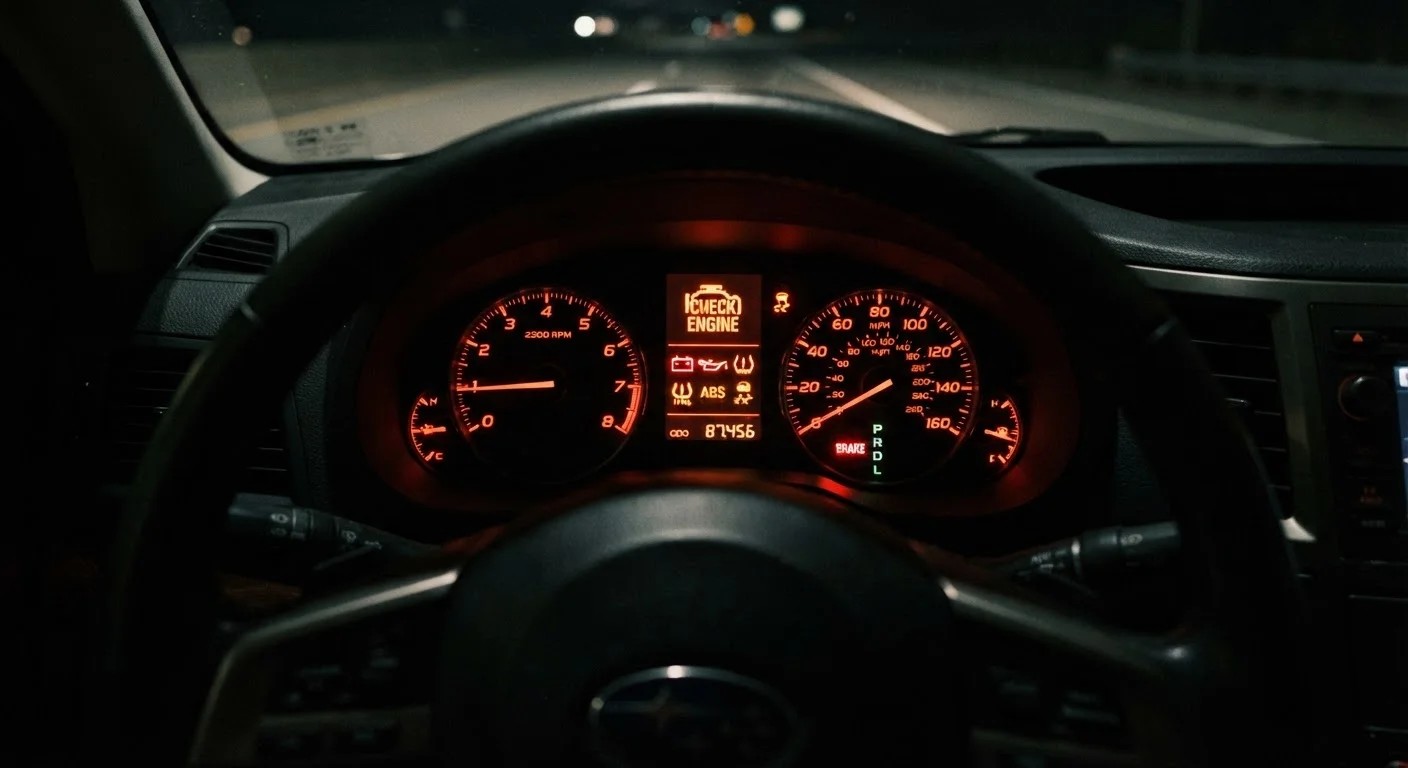
Photo: SummarizedReads.net | Just Read It! editorial
—— In This Article
How Dashboard Warning Lights Work
Modern vehicles use an onboard diagnostic system (OBD) to continuously monitor dozens of sensors throughout the engine, transmission, brakes, and emissions systems. When something falls outside normal operating parameters, the system triggers a dashboard warning light. The color of the light matters as much as the symbol itself.
- Red lights signal immediate danger-stop driving or pull over safely as soon as possible.
- Yellow/amber lights indicate a developing problem that needs attention soon but usually isn't an emergency right now.
- Green or blue lights are informational (high beams on, turn signal active) and require no action.
Before referencing any guide, keep your owner's manual in the glove box. Symbols vary slightly by manufacturer, and your manual is always the authoritative source for your specific vehicle. This article covers the most common lights found across mainstream passenger vehicles in the U.S.
| OBD-II standardization year | 1996 (all U.S. passenger vehicles) (U.S. EPA and CARB regulatory requirement) |
| Red light response | Pull over and stop driving promptly |
| Amber light response | Schedule service within days to a couple of weeks |
| Fault code readers | Available free at many U.S. auto parts retailers |
| TPMS inflation reference | Driver's door jamb sticker (not tire sidewall) |
| Flashing CEL urgency | Higher than steady CEL - reduce speed and seek prompt evaluation |
The Warning Lights You're Most Likely to See
Check Engine Light (CEL) - Perhaps the most misunderstood light on any dashboard. A steady amber CEL means the OBD system has logged a fault code-anything from a loose gas cap to a failing oxygen sensor. A flashing CEL is more urgent and often indicates engine misfiring that can damage the catalytic converter. A flashing light warrants reducing speed and seeking prompt mechanical evaluation. For steady CEL guidance, see when a repair is DIY-appropriate versus mechanic territory.
Oil Pressure Warning - A red oil can symbol means oil pressure has dropped to a dangerous level. Pull over and shut off the engine promptly. Continuing to drive risks severe engine damage within minutes. Check your oil level once the engine has cooled; low oil is one possible cause, but a failing oil pump is another. See how to check your engine oil and other critical fluids for the correct procedure.
Temperature Warning - A red thermometer or the letters TEMP indicate your engine is overheating. Turn off the A/C, pull over safely, and let the engine cool before opening the hood. Never open a hot radiator cap. Causes range from low coolant to a failed water pump or blocked radiator.
Battery / Charging System - An amber or red battery symbol indicates the charging system isn't maintaining adequate voltage. Your battery is discharging while driving. You may have 20-60 minutes before the vehicle stalls, depending on electrical load. Drive directly to a repair shop or safe stopping point.
Brake Warning Light - If this red light appears while driving (not just at startup with the parking brake engaged), check that the parking brake is fully released first. If it remains on, it may indicate low brake fluid or a hydraulic fault. Brake system concerns should always be evaluated by a qualified mechanic promptly-braking performance directly affects safety. Learn more at how your braking system components work together.
Tire Pressure Monitoring System (TPMS) - An amber horseshoe symbol with an exclamation mark means one or more tires is significantly under-inflated. Check pressure with a gauge and inflate to the spec shown on the driver's door jamb sticker-not the number printed on the tire sidewall. Driving on under-inflated tires reduces fuel economy and increases blowout risk.
OBD (Onboard Diagnostics)
A standardized computer system built into vehicles since 1996 that monitors engine, transmission, and emissions performance. When a fault is detected, it stores a code and may trigger a warning light.
Fault Code (DTC)
A Diagnostic Trouble Code stored by the OBD system when a sensor reading falls outside normal range. Codes are read with a scan tool and help technicians narrow down the source of a problem.
TPMS
Tire Pressure Monitoring System. A sensor-based system that alerts the driver when one or more tires drops significantly below the recommended inflation level.
Catalytic Converter
An emissions control device in the exhaust system that converts harmful gases into less toxic compounds. Engine misfires can overheat and permanently damage it.
Oil Pressure
The force at which oil circulates through engine components. Insufficient pressure means parts aren't being lubricated, which can cause rapid, severe engine damage.
Charging System
The combination of the alternator, battery, and associated wiring that generates and stores electrical power while the vehicle is running. A failure means the battery drains while driving.
When to Act Immediately vs. When You Can Wait
A useful rule of thumb: red means stop, amber means schedule. Red warning lights involve conditions that can cause irreversible mechanical damage or create an immediate safety hazard within a short drive. Amber lights typically indicate a developing problem that should be addressed within days to a few weeks-but you should still get a diagnostic scan to understand the specific fault code.
Most auto parts retailers in the U.S. will read OBD fault codes at no charge, which gives you a starting point before committing to a repair. Note that a fault code points to a system or sensor, not always a specific failed part-professional diagnosis is still recommended for accurate repair decisions.
Staying current with your vehicle's service intervals reduces the likelihood of unexpected warning lights. See how to decode your car's recommended maintenance schedule for a practical breakdown of service milestones. And if you're new to car ownership, this first-timer's maintenance overview is a solid foundation. Before any long drive, a quick systems check is worthwhile-pre-trip checks every driver should know outlines what's worth inspecting yourself.
A Word on Resetting Warning Lights
Clearing a fault code with a scan tool makes the warning light go off, but it does not fix the underlying problem. The light will typically return once the vehicle completes its diagnostic cycle. Always address the root cause before or instead of simply resetting the code. A cleared code can also temporarily mask emissions issues that would otherwise be caught at a state inspection.

Auto Editorial Team
Auto Editorial Team is the collective byline for our editorial team and contributor network. Articles published under this byline or an editorial pen name are researched, written, and reviewed according to our editorial standards for clarity, consistency, and independence before publication.
View author profile