
Body Moisturising After a Shower: Why Timing and Technique Matter
The science behind post-shower moisturising and how small changes in timing and application make a real difference to skin hydration.
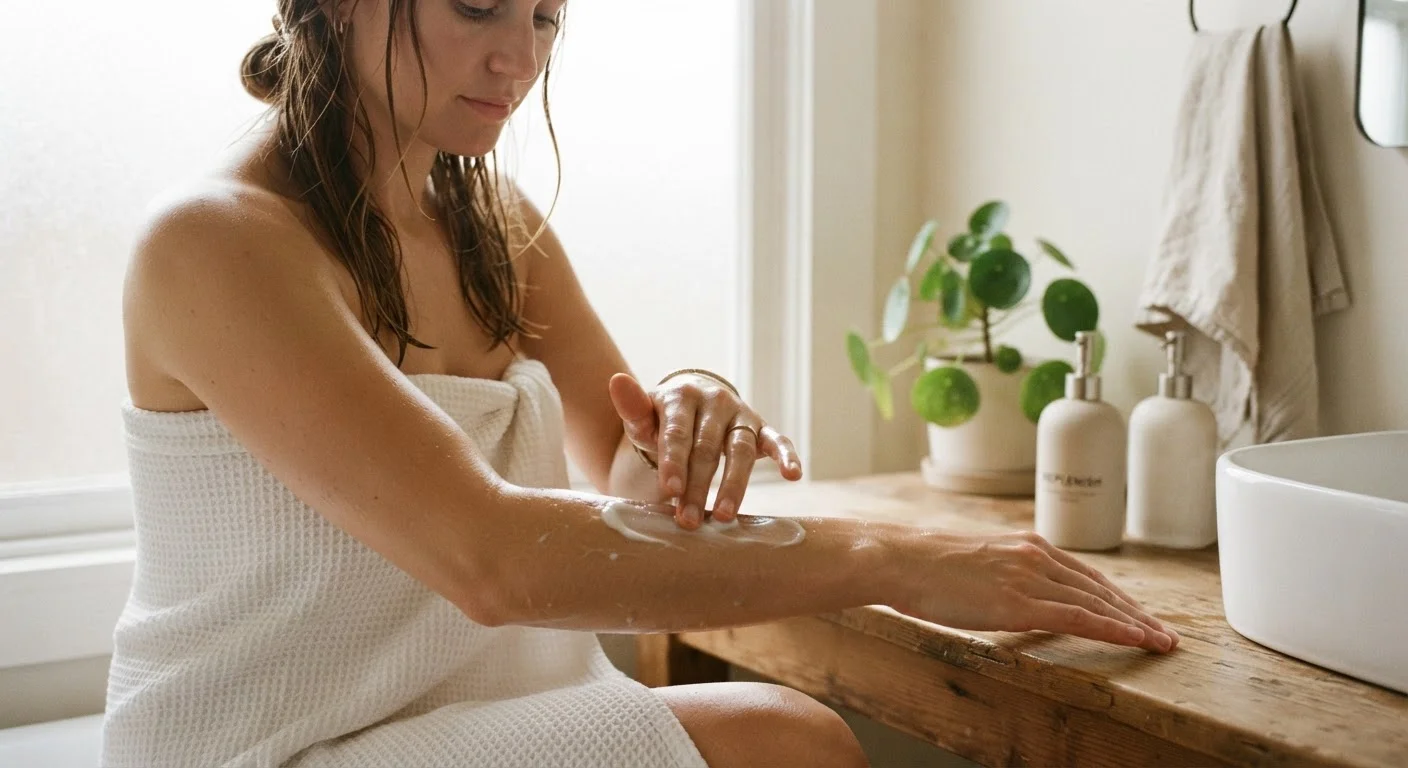
Photo: SummarizedReads.net | Just Read It! editorial
—— In This Article
Key Takeaways
- Apply moisturiser within two to three minutes of stepping out of the shower for best results.
- Pat skin damp - not soaking wet, not fully dry - before applying product.
- Hot water strips the skin's natural oils; lukewarm showers preserve the moisture barrier.
- Thick creams and ointments seal in moisture more effectively than thin lotions for dry skin types.
- Consistent daily application matters more than occasional heavy applications.
The Two-Minute Window That Changes Everything
Most people apply body lotion whenever they remember - sometimes right after a shower, sometimes an hour later. But timing is one of the most impactful variables in whether your moisturiser actually works.
When you step out of the shower, your skin's surface is coated in water. Within minutes, that water begins to evaporate - and it takes some of your skin's own natural moisture with it, a process called transepidermal water loss (TEWL). Applying moisturiser while the skin is still lightly damp creates a physical seal that slows this evaporation significantly.
Dermatologists commonly recommend a window of two to three minutes post-shower. After that, the surface water is largely gone, and you're applying product to already-drying skin rather than locking hydration in. Setting a habit of reaching for your moisturiser before you even leave the bathroom can shift how effective your routine feels, without changing what you're using.
To understand why this matters at the ingredient level, see our explainer on the difference between hydration and moisturisation.
How to Prepare Your Skin Before You Apply Anything
The condition of your skin when you apply product is just as important as timing. Two common mistakes cancel out much of the benefit:
- Showering in hot water: High temperatures dissolve the skin's lipid barrier - the natural oils that help hold moisture in. The skin feels tight and dry immediately after because the barrier has been temporarily disrupted. Switching to lukewarm water can noticeably reduce this effect.
- Towelling off completely: Vigorous drying removes the surface water that makes post-shower moisturising so effective. Instead, pat skin gently to remove excess dripping water, then stop. A light film of dampness is exactly what you want before applying.
Think of it as a two-step prep: a gentler shower, followed by a strategic towel pat rather than a full dry-down.
Keep Your Moisturiser Within Arm's Reach
Place your body lotion or cream on the bathroom counter or shelf before you step into the shower. Having it immediately accessible removes the friction that causes most people to delay application. The easier the habit is to execute, the more consistently it gets done - and consistency is what delivers results.
Technique: Application Methods That Actually Reach the Skin
Squeezing lotion onto skin and rubbing briskly is the default for most people - but pressure and direction matter more than most realise.
Apply product using long, sweeping strokes in the direction of hair growth. This reduces the likelihood of trapping product around hair follicles, which can occasionally cause irritation. Use enough product that your hands glide smoothly rather than dragging - this signals you're using a sufficient quantity to cover the area. On rough-textured zones like knees, elbows, and heels, apply a slightly thicker layer and give it a moment before getting dressed.
Layering order also plays a role - if you use a body oil and a lotion, the oil typically goes on last to seal everything in, not first.
2-3 min
Optimal post-shower moisturising window
Skin scientists and dermatologists generally cite this timeframe as the point at which surface water is still present and occlusion is most effective.
30-40%
Water content in healthy stratum corneum
The outermost skin layer functions optimally when its water content stays within this range, according to dermatological literature on skin barrier function.
Daily
Frequency recommended for visible improvement
Skin barrier research suggests consistent daily application produces better long-term results than infrequent intensive moisturising sessions.
Choosing the Right Product Texture for Your Skin
The format of your moisturiser determines how much occlusion - barrier protection - it provides. Understanding this helps you match the product to your actual skin needs rather than defaulting to whatever's on sale.
- Lotions: High water content, lightweight, fast-absorbing. Suitable for normal to slightly dry skin, or humid climates.
- Creams: Balanced water and oil content. A practical everyday option for most skin types.
- Ointments and balms: Mostly oil-based, thick, and highly occlusive. Effective for very dry or compromised skin, though they feel heavier and take longer to absorb.
- Body oils: No water content; work primarily as emollients rather than humectants. Best used in combination with a water-based product, or over damp skin.
For a plain-English breakdown of how ingredient categories like humectants, emollients, and occlusives work together, our article on body lotion ingredients worth understanding explains the science without the marketing language.
This article provides general skincare information for educational purposes and is not a substitute for advice from a qualified dermatologist or healthcare professional. If you have a skin condition, sensitivity, or concern, please consult a medical provider.
Frequently Asked Questions

Beauty Editorial Team
Beauty Editorial Team is the collective byline for our editorial team and contributor network. Articles published under this byline or an editorial pen name are researched, written, and reviewed according to our editorial standards for clarity, consistency, and independence before publication.
View author profile