
Drugstore Shampoo vs. Salon Shampoo: What the Ingredients Actually Tell You
A clear look at how drugstore and salon shampoos differ in formulation, so you can decide what your hair actually needs.
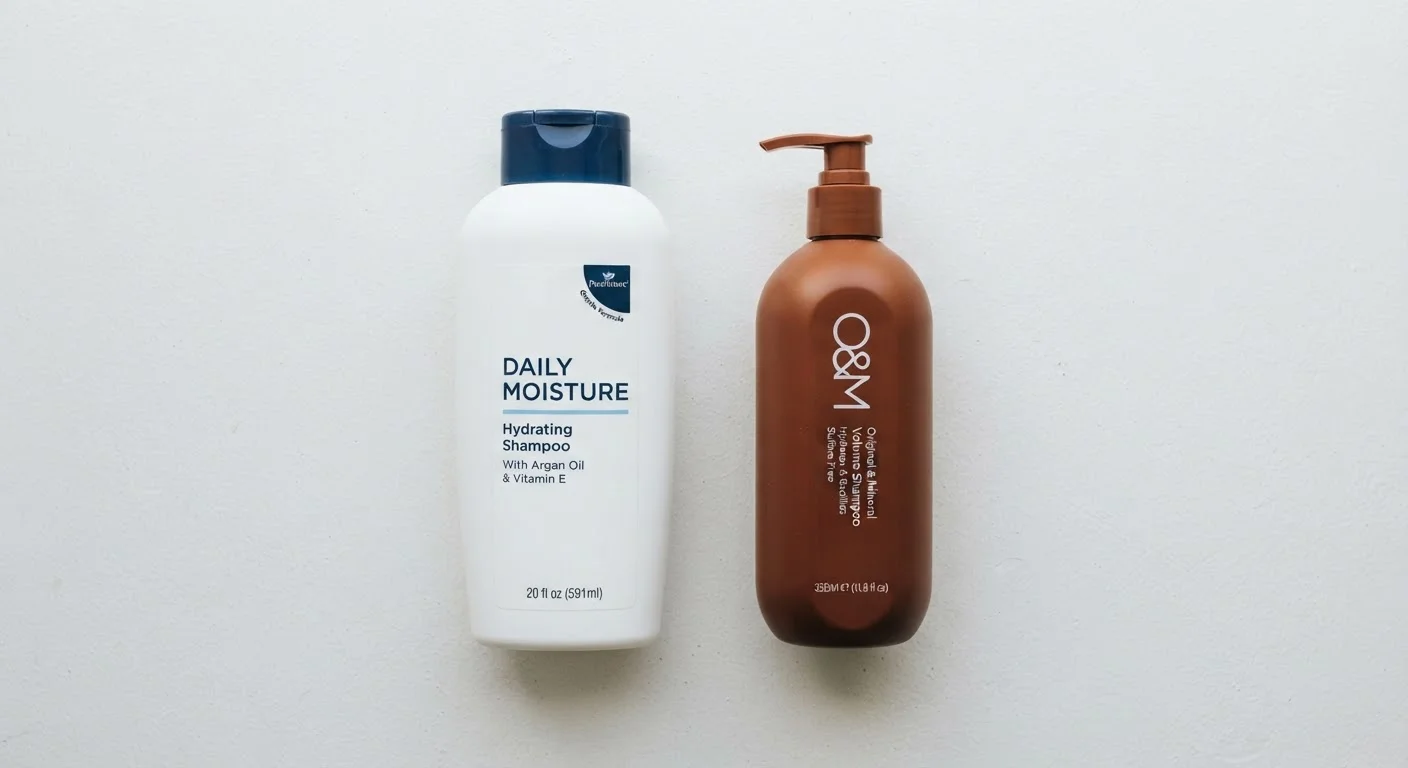
Photo: SummarizedReads.net | Just Read It! editorial
—— In This Article
Key Takeaways
- Ingredient concentration and quality of surfactants are the real differentiators between price tiers.
- Sulfate-free formulas exist at both price points; the label matters more than the retailer.
- Salon shampoos are often more concentrated, meaning you may need less product per wash.
- Many drugstore formulas are genuinely effective for healthy, unprocessed hair.
- No shampoo at any price point can repair structurally damaged hair - that happens with conditioning treatments.
- Your scalp condition and hair history should drive your choice, not marketing claims alone.
How Shampoo Is Formulated - The Basics
Every shampoo, regardless of price, is built on the same foundational structure: water, a primary surfactant (the cleansing agent), co-surfactants, conditioning agents, preservatives, and fragrance. The surfactant is the single most important ingredient because it determines how aggressively the formula strips oil and debris from your scalp and strands.
The most commonly used surfactants in drugstore shampoos are sodium lauryl sulfate (SLS) and sodium laureth sulfate (SLES). Both produce a rich lather and clean effectively, but SLS in particular can be drying for people with fine, color-treated, or naturally dry hair. Salon shampoos, especially those positioned for damaged or color-treated hair, more frequently use milder surfactants such as sodium cocoyl isethionate, decyl glucoside, or cocamidopropyl betaine - ingredients that clean without stripping as aggressively.
That said, the surfactant divide is not absolute. Plenty of drugstore shampoos now use gentle, sulfate-free cleansing agents. The honest takeaway: read the ingredient list, not just the price tag. For a deeper understanding of why scalp chemistry matters in this equation, see our guide to scalp health.
| Criterion | Drugstore Shampoo | Salon Shampoo |
|---|---|---|
| Primary surfactant type | Often SLS or SLES; sulfate-free options available | More frequently mild or amino acid-based surfactants |
| Ingredient concentration | Standard; may require more product per use | Often more concentrated; less needed per wash |
| pH calibration | Variable; not always disclosed | More commonly pH-balanced to 4.5-5.5 |
| Active ingredients for scalp | Present in medicated lines; variable concentration | Present in targeted lines; often at higher concentrations |
| Fragrance and dye load | Often higher; varies widely by product | Varies; some professional lines are fragrance-minimized |
| Price per bottle | Generally lower upfront cost | Higher upfront cost, may last longer per bottle |
| Suitability for color-treated hair | Some options available; varies by formula | More targeted options with color-safe formulations |
Where the Real Differences Show Up
Beyond surfactant choice, three factors genuinely separate many salon formulas from their drugstore counterparts: ingredient concentration, pH calibration, and active ingredient inclusion.
Concentration: Salon shampoos are often more concentrated, which means a smaller amount of product is needed to achieve the same cleansing effect. This doesn't make them inherently superior, but it does mean the per-wash cost gap can be narrower than the sticker price suggests.
pH balance: Hair strands and scalp skin function best around a slightly acidic pH (4.5-5.5). Some salon formulas are specifically pH-calibrated to stay in this range, which helps the cuticle (the outermost layer of each hair strand) lie flat - reducing frizz and improving shine. Many drugstore formulas are also acidic, but the precision is not always guaranteed or disclosed on the label.
Active ingredients: Shampoos marketed for dandruff, hair thinning, or scalp sensitivity - at any price point - sometimes include active ingredients like zinc pyrithione, ketoconazole, or salicylic acid. The concentration and delivery system of these actives can vary meaningfully between formulas. If you're relying on a shampoo for a specific scalp condition, it's worth comparing the active ingredient percentage rather than the brand tier alone.
~4.5-5.5
Ideal scalp and hair pH range
Dermatologists generally cite this pH range as optimal for hair cuticle integrity and scalp barrier function.
Top 5
Ingredients to read before buying
Cosmetic chemists note that ingredients listed in the first five positions make up the bulk of a formula's composition by weight.
1-3%
Typical active ingredient concentration in OTC anti-dandruff shampoos
U.S. FDA monograph requirements govern the permitted concentration range for active ingredients in over-the-counter dandruff shampoos.
One area where both price tiers fall short equally: structural repair. No shampoo can rebuild the internal protein structure (cortex) of damaged hair. That's the role of protein treatments and deep conditioners. For more context on what cleansing can and cannot accomplish, our article on co-washing versus shampooing is a useful companion read.
Making a Smart Choice Without Overspending
The most practical approach is to let your hair's current condition - not marketing language or price - guide your purchase. Here's a simple framework:
- Identify your primary concern. Is it oil control, dryness, color preservation, or scalp irritation? Match the formula's stated purpose and key ingredients to that concern.
- Check the first five ingredients. Ingredients are listed by concentration (highest first). If a moisturizing oil or conditioning agent appears in the first five spots of a drugstore formula, that's meaningful. If it's listed near the end of a salon formula, its impact may be minimal regardless of price.
- Look for what's absent. If your scalp is sensitive, look for formulas without added fragrance or dyes - these are common irritants present at all price points.
- Consider your wash frequency. Daily washers may actually benefit from gentler, lower-cost formulas rather than potent salon cleansers used too frequently.
It's also worth remembering that the brand tier itself isn't a reliable quality signal - a pattern that holds across many product categories. Our breakdown of generic versus name-brand products explores this dynamic in more detail.
A Note on 'Professional Formula' Claims
The term 'professional' or 'salon-grade' is not regulated by the FDA or any cosmetic authority in the U.S. Any brand can use these terms on packaging regardless of formulation quality. This makes independent ingredient review - rather than label language - the most reliable evaluation method. Comparing ingredient lists between formulas you're considering is more informative than channel or branding cues alone.
This article is for general informational purposes only and is not medical or dermatological advice. If you have a persistent scalp condition, consult a licensed dermatologist before changing your hair care routine.

Beauty Editorial Team
Beauty Editorial Team is the collective byline for our editorial team and contributor network. Articles published under this byline or an editorial pen name are researched, written, and reviewed according to our editorial standards for clarity, consistency, and independence before publication.
View author profile