
Co-Washing vs. Shampooing: Which Cleansing Approach Suits Your Hair Type?
Co-washing and shampooing serve different hair needs. Here's how to compare the two methods and find what works for your texture.
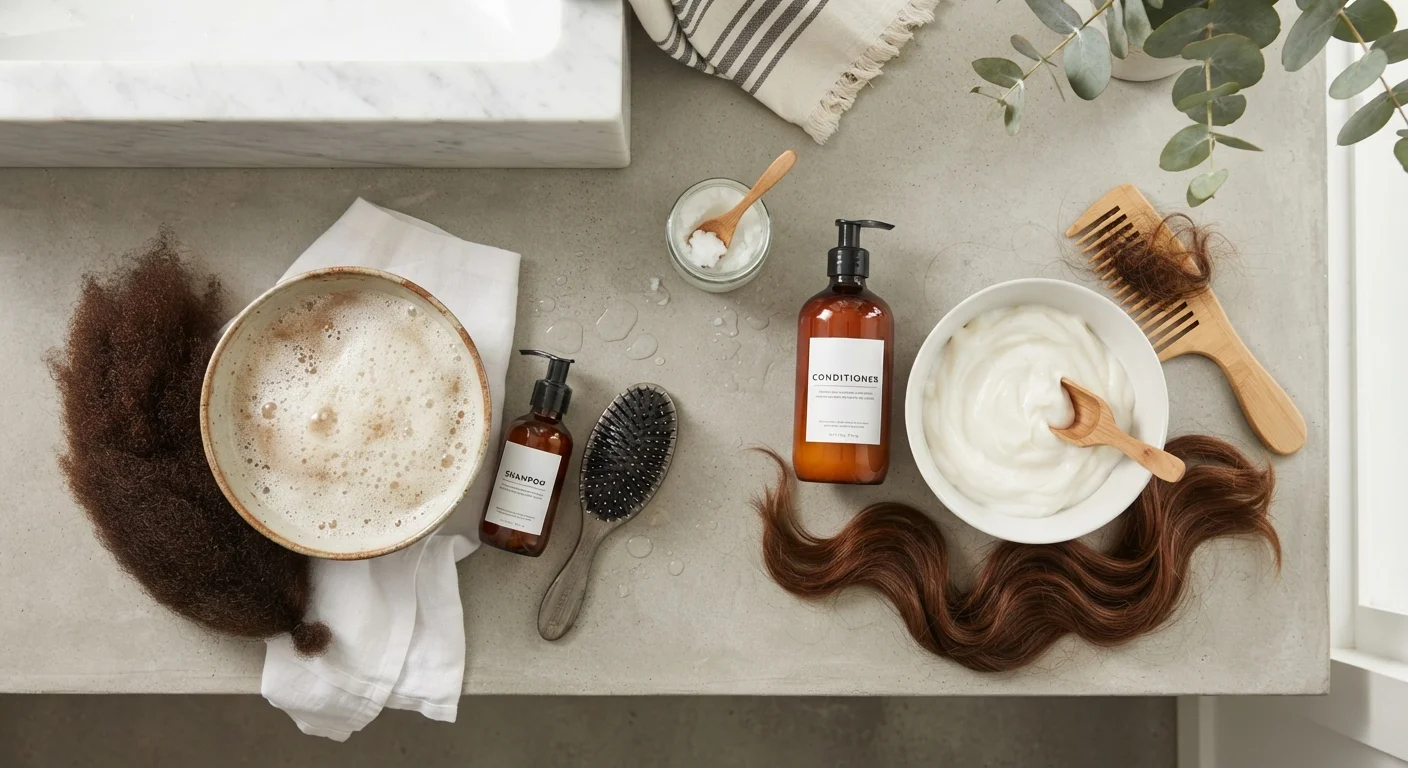
Photo: SummarizedReads.net | Just Read It! editorial
—— In This Article
Key Takeaways
- Shampoo uses surfactants to lift oil and buildup; co-washing uses conditioner to cleanse gently without stripping.
- Co-washing works best for dry, curly, or coily textures; shampooing suits oily scalps and fine or straight hair.
- Neither method is universally superior - hair porosity, scalp oiliness, and styling habits all influence the right choice.
- Some people combine both methods, shampooing occasionally and co-washing in between, for a balanced routine.
- Hard water and heavy product use can reduce co-washing effectiveness and may require periodic clarifying.
What Each Method Actually Does
Despite both being marketed as cleansing routines, shampoo and co-washing work through different chemistry. Understanding that difference helps you choose - or combine - them more effectively.
Shampoo relies on surfactants - molecules with a water-attracting end and an oil-attracting end. When you lather and rinse, surfactants bind to sebum, product residue, and environmental debris, then carry them down the drain. This is efficient, but the same action that removes buildup can also strip away some of the scalp's natural oils, leaving strands temporarily dry.
Co-washing (short for conditioner washing) uses a conditioner or a specially formulated co-wash product in place of shampoo. These products contain milder cleansing agents - often fatty alcohols and emulsifiers - that loosen light dirt through gentle friction without aggressively stripping the hair shaft. The result is a cleanse that leaves more moisture intact.
Whether one approach fits your life better depends less on trend and more on your scalp's oil production, your hair's structural texture, and your styling habits. For a fuller picture of how washing habits affect hair health overall, see common hair washing mistakes worth avoiding.
| Criterion | Traditional Shampooing | Co-Washing |
|---|---|---|
| Cleansing mechanism | Surfactants strip oil and buildup | Emulsifiers loosen light dirt gently |
| Moisture retention | Lower - can strip natural oils | Higher - preserves hydration |
| Best scalp type | Oily or combination scalp | Dry or balanced scalp |
| Best hair texture | Fine, straight, or wavy | Curly, coily, or dry/damaged |
| Product buildup removal | Effective on heavy buildup | Limited with heavy styling products |
| Frequency flexibility | Daily to weekly depending on need | Suited to every 2-3 days |
| Cost per wash | Generally lower per use | Conditioner used in larger amounts |
| Hard water compatibility | Varies by formula | Can be reduced by mineral deposits |
Matching the Method to Your Hair Type
Hair type isn't just curl pattern - it includes porosity (how readily strands absorb and lose moisture), scalp oiliness, and thickness. Each factor shapes which cleansing approach makes sense.
When Shampooing Makes More Sense
- Straight or wavy hair with a naturally oily scalp: Sebum travels easily from root to tip, meaning buildup accumulates faster. A surfactant shampoo cuts through this efficiently.
- Fine hair: Conditioner residue can collapse fine strands, making co-washing alone likely to leave hair feeling limp or heavy.
- Scalp conditions like dandruff or seborrheic dermatitis: Medicated shampoos are often part of a clinician's recommendation for these conditions - co-washing would not deliver the same targeted ingredients. Always consult a dermatologist for scalp conditions before changing your routine.
When Co-Washing Makes More Sense
- Coily or tightly curled hair (Type 3c-4c): The spiral shape of these strands physically slows sebum travel, making scalps drier and strands more fragile. Frequent shampooing can worsen this.
- Chemically processed hair: Bleached, permed, or relaxed hair has a disrupted cuticle layer, making it highly porous and prone to moisture loss after surfactant exposure.
- Dry or high-porosity hair: High-porosity hair absorbs moisture quickly but loses it just as fast; co-washing limits additional drying from harsh surfactants.
If you live in an area with hard water, it's worth knowing that mineral deposits can interact with both methods - sometimes reducing co-washing's effectiveness entirely. Hard water and hair is a topic worth exploring if your hair feels stiff or dull despite a consistent routine.
A Note on Scalp Health and Medical Conditions
Co-washing is a general hair care strategy, not a treatment for scalp conditions. If you experience persistent itching, flaking, hair loss, or scalp irritation, these may signal an underlying condition that warrants professional evaluation. A board-certified dermatologist or trichologist can assess your scalp and guide you toward appropriate cleansing and treatment options. General hair care advice is not a substitute for that guidance.
Building a Routine That Actually Works
For many people, a hybrid approach makes the most practical sense. A common pattern: co-wash two to three times per week to maintain moisture, then use a clarifying or regular shampoo once every one to two weeks to remove accumulated buildup. This cadence works especially well for curly and coily textures that still use some styling products.
A few practical guidelines:
- Start with your scalp, not your ends. Whether shampooing or co-washing, the goal is scalp cleansing - the ends are rinsed as water travels down.
- Use enough product to create slip. Co-washing particularly requires enough conditioner to allow your fingers to move through strands without tugging, which is where the gentle cleansing friction happens.
- Rinse thoroughly. Conditioner left on the scalp can clog follicles over time. Both methods require a complete rinse.
- Reassess seasonally. Scalp oiliness often changes with humidity, season, and hormonal shifts. What works in winter may not suit summer.
Pairing your cleansing approach with thoughtful drying habits matters too. See air-drying vs. heat styling trade-offs if you're also reconsidering how you finish your routine. And if you want to audit your overall hair care habits methodically, a weekly hair care audit can surface gaps you might not notice day-to-day.
~65%
Of women report dry or damaged hair
According to industry surveys cited in trichology literature, a significant majority of women identify dryness or damage as their primary hair concern, making moisture-preserving routines widely relevant.
2-4x
More conditioner used per co-wash session
Hair care educators generally note that effective co-washing requires substantially more product than a standard rinse-out conditioning step, which affects overall product cost and sustainability.
Finally, ingredient labels matter. If you're curious how formulations differ across product tiers, drugstore vs. salon shampoo ingredients breaks down what the label actually tells you.
This article is for general informational purposes only and is not a substitute for professional advice from a licensed dermatologist or trichologist. If you have a scalp condition or medical concern related to hair loss or scalp health, please consult a qualified healthcare professional.

Beauty Editorial Team
Beauty Editorial Team is the collective byline for our editorial team and contributor network. Articles published under this byline or an editorial pen name are researched, written, and reviewed according to our editorial standards for clarity, consistency, and independence before publication.
View author profile