
Hard Water and Hair: What's Actually Happening and How to Adapt
If your hair feels dull or stiff despite good habits, your water supply may be a factor. Learn what hard water does and practical ways to respond.
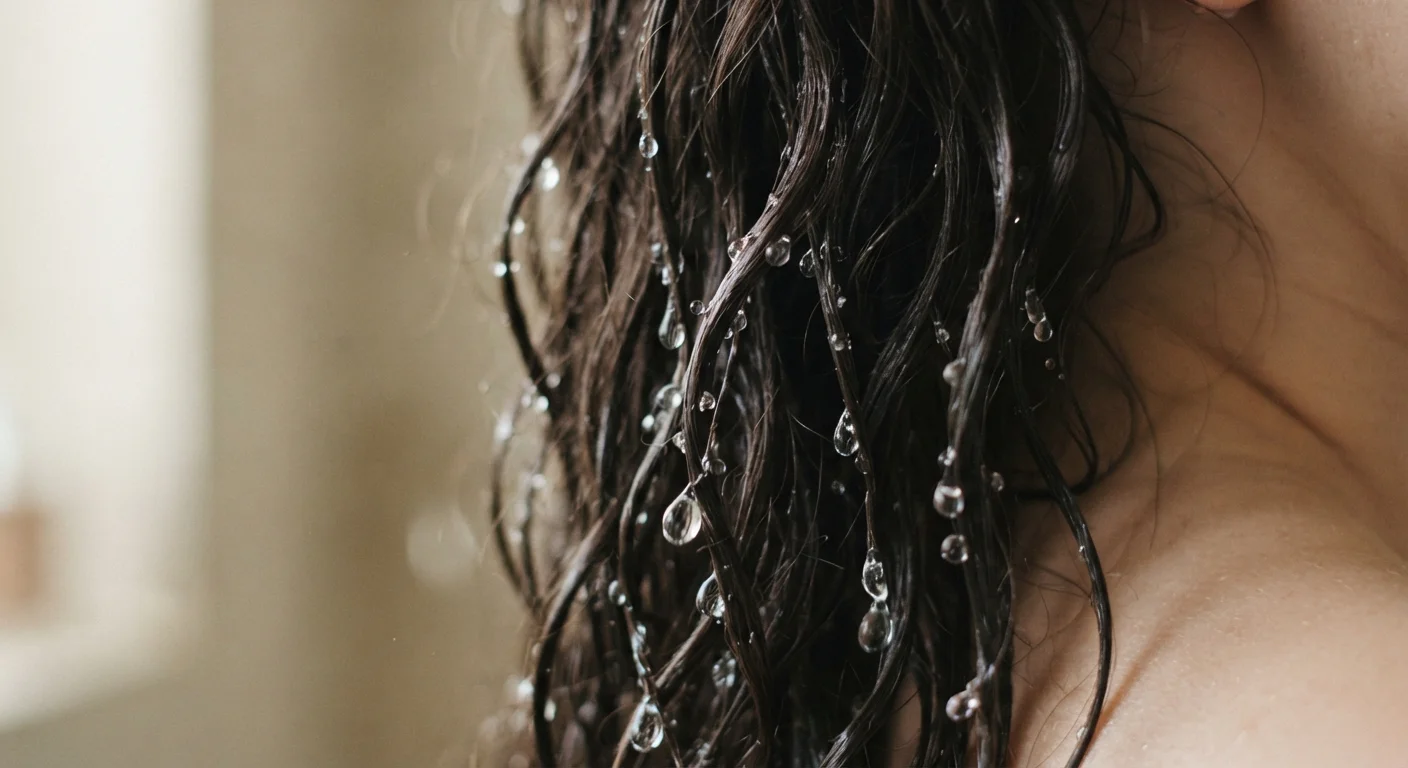
Photo: SummarizedReads.net | Just Read It! editorial
—— In This Article
Key Takeaways
- Hard water contains calcium and magnesium that deposit on hair strands over time.
- Mineral buildup can make hair feel stiff, look dull, and resist conditioning.
- Rinsing with filtered or softened water can reduce mineral accumulation.
- Chelating or clarifying shampoos are formulated to remove mineral deposits from the hair shaft.
- A consistent scalp care routine helps counteract the drying effects of mineral-heavy water.
- No single solution works for everyone - adapting your routine gradually is the most practical approach.
What Hard Water Actually Does to Your Hair
When hard water evaporates off your hair, dissolved calcium and magnesium ions remain behind, forming a thin mineral film on the surface of each strand. Over repeated washes this accumulates, roughing up the hair's outer cuticle layer - the overlapping scales that normally lie flat to reflect light and retain moisture.
The practical result is hair that feels coarser than usual, appears dull or lacks shine, and may resist conditioner - because the mineral layer sits between the conditioning ingredients and the hair shaft itself. Some people also notice their scalp feels drier or slightly itchy. Understanding this mechanism matters because it helps you target the actual problem rather than simply adding more product on top of it. For deeper context on how your scalp responds to environmental stressors, see our guide to scalp health basics.
Hard Water Affects More Than Hair
The same mineral accumulation that deposits on hair strands also affects your skin, laundry, and household appliances. Recognizing the broader pattern - such as soap scum on shower walls or reduced appliance efficiency - can help confirm that hard water is present in your home before investing in hair-specific solutions.
Recognizing the Signs in Your Own Routine
Hard water effects are easy to misread. Many people assume their conditioner has stopped working, that they need to switch shampoo, or that their hair type has changed - when the underlying issue is mineral accumulation. A few patterns worth noticing:
- Conditioner that seems ineffective - minerals coating the shaft block moisture absorption.
- Hair that tangles more easily - roughed-up cuticles create friction between strands.
- Frizz that persists even in low humidity - lifted cuticles make strands more reactive.
- A filmy or waxy feeling after washing - hard water also affects how well soap and shampoo rinse clean.
If these symptoms appeared gradually after a move to a new home or city, your water supply is a reasonable first factor to investigate. Our weekly hair care audit checklist can help you systematically rule out other routine gaps at the same time.
Practical Ways to Adapt Your Routine
No single fix works universally, but the following adjustments address the problem at different levels and can be combined based on your budget and hair type.
Use a chelating or clarifying shampoo periodically
Chelating shampoos contain ingredients - such as EDTA or phytic acid - that bond to mineral ions and lift them from the hair shaft. Using one once or twice a month can reset accumulation without stripping your hair of its natural oils if used in moderation. Follow with a hydrating conditioner to compensate for any dryness. If you're rethinking your overall cleansing approach, the comparison in our article on co-washing vs. shampooing may help you calibrate how often to cleanse.
Finish with an acidic rinse
A diluted apple cider vinegar rinse (roughly one tablespoon per cup of water) can help smooth the cuticle and temporarily counteract mineral deposits, since the mild acidity works against the alkaline nature of hard water. Use sparingly - once a week at most - and avoid if your scalp is sensitive or has any open irritation.
Consider a shower filter rated for hardness
Ion-exchange shower filters can meaningfully reduce calcium and magnesium at the source. They vary in effectiveness and require regular cartridge replacement, but for households with consistently hard water, they address the problem before it reaches your hair.
DIY Hard Water Test Before You Spend
Before purchasing a shower filter or specialized shampoo, confirm your water hardness level using an inexpensive test strip kit, available at most hardware stores. Many local utility companies also publish annual water quality reports online listing hardness measurements for your area - a free first step that takes minutes.
Adjust your washing habits
Cooler water temperatures help the cuticle stay flatter after washing - this won't remove existing mineral deposits, but it can reduce how much additional buildup adheres during each wash. Our article on common hair washing mistakes covers water temperature and other overlooked variables in detail.
Setting Realistic Expectations
Hard water is a manageable factor, not an insurmountable one. Improvements in texture and shine often become noticeable within two to four weeks of consistent adjustments - though this varies with water hardness levels and hair porosity. The goal is to interrupt the cycle of buildup rather than eliminate hard water entirely from your environment.
If you've made routine changes and still notice persistent scalp dryness, flaking, or unusual hair fragility, it's worth speaking with a dermatologist. These could indicate a separate condition that hard water is exacerbating but not causing on its own.
This article is for general informational purposes only and does not constitute medical or dermatological advice. Consult a qualified healthcare professional for concerns about hair loss, scalp conditions, or any symptoms that persist or worsen.
Frequently Asked Questions

Beauty Editorial Team
Beauty Editorial Team is the collective byline for our editorial team and contributor network. Articles published under this byline or an editorial pen name are researched, written, and reviewed according to our editorial standards for clarity, consistency, and independence before publication.
View author profile