
Air-Drying vs. Heat Styling: The Real Trade-Offs for Your Hair
Both approaches have genuine advantages and drawbacks. Here's an honest look at what each method does to your hair over time.
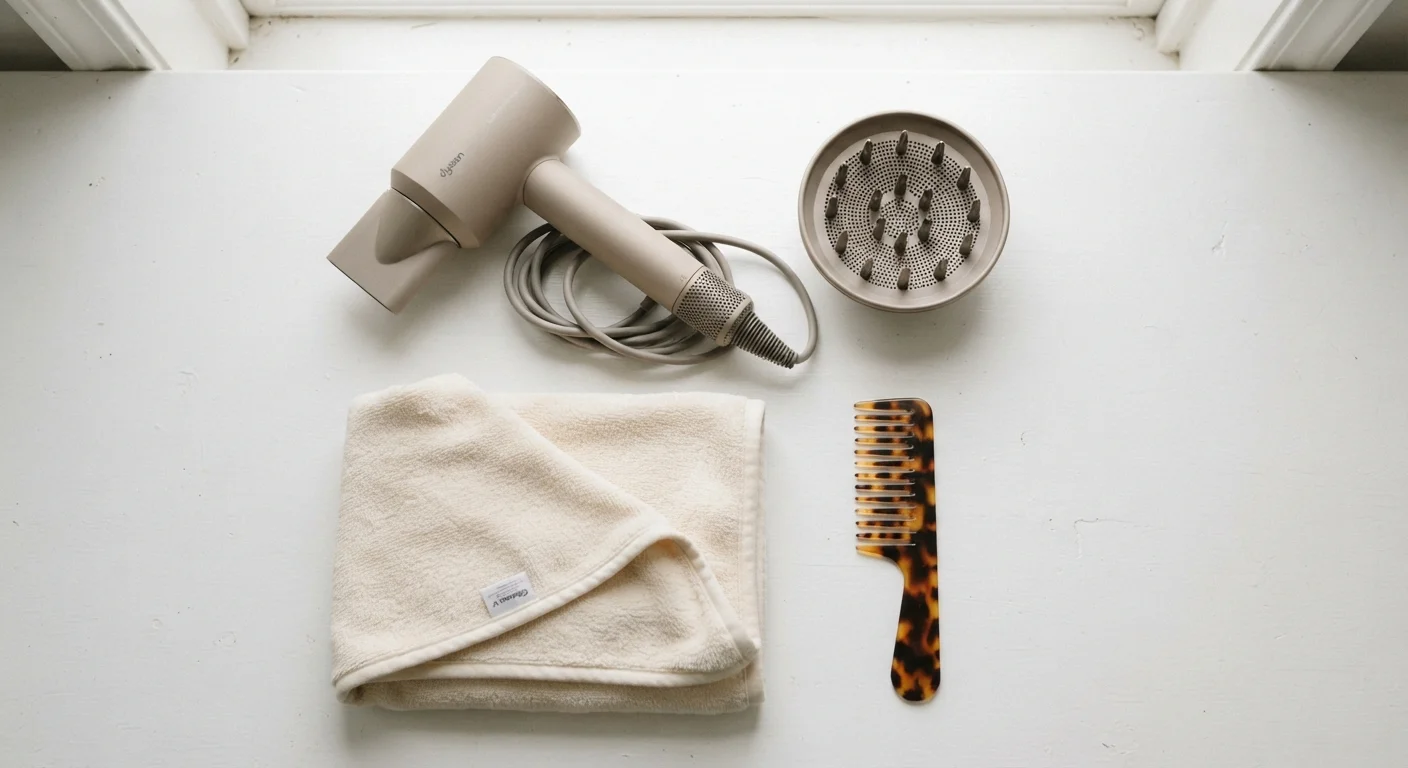
Photo: SummarizedReads.net | Just Read It! editorial
—— In This Article
Key Takeaways
- Heat styling produces faster results but causes cumulative protein and moisture damage over time.
- Air-drying avoids thermal damage but can leave hair vulnerable during the prolonged wet phase.
- Your hair texture, porosity, and styling goals should determine which method - or combination - makes sense.
- Protective steps like heat protectant sprays and microfiber towels meaningfully reduce damage from both methods.
- Neither method is universally superior; alternating approaches is a practical middle ground for many hair types.
Faster drying and precise style control
Heat tools can dry hair in minutes and allow shaping - volume, smoothness, curl definition - that air-drying alone rarely achieves. This is a practical advantage for time-constrained routines.
Reduces prolonged wet-phase vulnerability
Blow-drying shortens the window when hair is swollen and mechanically fragile, which can actually reduce hygral fatigue for hair types prone to it.
Effective for managing frizz in humid climates
A cool-shot finish from a blow-dryer seals the cuticle temporarily, helping hair resist humidity-driven frizz in ways that air-drying often cannot.
Low temperature settings are widely underused
Many styling goals are achievable at 300°F or below - well within a safer range - but most users default to the highest setting out of habit, not necessity.
Cumulative protein and moisture damage over time
Regular high-heat use degrades the keratin structure inside each strand. This manifests gradually as increased breakage, dullness, and loss of elasticity - damage that cannot be reversed, only managed.
Risk of scalp burns and contact damage
Holding a diffuser or nozzle too close to the scalp for extended periods can cause surface burns or irritation, particularly on fine or sensitive skin.
Equipment cost and electricity use add up
Quality heat tools represent an upfront investment, and regular use contributes to household electricity consumption - a real consideration for budget-focused routines.
Amplifies damage in already-compromised hair
Chemically treated, bleached, or previously heat-damaged hair has a weakened cuticle that responds poorly to additional thermal stress, accelerating breakage.
Why the Air-Dry vs. Heat Debate Actually Matters
Most hair-care conversations focus on products - shampoos, masks, oils - while the drying step gets treated as an afterthought. In practice, how you dry your hair influences its structural integrity as much as what you put on it. Heat and water interact with the keratin proteins inside each strand in ways that compound over weeks and months, making this a genuinely consequential choice.
This article doesn't declare a winner. It lays out what each approach actually does to hair at a structural level, so you can make an informed call for your own texture and routine. For a broader look at your habits, see the Weekly Hair Care Audit checklist.
What Heat Styling Does to Hair Structure
Every strand of hair is made up of a cortex - tightly coiled keratin proteins - wrapped in overlapping cuticle scales. When heat is applied, those scales lift and the proteins inside can denature (lose their shape) if temperatures exceed what the strand can tolerate. Research published in dermatology literature consistently identifies temperatures above 365°F (185°C) as a threshold for measurable protein damage, though fine or chemically treated hair can show harm at lower temperatures.
Repeated thermal stress also strips moisture from the cortex. The result over time is increased porosity, brittleness, and split ends - particularly at mid-lengths and ends where the hair is oldest. That said, a quality heat protectant - typically a silicone or film-forming polymer that distributes heat more evenly - demonstrably reduces peak temperature at the cuticle surface. Understanding how those protective ingredients work is worth exploring; see our piece on silicones in hair products for a myth-vs-fact breakdown.
Faster drying and precise style control
Heat tools can dry hair in minutes and allow shaping - volume, smoothness, curl definition - that air-drying alone rarely achieves. This is a practical advantage for time-constrained routines.
Reduces prolonged wet-phase vulnerability
Blow-drying shortens the window when hair is swollen and mechanically fragile, which can actually reduce hygral fatigue for hair types prone to it.
Effective for managing frizz in humid climates
A cool-shot finish from a blow-dryer seals the cuticle temporarily, helping hair resist humidity-driven frizz in ways that air-drying often cannot.
Low temperature settings are widely underused
Many styling goals are achievable at 300°F or below - well within a safer range - but most users default to the highest setting out of habit, not necessity.
What Air-Drying Actually Does (It's Not All Good)
Air-drying avoids thermal damage entirely, but it introduces a different set of stressors. When hair is wet, the cortex swells as water enters the shaft - a process called hygral expansion. Prolonged swelling, repeated cycle after cycle, can weaken the hydrogen bonds that give hair its elasticity, a phenomenon sometimes called hygral fatigue. This matters especially for high-porosity hair that absorbs and releases water quickly.
Wet hair is also mechanically fragile. Combing, sleeping on, or bunching wet strands generates friction that can snap the cuticle - and if you're air-drying in a humid or windy environment without any styling product, frizz and tangling compound that risk. Wrapping wet hair tightly in a cotton towel adds significant friction; switching to a microfiber towel or a soft t-shirt and using a gentle blotting motion is a meaningful upgrade with no cost in drying time.
Cumulative protein and moisture damage over time
Regular high-heat use degrades the keratin structure inside each strand. This manifests gradually as increased breakage, dullness, and loss of elasticity - damage that cannot be reversed, only managed.
Risk of scalp burns and contact damage
Holding a diffuser or nozzle too close to the scalp for extended periods can cause surface burns or irritation, particularly on fine or sensitive skin.
Equipment cost and electricity use add up
Quality heat tools represent an upfront investment, and regular use contributes to household electricity consumption - a real consideration for budget-focused routines.
Amplifies damage in already-compromised hair
Chemically treated, bleached, or previously heat-damaged hair has a weakened cuticle that responds poorly to additional thermal stress, accelerating breakage.
Your water supply can also play a role here - mineral deposits from hard water can coat the cuticle and change how hair dries and feels. The Hard Water and Hair guide explains what's happening and practical ways to adapt.
How Hair Type Changes the Equation
Texture, porosity, and chemical history all shift which risks are most relevant to you.
Porosity Is the Key Variable
Hair porosity - how readily your strands absorb and release moisture - is one of the most practical factors in deciding how to dry your hair. Low-porosity hair resists water entry and takes longer to dry; high-porosity hair absorbs quickly but also loses moisture fast. A simple float test (dropping a clean strand in water and observing whether it sinks slowly or quickly) can give you a rough sense of where your hair falls, though it's not a definitive measure.
- Fine or low-porosity hair tends to take longer to air-dry (water doesn't penetrate or release quickly), prolonging the swelling phase. A brief low-heat blow-dry - say, five minutes on a cool or warm setting - can shorten wet time without meaningful thermal damage.
- Coarse or high-porosity hair dries faster but is already prone to moisture loss. High heat accelerates that further; air-drying with a leave-in conditioner applied while wet typically produces better long-term results.
- Chemically treated hair (color, relaxer, keratin treatments) has a disrupted cuticle layer that tolerates thermal stress poorly. Lower heat settings and heat protectants are especially important here, and air-drying more frequently is broadly recommended by stylists who work with chemically processed hair.
Cleansing method also intersects with drying: hair that retains more natural oils (as with co-washing) may air-dry with a different texture than clarified hair. The Co-Washing vs. Shampooing article walks through which cleansing approach suits different hair types.
365°F
Temperature threshold for measurable protein damage
Dermatology research identifies this approximate threshold - though chemically treated or fine hair may be affected at lower temperatures.
~30 min
Typical air-dry time for medium-length hair
Prolonged wet exposure varies by porosity and environmental humidity; high-porosity hair may dry faster but absorb more water per cycle.
Practical Ways to Reduce Damage From Either Method
The goal isn't to choose a side permanently - it's to reduce cumulative harm regardless of which method you're using on a given day.
- For heat styling: Always start with a detangled, mostly dry (not soaking wet) section. Apply heat protectant to damp - not dry - hair for best distribution. Use the lowest effective temperature for your texture. Keep the dryer moving rather than holding it stationary on one section.
- For air-drying: Blot, don't rub. Apply a lightweight leave-in or styling cream while hair is still wet to reduce frizz and mechanical tangling. Avoid tying wet hair into a tight elastic, which creates a stress point.
- For both: Trim regularly to remove already-compromised ends - no drying method can repair split ends once they form. And consider checking how your overall routine holds up with the Weekly Hair Care Audit.
This article is for general informational purposes only. For concerns about hair loss, scalp conditions, or significant hair damage, consult a qualified dermatologist or trichologist.

Beauty Editorial Team
Beauty Editorial Team is the collective byline for our editorial team and contributor network. Articles published under this byline or an editorial pen name are researched, written, and reviewed according to our editorial standards for clarity, consistency, and independence before publication.
View author profile