
Physical vs. Chemical Exfoliation: What Suits Different Skin Concerns
Scrubs and chemical exfoliants both remove dead skin cells, but they work very differently. Learn which approach aligns with your skin's needs.
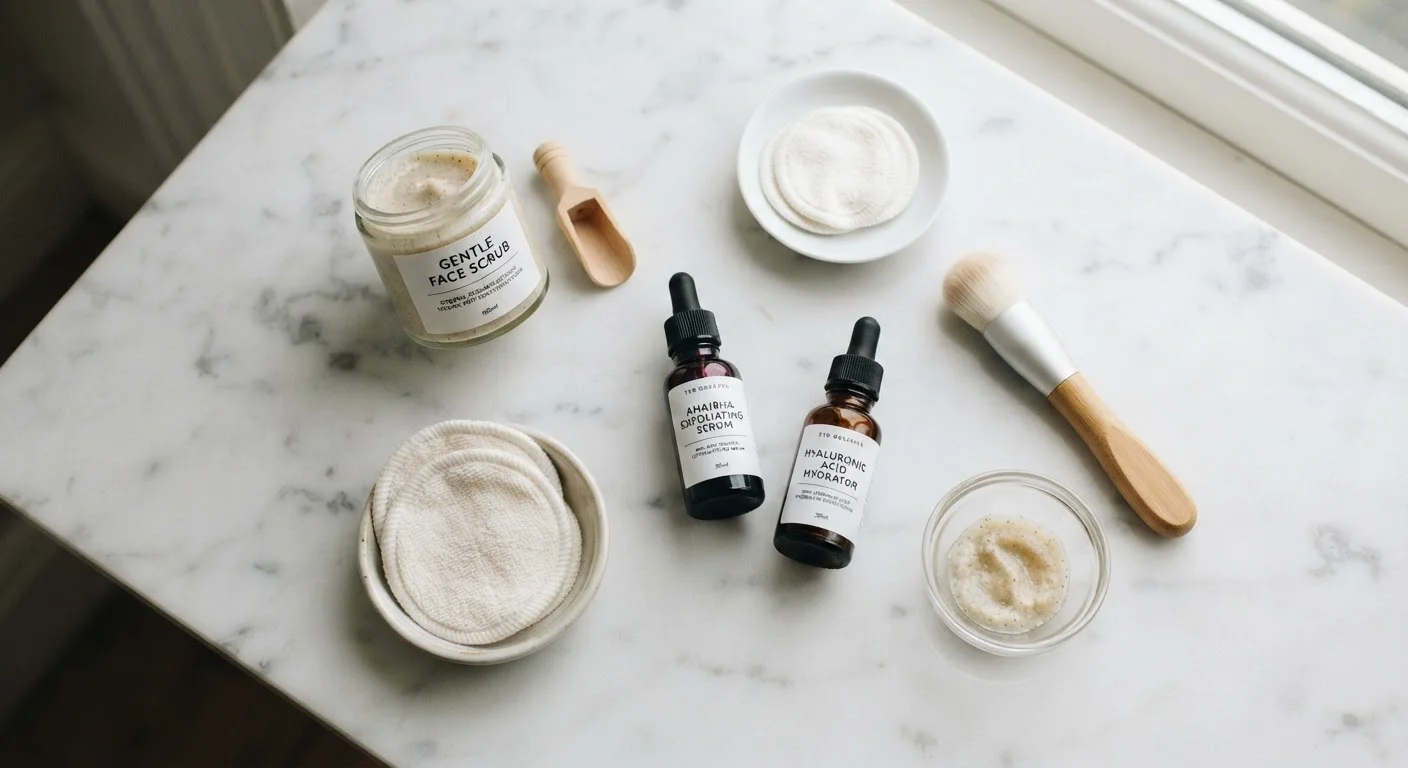
Photo: SummarizedReads.net | Just Read It! editorial
—— In This Article
Key Takeaways
- Physical exfoliation manually buffs away dead cells; chemical exfoliation dissolves the bonds holding them to skin.
- Chemical exfoliants like AHAs and BHAs are generally more effective for uneven tone, acne, and visible pores.
- Physical scrubs carry a higher risk of micro-tears and irritation, especially on sensitive or inflamed skin.
- Over-exfoliating with either method can compromise your skin barrier - less is more.
- Sensitive skin types typically tolerate mild chemical exfoliants better than abrasive physical ones.
- Sunscreen is non-negotiable after any form of exfoliation, particularly with chemical acids.
How Each Method Actually Works
Exfoliation - the process of removing dead cells from the skin's surface - is one of the most agreed-upon pillars of a functional skincare routine. But how you exfoliate matters considerably, because the two main methods work through completely different mechanisms.
Physical exfoliation uses friction. A scrub, a brush, a textured cloth, or a konjac sponge physically dislodges dead skin cells when you rub it across your face. The results are immediate: skin feels smoother right after rinsing. The downside is control - pressure, particle size, and skin sensitivity all affect how aggressively the surface is disrupted.
Chemical exfoliation uses acids or enzymes to dissolve the intercellular "glue" that holds dead cells to the skin's surface. The most common chemical exfoliants are alpha hydroxy acids (AHAs) such as glycolic and lactic acid, beta hydroxy acids (BHAs) such as salicylic acid, and polyhydroxy acids (PHAs) such as gluconolactone. Enzymes from papaya or pineapple offer a gentler variation. Unlike physical scrubs, chemical exfoliants work gradually, usually over minutes to hours, and can penetrate beyond the very surface of the skin.
Understanding this distinction makes it easier to match the method to your concern rather than default to whichever product is most familiar. For a look at how exfoliation fits into your broader routine, see our guide on what each cleansing step is actually doing.
| Criterion | Physical Exfoliation | Chemical Exfoliation |
|---|---|---|
| Mechanism | Manual friction removes surface cells | Acids or enzymes dissolve cell bonds |
| Speed of results | Immediate surface smoothness | Gradual improvement over days to weeks |
| Depth of action | Surface only | Surface and within pores (BHAs) |
| Best for | Quick texture polish | Tone, pores, acne, pigmentation |
| Sensitive skin suitability | Risk of irritation from friction | PHAs and lactic acid are gentler options |
| Acne-prone skin | May spread bacteria on active breakouts | BHAs penetrate and clear pore lining |
| Learning curve | Low - intuitive to use | Moderate - concentration and pH matter |
| Sun sensitivity after use | Mild increase | Notable increase - SPF is essential |
Matching Method to Skin Concern
Neither approach is universally superior - the better choice depends heavily on what your skin is doing right now.
2-3×
Recommended maximum weekly exfoliation sessions
Dermatologists commonly advise exfoliating no more than two to three times per week to protect the skin barrier, with frequency adjusted based on skin type and product strength.
~28 days
Natural skin cell turnover cycle in younger adults
The skin's natural desquamation cycle slows with age, which is why exfoliation is frequently recommended to support the process - though over-exfoliation can disrupt it.
0.5%-2%
Salicylic acid concentration range for OTC products
Over-the-counter BHA formulas in the US typically fall within this range; starting at the lower end reduces the likelihood of irritation for first-time users.
Acne and Clogged Pores
BHAs, particularly salicylic acid, are oil-soluble, meaning they can work inside the pore lining rather than just across the surface. Physical scrubs can temporarily loosen debris but cannot reach inside follicles - and on actively inflamed acne, friction risks spreading bacteria and worsening breakouts.
Hyperpigmentation and Uneven Tone
AHAs encourage more even cell shedding across the surface, which over consistent use can reduce the appearance of post-inflammatory marks. Physical exfoliation removes surface cells but doesn't influence the cell turnover rate beneath them.
Dryness and Sensitivity
PHAs and lactic acid are larger-molecule acids that penetrate more slowly, making them better tolerated by dry or sensitive skin. Coarse physical scrubs are particularly risky here - small tears in dry or compromised skin are difficult to see but easy to cause. If your skin barrier is already stressed, consult a dermatologist before adding any exfoliant.
Dull or Rough Texture
Either method can address surface dullness, but consistency matters more than intensity. A mild chemical exfoliant used two to three times weekly tends to produce more cumulative improvement than an aggressive scrub used occasionally. If you plan to layer chemical exfoliants with other active ingredients, our article on introducing actives without irritating your skin walks through a measured approach.
A Note on DIY Scrubs
Homemade scrubs - often made with sugar or coffee grounds - are popular for their low cost, but particle size and sharpness are difficult to control at home. Ingredients like lemon juice also carry an unpredictable pH that can irritate skin. For a balanced look at when homemade options make sense, see our piece on DIY versus store-bought skincare.
Common Mistakes and How to Avoid Them
Over-exfoliation is one of the most common causes of a damaged skin barrier - the protective outer layer responsible for keeping moisture in and irritants out. Signs include stinging, tightness, redness, or a sudden increase in sensitivity. Both physical and chemical exfoliation can cause this when overdone.
- More pressure is not more effective. With physical exfoliation, gentle circular motions are sufficient. Scrubbing harder doesn't accelerate results - it increases the risk of micro-damage.
- Layering acids is not additive. Using an AHA toner, a BHA serum, and an enzyme mask in the same routine is usually too much. Pick one exfoliant per session.
- Sunscreen is mandatory. Chemical exfoliants increase photosensitivity. Without broad-spectrum SPF applied daily, you risk accelerating the very discolouration you're trying to address.
- Start low and slow. If chemical exfoliants are new to your routine, begin with a low concentration once a week and observe how your skin responds over several weeks before increasing frequency.
Exfoliation also doesn't replace hydration. Understanding the difference between hydrating and moisturising your skin can sharpen how you rebuild after an exfoliation session - see our piece on skin hydration vs. moisturisation for more context.
This article is for general informational purposes only and is not a substitute for personalised advice from a qualified dermatologist or healthcare provider. If you have a skin condition, persistent irritation, or underlying health concern, consult a professional before changing your skincare routine.

Beauty Editorial Team
Beauty Editorial Team is the collective byline for our editorial team and contributor network. Articles published under this byline or an editorial pen name are researched, written, and reviewed according to our editorial standards for clarity, consistency, and independence before publication.
View author profile