
Cleanser, Toner, Moisturiser: What Each Step Is Actually Doing
The classic three-step routine explained clearly. Understand the purpose of each stage so you can build a routine that makes sense for your skin.
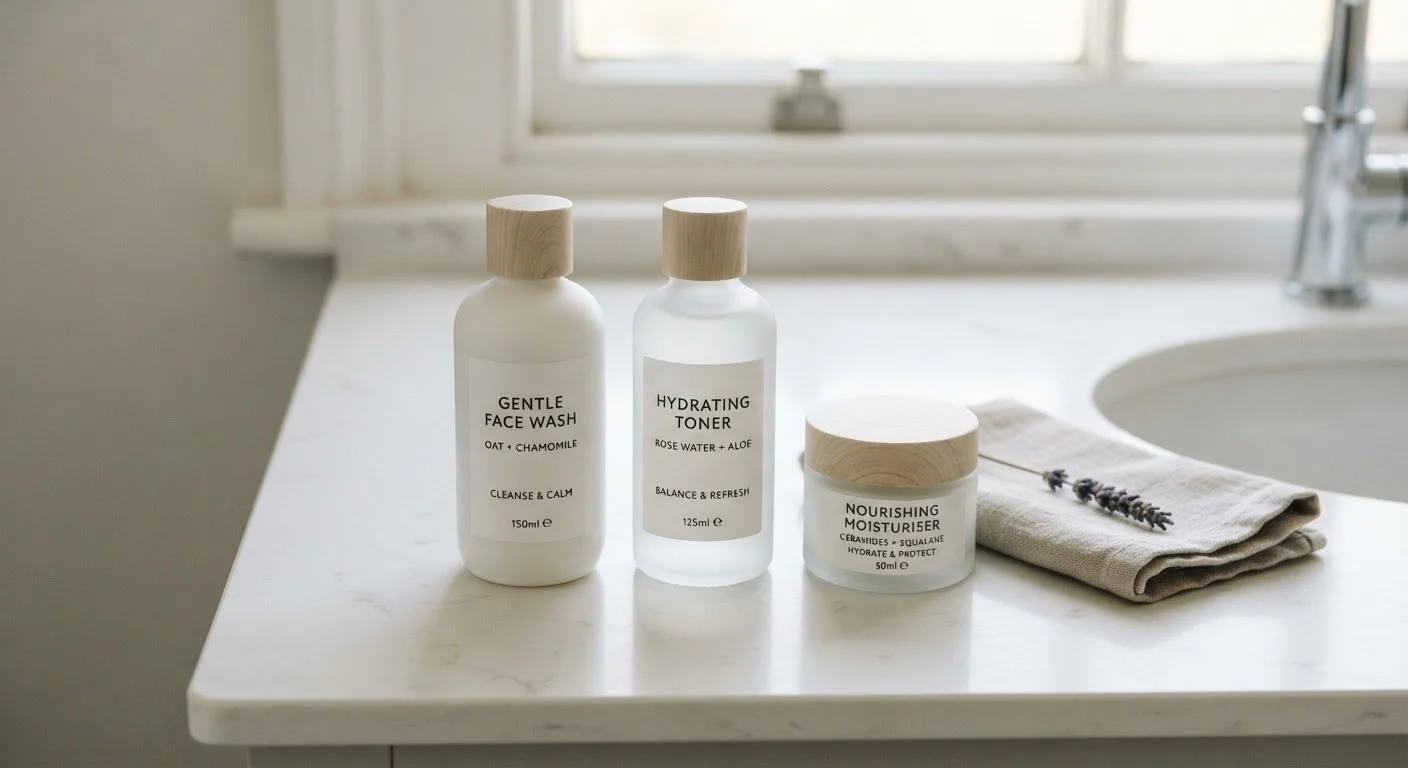
Photo: SummarizedReads.net | Just Read It! editorial
—— In This Article
Key Takeaways
- Cleansing removes dirt, oil, and residue - but over-cleansing can strip your skin's protective barrier.
- Toner is not just a historical relic; modern formulas help restore pH balance and deliver light active ingredients.
- Moisturiser works by preventing water loss, not just adding water to the skin.
- The right products for each step depend on your skin type, not on what's trending.
- A consistent three-step routine outperforms an inconsistent ten-step one every time.
Step One: What Cleansing Is Actually Doing
A cleanser's job is removal - not transformation. It lifts away excess sebum (your skin's natural oil), dead skin cells, environmental pollutants, sweat, sunscreen, and makeup so that your skin starts each routine on a clean, receptive surface.
What it should not do is strip the skin entirely. Your skin naturally maintains a slightly acidic environment - often called the acid mantle - that acts as a protective barrier against bacteria and moisture loss. Harsh cleansers, particularly those that leave skin feeling tight or squeaky clean, can disrupt this barrier. Over-cleansing is a surprisingly common issue that can lead to increased sensitivity, breakouts, or dry patches - even on oily skin types.
The right cleanser for your skin type matters more than the price point. Gel or foaming formulas generally suit oily and combination skin. Cream or balm cleansers tend to work better for dry or sensitive skin. Micellar water can be a gentle option for those with reactive skin who want minimal friction.
Patch-Test New Cleansers First
Even gentle cleansers can cause reactions in sensitive skin. Before using a new cleanser on your full face, apply a small amount to the inside of your wrist or jaw for a day or two. This simple step can save you from a week of redness or irritation.
Step Two: What Toner Is Actually Doing
Toner has a complicated reputation - partly because older astringent formulas, loaded with alcohol, genuinely were too harsh for most skin. Modern toners are a different category entirely, and understanding the distinction is worth your time.
After cleansing, your skin's pH can shift slightly alkaline. Toner helps nudge it back toward its natural mildly acidic state, which keeps the skin barrier functioning properly. Beyond pH correction, many contemporary toners act as a delivery vehicle for light active ingredients - think hydrating agents like glycerin or hyaluronic acid, soothing ingredients like centella asiatica, or mild exfoliants like lactic acid in low concentrations.
For the budget-conscious: toner is the most optional of the three steps. If your cleanser is well-formulated and your skin feels balanced afterward, you may not need it. It earns its place in routines where the cleanser feels slightly stripping, or where you want an efficient way to layer in a specific ingredient. See how actives like niacinamide work if you're considering a toner with added ingredients.
“The goal of a toner has evolved significantly. Rather than stripping the skin, a well-formulated toner today should be thought of as a first layer of treatment - something that restores balance and preps the skin for what comes next.”
— Joshua Zeichner, Board-certified dermatologist and director of cosmetic and clinical research in dermatology
Step Three: What Moisturiser Is Actually Doing
Here's the most misunderstood step: moisturiser doesn't primarily add water to your skin. It mainly prevents the water already in your skin from escaping - a process called transepidermal water loss (TEWL). Understanding this changes how you apply it.
Moisturisers typically work through three mechanisms. Humectants (like glycerin and hyaluronic acid) draw water toward the skin. Emollients (like fatty acids and plant oils) soften and smooth the surface. Occlusives (like petrolatum or dimethicone) create a physical seal that slows water escaping. Most moisturisers combine two or more of these types. For a deeper look at how these mechanisms differ, the distinction between hydrating and moisturising is worth understanding before you shop.
Apply moisturiser while your skin is still slightly damp after toning - this gives humectants something to work with and helps the formula spread evenly. Both AM and PM moisturisers serve the same core purpose, though formulations may differ. Morning and evening routines have different priorities that are worth understanding as your routine evolves.
~5.5
Healthy skin surface pH
Dermatology research consistently identifies a slightly acidic pH around 4.5-5.5 as optimal for the skin barrier; cleansers that raise pH significantly can impair barrier function.
30-60 sec
Recommended cleansing contact time
Many dermatologists suggest massaging a cleanser for 30-60 seconds to allow surfactants to emulsify oils and debris before rinsing - longer isn't necessarily better.
2×
Daily cleansing frequency (typical)
Morning and evening cleansing is the standard dermatologist recommendation for most skin types, though people with dry or sensitive skin sometimes use water alone in the morning.
Putting It Together: Why Sequence and Consistency Beat Complexity
The three steps work as a system. Cleansing creates a clean surface so toner can penetrate without interference. Toner restores the skin environment so moisturiser can form an effective seal. Skip or misorder a step and the ones that follow are less effective.
If you're starting out or rebuilding a routine from scratch, resist the urge to add more steps before mastering these three. A bare-bones routine done consistently will outperform a complex one applied sporadically. Once you have a stable foundation, you can assess whether additional steps - exfoliation, serums, SPF - address a real need for your skin. Knowing what's genuinely essential versus optional is one of the most practical things you can learn in skincare.
If your current routine isn't delivering results, the issue is often one of the basics: wrong cleanser for your skin type, a toner with irritating alcohol, or a moisturiser too heavy or too light. A routine audit is a structured way to find the weak link without buying a new set of products.
This article is for general informational purposes only and does not constitute medical or dermatological advice. If you have a skin condition or concern, consult a qualified healthcare or dermatology professional.
Frequently Asked Questions

Beauty Editorial Team
Beauty Editorial Team is the collective byline for our editorial team and contributor network. Articles published under this byline or an editorial pen name are researched, written, and reviewed according to our editorial standards for clarity, consistency, and independence before publication.
View author profile