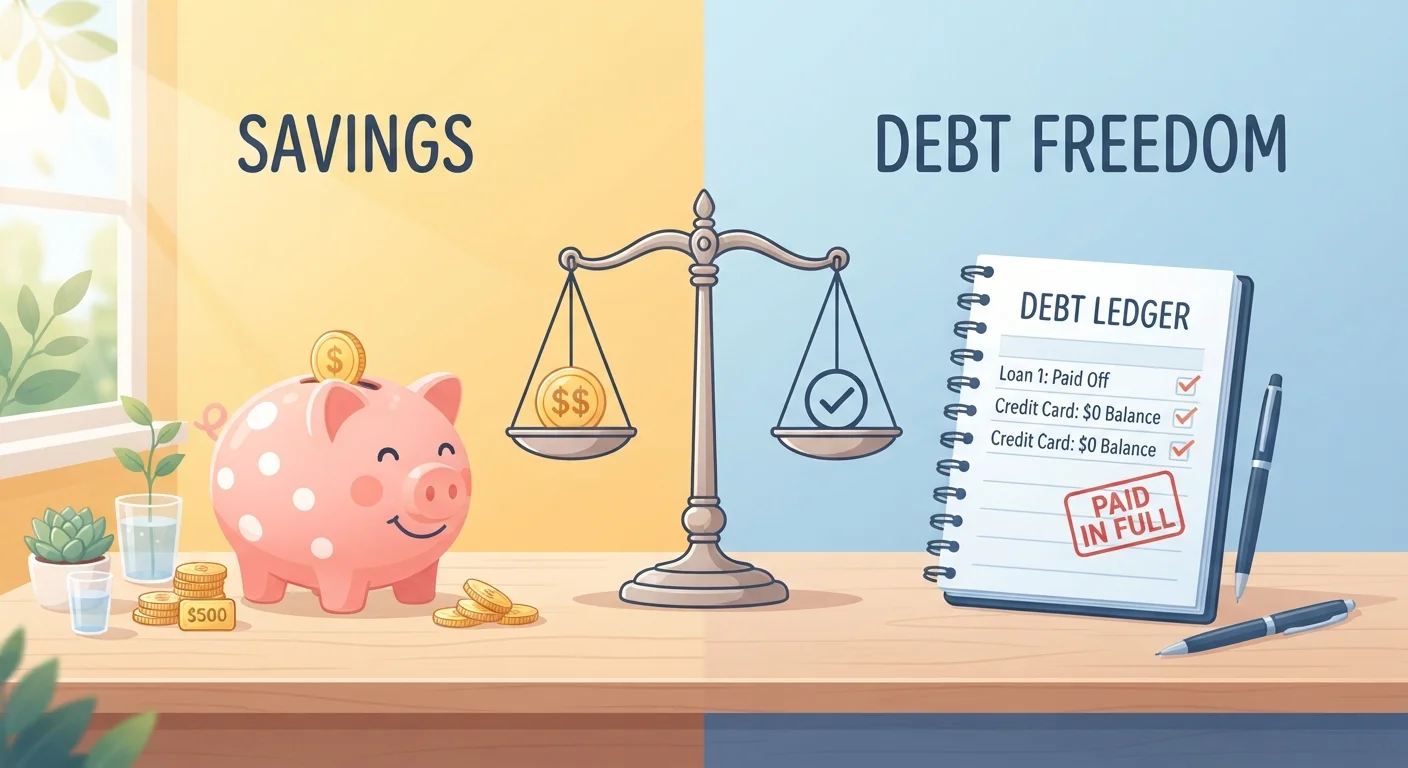
Psychological Factors Behind Debt: Why Knowing the Numbers Isn't Always Enough
Emotional spending, loss aversion, and optimism bias all shape financial decisions. Understanding them can help break unhelpful cycles.

Photo: SummarizedReads.net | Just Read It! editorial
—— In This Article
Key Takeaways
- Knowing your debt numbers is necessary but rarely sufficient on its own to change behavior.
- Emotional spending, loss aversion, and optimism bias are among the most common psychological drivers of debt.
- Avoidance of financial information often makes debt worse, not better.
- Structural strategies - like automation and concrete savings goals - can reduce reliance on willpower alone.
- Understanding your triggers is a practical first step toward breaking unhelpful financial cycles.
When Information Alone Doesn't Change Behavior
Most people in debt know, at least roughly, how much they owe. Many can explain compound interest. Some have printed out spreadsheets, downloaded apps, and set reminders. And yet the balance doesn't move the way they planned.
This isn't a failure of intelligence. It's a predictable result of how the human brain actually works with money. Financial decisions are not made in a purely rational vacuum - they are shaped by emotion, habit, memory, and a set of cognitive biases that researchers have documented extensively. Understanding these patterns doesn't excuse financial outcomes, but it does make them more legible - and more addressable.
If you're trying to build financial habits while carrying existing debt, the psychological dimension is worth taking seriously alongside the numbers.
Three Psychological Patterns That Fuel Debt
Several well-studied mental tendencies show up repeatedly in the context of personal debt. None of them are unique to people with financial problems - they are universal features of human cognition.
Emotional Spending
Spending in response to emotional states - stress, boredom, loneliness, anxiety - is one of the most common drivers of unplanned purchases. The relief is real but temporary. Over time, the pattern can compound debt while doing little to address the underlying emotional need. Identifying specific triggers (a difficult workday, a social comparison on social media) is more useful than relying on general willpower.
Optimism Bias
Optimism bias is the tendency to believe that future circumstances will be better than present evidence suggests. In debt management, it often appears as: "I'll pay this off next month when things calm down." It's not dishonesty - it's a documented cognitive tendency that can delay action month after month. Research in behavioral economics consistently shows that people overestimate their future self-control and underestimate future expenses.
Loss Aversion and Financial Avoidance
Loss aversion - the principle that losses feel roughly twice as painful as equivalent gains feel good - can cause people to avoid looking at bank statements or credit card balances altogether. The logic is understandable: if looking at the number feels bad, not looking feels better. But avoidance prevents the decision-making needed to improve the situation, and avoidance is one of the patterns that quietly erodes financial progress over time.
Avoidance Is a Normal Response - Not a Flaw
Avoiding uncomfortable financial information is a documented psychological response, not a personal failure. Loss aversion and stress both contribute to it. Recognizing avoidance as a pattern - rather than judging it - makes it easier to design practical workarounds, like scheduling a specific, time-limited review session rather than leaving financial check-ins open-ended.
Structural Strategies That Work With Your Psychology
Awareness is a starting point, not a solution. The most effective approaches pair psychological understanding with structural changes that reduce the burden on willpower.
- Automation: Setting up automatic minimum payments or savings transfers removes the decision from the emotional moment. You don't have to "choose" to save if the money moves before you see it.
- Concrete, labeled goals: Behavioral research suggests that saving for a specific named goal ("car repair fund") is more motivating than saving toward an abstract number. The specificity counters optimism bias by making the future feel real.
- Scheduled financial check-ins: Rather than open-ended avoidance or constant anxious monitoring, a set weekly or monthly review time reduces the emotional charge of engaging with financial information.
- Small wins: Strategies like the debt snowball method - paying off the smallest balance first - are designed partly around psychological motivation, not just math. A sense of progress matters.
For a side-by-side look at structured repayment approaches, see how the debt avalanche and snowball methods compare.
Name Your Financial Goals Specifically
Rather than saving toward a vague "emergency fund," try labeling it by purpose: 'car repair cushion' or 'three months rent.' Behavioral research suggests named, concrete goals are more motivating and harder to mentally raid for unrelated spending. The specificity makes the future feel real in a way that abstract numbers often don't.
Debt, Stress, and the Feedback Loop
Financial stress and psychological state are not separate problems. Chronic stress impairs the kind of deliberate, long-term thinking that financial planning requires. It can increase impulsive spending as a coping mechanism, which deepens debt, which increases stress - a reinforcing cycle that is hard to interrupt through information alone.
This is worth naming plainly: financial difficulty and mental well-being are connected, and resources for managing financial stress exist beyond the spreadsheet. If debt-related anxiety is affecting daily functioning, speaking with a professional - whether a licensed counselor or a nonprofit credit counselor - is a legitimate and practical step.
For readers working through the tension between saving and repayment, saving while carrying debt is often more viable than it seems - and understanding your own psychological patterns can make either path more sustainable.
This article is for general informational and educational purposes only. It is not financial, psychological, or medical advice. For decisions about your specific financial situation or mental health, please consult a qualified professional.
Frequently Asked Questions

Finance Editorial Team
Finance Editorial Team is the collective byline for our editorial team and contributor network. Articles published under this byline or an editorial pen name are researched, written, and reviewed according to our editorial standards for clarity, consistency, and independence before publication.
View author profile