
No Gym, No Problem: Building a Sustainable Exercise Habit at Home
You don't need a membership to get fit. This guide covers how to build a consistent, equipment-free routine that works around your real daily life.
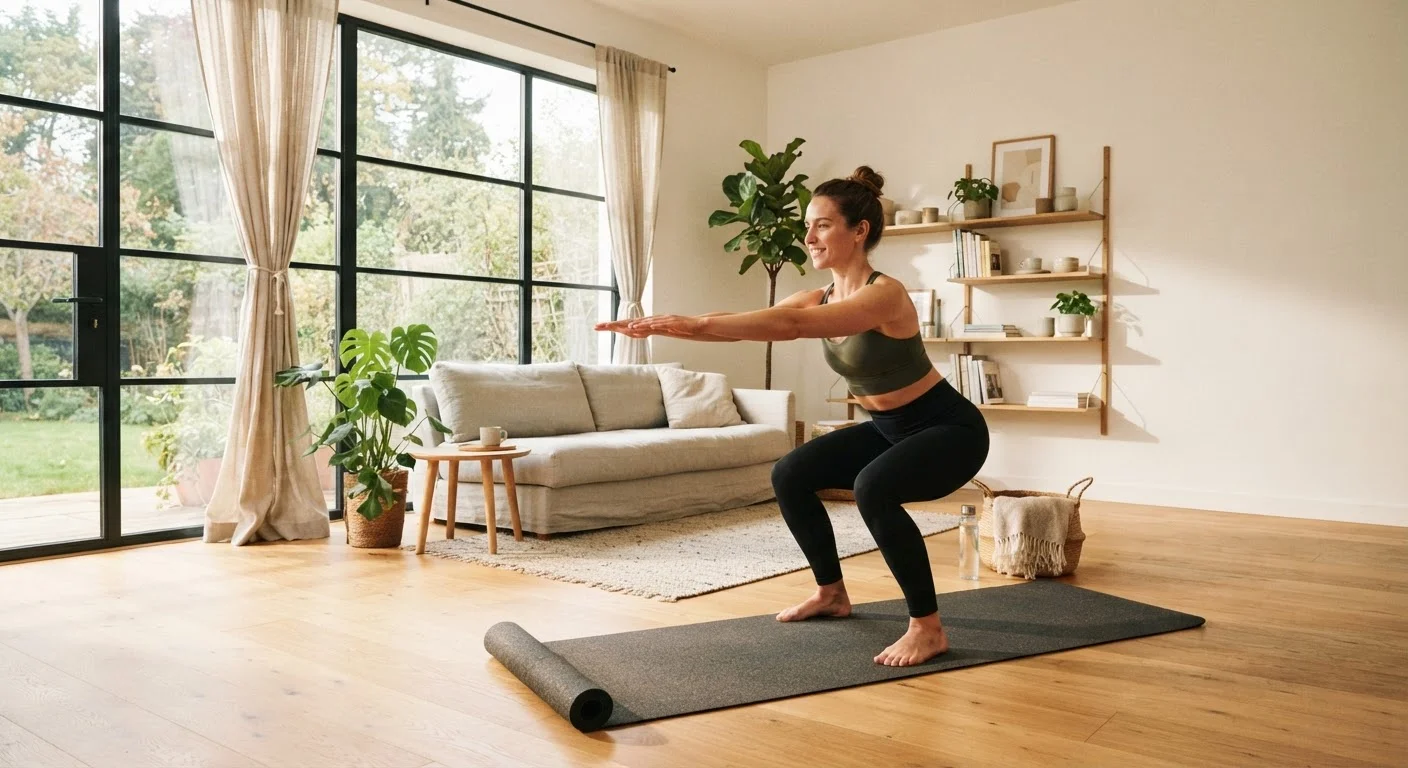
Photo: SummarizedReads.net | Just Read It! editorial
—— In This Article
Key Takeaways
- Consistent bodyweight training at home can deliver meaningful fitness gains without any equipment.
- Habit formation-not workout intensity-is the primary driver of long-term results for beginners.
- A routine built around your existing schedule is more sustainable than one that demands major lifestyle changes.
- Progressive overload is achievable at home by adjusting leverage, tempo, and exercise variation.
- Rest, sleep, and balanced nutrition support every exercise habit you build.
Why Home Workouts Work (When You Set Them Up Right)
The most common barrier to regular exercise isn't motivation-it's friction. Commute time to a gym, membership costs, scheduling conflicts, and the social anxiety of a new environment all create resistance that compounds over time. Removing those barriers by exercising at home dramatically lowers the activation energy required to begin each session.
Exercise science supports this: adherence, not program sophistication, predicts long-term fitness outcomes. A modest routine performed consistently outperforms an optimal program done sporadically. Home training works precisely because it removes the logistical hurdles that interrupt consistency.
Before you design anything, it helps to clear up some persistent misconceptions. Our guide to common fitness myths covers why ideas like "no pain, no gain" and "you need a gym to build strength" aren't supported by current evidence-worth reading if self-doubt has held you back before.
This article provides general health and fitness information for educational purposes only. It is not a substitute for personalized advice from a qualified healthcare or fitness professional. If you have any medical conditions, injuries, or concerns, consult a professional before starting a new exercise routine.
The Building Blocks of an Effective Bodyweight Routine
A well-structured bodyweight routine covers four movement patterns: push (push-ups, pike push-ups), pull (if a doorframe pull-up bar or low table is available), hinge (hip hinges, glute bridges), and squat (bodyweight squats, split squats). Pairing these with core stability work and some cardiovascular intervals produces a balanced session.
Progressive overload
Gradually increasing the difficulty of exercise over time so your muscles and cardiovascular system continue to adapt and improve.
Bodyweight training
Exercise that uses your own body weight as resistance, requiring no external equipment-examples include push-ups, squats, and planks.
Habit anchoring
Linking a new behavior to an existing routine so it becomes automatic more quickly-for example, always exercising right after brushing your teeth.
Time under tension
The total time a muscle is working during an exercise set; slowing movements down increases this and can make an exercise more challenging without adding weight.
Active recovery
Low-intensity movement on rest days-like walking or gentle stretching-that supports circulation and muscle repair without adding significant training stress.
A simple starter structure might look like this:
- Warm-up (5 min): Arm circles, leg swings, marching in place, slow bodyweight squats
- Strength block (15-20 min): Two to three sets each of squats, push-ups, glute bridges, and a core hold like a plank
- Cardio burst (5 min): Jumping jacks, mountain climbers, or stair climbing if available
- Cool-down (5 min): Light stretching targeting the major muscles worked
For a deeper look at how bodyweight training compares to using weights as you advance, see our bodyweight vs. free weights guide.
Making the Habit Stick: Scheduling and Consistency
Behavioral research on habit formation consistently points to the same principle: new behaviors attach more durably when anchored to existing routines. Rather than carving out a new time slot, consider linking exercise to something you already do-before your morning coffee, directly after work, or following a regular meal.
The Two-Minute Rule for Consistency
On days when motivation is low, commit to just two minutes of movement-enough to put on your workout clothes and do a few squats. Research on habit formation suggests that starting the behavior, even briefly, is far more effective than waiting until you feel ready. Most people continue past two minutes once they've begun. If you don't, two minutes is still better than zero.
Start with sessions short enough that skipping feels unnecessary. A 20-minute session three times a week is a legitimate starting point. As the habit becomes automatic-typically after several weeks of consistent repetition-you can extend duration or add frequency naturally.
Tracking matters too. A simple handwritten log or a notes app entry after each session creates a small psychological reward and a visible record of effort. You don't need a sophisticated app; you just need a record that makes streaks visible.
If your schedule is already demanding, our morning routine guide offers practical strategies for layering new habits onto tight mornings without losing sleep.
Progressing Without Equipment
One concern beginners often raise is whether bodyweight training will eventually plateau. The answer lies in understanding progressive overload-the principle of gradually increasing the demand placed on your muscles over time. Without weights, you apply this through four levers:
- Volume: Add reps or sets as exercises become comfortable.
- Tempo: Slow the lowering phase of a movement (e.g., a 3-second descent in a squat) to increase muscular time under tension.
- Variation: Move to harder exercise variants-from a knee push-up to a standard push-up to a close-grip push-up, for example.
- Rest reduction: Shorten rest periods to increase cardiovascular and muscular demand.
These adjustments mean a thoughtful bodyweight program can sustain meaningful challenge for months before any equipment becomes relevant-if it ever does. For context on what low-cost options exist if you do want to expand, staying active on a tight budget explores approaches that won't strain your finances.
Common Pitfalls and How to Avoid Them
Even with the best intentions, home exercisers tend to run into a few predictable obstacles:
- Starting too hard, too fast
- Beginning with daily hour-long sessions almost always leads to burnout or injury within weeks. Err on the side of less-you can always add more once the habit is stable.
- Skipping the warm-up
- Cold muscles and connective tissue are more vulnerable to strain. Even five minutes of low-intensity movement before a session meaningfully reduces injury risk.
- Ignoring recovery
- Muscle adaptation happens during rest, not during the workout itself. Prioritize sleep and allow at least one full rest day between strength-focused sessions.
- Neglecting nutrition
- Exercise and food work together. Basic, consistent nutrition habits support energy, recovery, and results. Our nutrition basics hub is a practical starting point if that side of the equation feels unclear.
Know When to Consult a Professional First
If you have a history of cardiovascular disease, joint injuries, chronic pain, or other medical conditions, check with a qualified healthcare provider before beginning a new exercise routine. The general guidance in this article is not a substitute for individualized assessment. Certain movements may be contraindicated depending on your health history.
Before beginning any new exercise program, use a readiness checklist to identify any factors that warrant a conversation with your doctor. Our pre-exercise readiness checklist walks through the key questions to ask before your first session.
Frequently Asked Questions

Health Editorial Team
Health Editorial Team is the collective byline for our editorial team and contributor network. Articles published under this byline or an editorial pen name are researched, written, and reviewed according to our editorial standards for clarity, consistency, and independence before publication.
View author profile