
Whole Grains vs. Refined Grains: What the Difference Means for Your Diet
Understand how whole and refined grains differ nutritionally and how that distinction affects your daily eating habits.
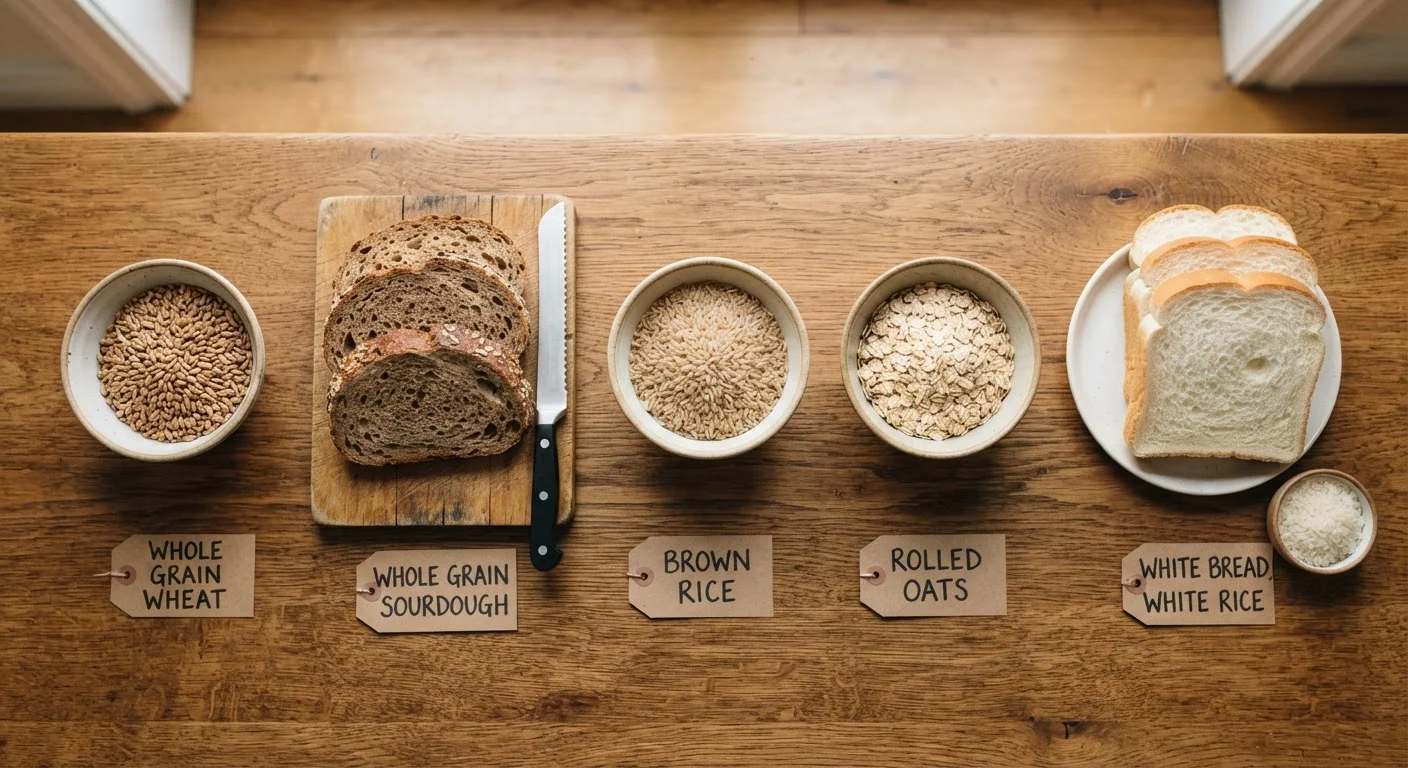
Photo: SummarizedReads.net | Just Read It! editorial
—— In This Article
Key Takeaways
- Whole grains retain the bran, germ, and endosperm; refined grains lose two of these three layers during milling.
- The milling process removes most fiber, B vitamins, iron, and phytonutrients found naturally in whole grains.
- Many refined grain products are enriched with some vitamins, but enrichment does not restore all lost nutrients.
- Dietary guidelines generally recommend making at least half of daily grain servings whole grains.
- Whole grain options are widely available at comparable or lower cost than many refined alternatives.
What Sets Whole and Refined Grains Apart
A grain kernel has three distinct parts: the bran (outer fiber-rich layer), the germ (nutrient-dense core), and the endosperm (starchy interior). Whole grains keep all three intact. Refined grains, produced through industrial milling, strip away the bran and germ-leaving predominantly the starchy endosperm.
That structural difference has meaningful nutritional consequences. The bran delivers fiber, B vitamins such as thiamine and niacin, and antioxidants. The germ contributes healthy fats, vitamin E, and additional B vitamins. When both are removed, what remains is largely starch with minimal micronutrient content.
Common whole grain examples include whole wheat, oats, brown rice, quinoa, barley, and bulgur. Refined grain examples include white flour, white rice, cornmeal, and many commercial breads and pastas. Many refined products are labeled enriched, meaning some B vitamins and iron are added back after milling-but enrichment replaces only a fraction of what processing removes, and dietary fiber is not restored.
| Criterion | Whole Grains | Refined Grains |
|---|---|---|
| Grain layers retained | Bran, germ, and endosperm | Endosperm only |
| Dietary fiber (per serving) | Significantly higher | Low to minimal |
| B vitamins and iron | Naturally present | Partially added back (enriched) |
| Phytonutrients and antioxidants | Present | Largely absent |
| Blood sugar response | More gradual (lower glycemic impact) | More rapid spike typical |
| Shelf life | Shorter (oils in germ can go rancid) | Longer |
| Cost (staple forms) | Comparable to refined; bulk is economical | Varies; some refined products cost more |
| Common examples | Oats, brown rice, whole wheat, quinoa | White flour, white rice, white bread |
How the Nutritional Gap Affects Your Health
The practical health difference between the two grain types shows up most clearly in fiber content. Dietary fiber supports healthy digestion, helps regulate blood sugar response after meals, and contributes to feelings of fullness. A diet consistently low in fiber-often the result of heavy reliance on refined grains-is associated with increased risk of constipation, elevated blood cholesterol, and less stable blood glucose levels, according to research published by major nutrition bodies including the American Heart Association.
~28g
Daily fiber recommended for most adults
The Dietary Guidelines for Americans recommend approximately 28 grams of dietary fiber per day based on a 2,000-calorie diet.
5-8x
More fiber in whole vs. refined grain
A serving of whole wheat bread can contain five to eight times the fiber of an equivalent serving of white bread, depending on the product.
~16%
U.S. adults meeting whole grain recommendations
Research published in nutritional epidemiology literature consistently finds that only a minority of American adults meet recommended whole grain intake targets.
Beyond fiber, whole grains provide phytonutrients (plant compounds with antioxidant properties) that are not measurable in enriched refined products. Observational research, including large cohort studies, consistently associates higher whole grain intake with reduced risk of cardiovascular disease and type 2 diabetes. That said, diet quality is multifactorial-grain type is one element among many, including overall food patterns, physical activity, and individual health status.
For budget-conscious consumers, this distinction is especially actionable. Staple whole grains such as oats, brown rice, and dried whole wheat pasta are among the most affordable items per serving in any grocery store. Choosing these over refined counterparts often costs the same or less, particularly when buying in bulk. For a broader look at how to evaluate everyday food choices against their alternatives, our guide to generic vs. name-brand products offers a useful complementary framework.
Making the Switch: Practical Strategies
Dietary guidelines from the U.S. Department of Agriculture recommend that at least half of daily grain servings come from whole grain sources. A straightforward way to work toward that is through gradual substitution rather than an abrupt overhaul.
- Start with familiar foods: Swap white sandwich bread for 100% whole wheat bread. Look for "whole wheat" or "whole grain" as the first ingredient on the label.
- Rethink breakfast: Rolled oats or steel-cut oats offer more fiber and staying power than many sweetened refined-grain cereals.
- Blend textures when needed: Mixing brown and white rice during a transition period can make the shift more palatable for households accustomed to refined textures.
- Read labels carefully: Terms like "multigrain," "wheat bread," or "made with whole grain" do not guarantee a whole grain product. Check that a whole grain is listed first among ingredients.
If you are also reconsidering your protein sources alongside grain choices, the question of plant versus animal protein often intersects with grain-heavy eating patterns. Our plant protein vs. animal protein comparison explores that dimension in depth.
This article provides general nutrition information and is not a substitute for personalized dietary advice. Consult a registered dietitian or qualified healthcare provider for guidance tailored to your individual health needs.

Health Editorial Team
Health Editorial Team is the collective byline for our editorial team and contributor network. Articles published under this byline or an editorial pen name are researched, written, and reviewed according to our editorial standards for clarity, consistency, and independence before publication.
View author profile