
Hand Tools Every DIY Homeowner Should Understand Before Buying
A practical look at the core hand tools used in home repairs — what each does, how to use it safely, and which jobs it's suited for.
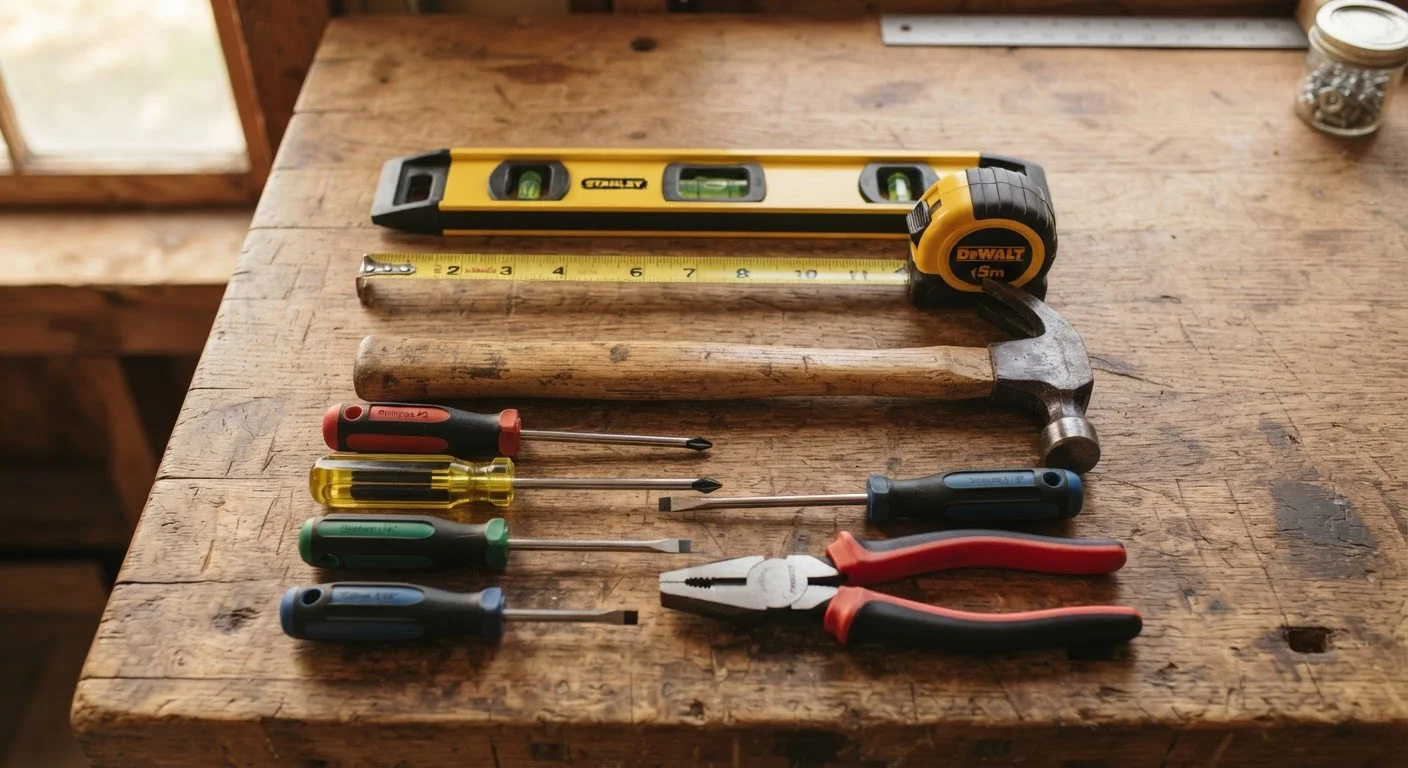
Photo: SummarizedReads.net | Just Read It! editorial
—— In This Article
Why Tool Literacy Matters Before You Shop
Buying tools before you understand them often leads to buying the wrong ones - or duplicates you don't need. A clear grasp of what each hand tool is designed to do helps you build a practical starter kit without wasting money. It also sets realistic expectations: the right tool applied correctly produces cleaner results with less effort and lower injury risk.
If you're new to home improvement, start with our beginner's guide to home improvement, which pairs foundational skills with the tool knowledge covered here. And before any project, it's worth reading our honest look at the real trade-offs of DIY so your expectations stay grounded.
| Typical starter kit size | 8-12 tools |
| Most universal measuring tool | 25-ft retractable tape measure |
| Most common screwdriver types | Flathead and Phillips |
| Jobs requiring a licensed professional | Electrical, gas, structural, main plumbing |
| Safety rule for utility knives | Always cut away from your body; retract when idle |
Core Hand Tools and What They Actually Do
The following tools appear in the vast majority of household repairs and light renovation work. Learning their purposes - not just their names - is what makes you effective on the job.
Crosscut saw
A handsaw designed to cut wood across the grain (perpendicular to the length of the board). It produces cleaner cuts on dimensional lumber and trim than a rip saw, which cuts along the grain.
Plumb
Perfectly vertical - straight up and down with no lean. A wall stud, door frame, or post that is plumb will not shift or rack over time the way an out-of-plumb installation might.
Torque
The rotational force applied when tightening a fastener. Over-torquing with a wrench or screwdriver can strip threads or crack materials; under-torquing leaves connections loose.
Scored cut
A shallow cut made with a utility knife to weaken a material along a line before snapping or sawing it cleanly. Common in drywall and tile work.
Kerf
The narrow slot or channel removed by a saw blade as it cuts. Understanding kerf width matters when measuring materials - always account for the blade's width when marking cut lines.
Measuring and Marking
Tape measure: Used to record lengths, widths, and heights before cutting or buying materials. A 25-foot retractable tape is versatile enough for most rooms and lumber cuts. Always measure twice before marking or cutting.
Level: Confirms whether a surface or object is perfectly horizontal (level) or vertical (plumb). Even small errors in shelf or frame installation become obvious over time, so a level is non-negotiable.
Fastening and Driving
Claw hammer: Drives nails and pulls them out with the curved claw end. Choose one that feels balanced in your hand - too heavy causes fatigue; too light reduces driving power.
Screwdrivers: Come in two dominant types: flathead (for slotted screws) and Phillips (for cross-head screws). Using the wrong size for a screw strips the head, making removal much harder. A set of three or four sizes covers most household jobs.
Adjustable wrench: Tightens or loosens bolts and nuts with a jaw that opens to different widths. Useful for plumbing fixtures, furniture assembly, and appliance connections.
Gripping and Cutting
Needle-nose pliers: Reach into tight spaces to grip small items, bend wire, or hold parts steady. Commonly needed for electrical switch plates, bike cables, and small hardware.
Utility knife: Scores drywall, cuts flooring underlayment, opens packaging, and trims caulk. Always cut away from your body and retract the blade when not in use.
Handsaw: Cuts wood without power. A crosscut saw handles most trim and lumber tasks. Keep fingers well clear of the cutting line and secure the workpiece before sawing.
Surface Preparation
Putty knife: Spreads filler compounds, scrapes old caulk or paint, and lifts stuck-on debris. Flexible blades suit spreading; rigid blades suit scraping.
Sanding block: Holds sandpaper flat against a surface for even material removal. Bare hands tend to produce uneven pressure and rounded edges - a block gives you control.
Safety Gear Is Part of the Tool Kit
Hand tools can cause cuts, eye injuries, and repetitive-strain issues when used without protection. Safety glasses protect against flying debris during sawing and chiseling. Work gloves reduce cut risk when handling sharp materials. For tasks involving dust or old paint, a basic dust mask is worth adding. Treat protective gear as essential equipment, not an optional extra.
Knowing When to Stop and Call a Professional
Hand tools are suited to surface-level repairs, assembly, measuring, and finishing. They are not adequate - and attempting them can be dangerous - when a job involves the home's electrical wiring, gas lines, load-bearing structures, or plumbing tied into main supply lines. Work in these categories typically requires licensed trades and, in most jurisdictions, a permit and inspection.
A good habit: before beginning any repair, ask yourself whether the work opens a wall, touches a circuit breaker panel, or involves a gas connection. If yes, consult a licensed professional. Our pre-project checklist walks you through how to vet contractors and set clear expectations before work begins.
Hand tool proficiency is a genuine skill that builds over time. Start with small, low-risk projects - tightening hinges, patching nail holes, installing curtain rods - before moving to more complex tasks. Confidence built on real experience is far more valuable than an ambitious first project gone wrong.

Home Editorial Team
Home Editorial Team is the collective byline for our editorial team and contributor network. Articles published under this byline or an editorial pen name are researched, written, and reviewed according to our editorial standards for clarity, consistency, and independence before publication.
View author profile