
Promo Codes vs. Store Coupons: What's the Difference and When to Use Each
Promo codes and store coupons look similar but work differently. Here's how to tell them apart and get the most from each.
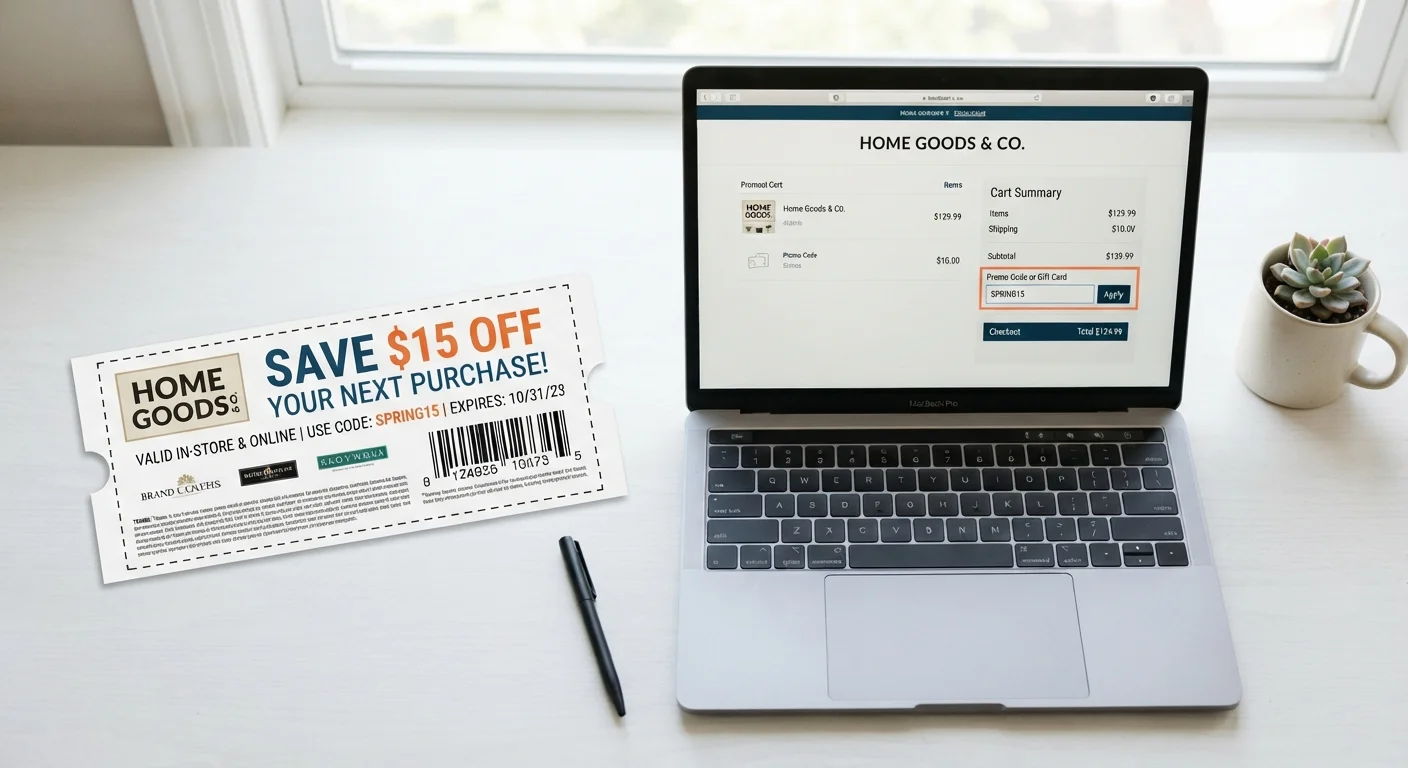
Photo: SummarizedReads.net | Just Read It! editorial
—— In This Article
Key Takeaways
- Promo codes are alphanumeric strings entered at online checkout; store coupons are issued by retailers or brands for specific products or categories.
- Store coupons often carry stricter product-level restrictions, while promo codes tend to apply more broadly to cart totals or categories.
- Both tools can expire, carry minimum spend requirements, and exclude sale items — always read the fine print.
- Combining both types in a single transaction is sometimes possible but depends entirely on the retailer's stacking policy.
- Browser extensions can surface promo codes automatically, but they don't replace manually sourced store coupons.
How Each One Actually Works
Despite being used interchangeably in casual conversation, promo codes and store coupons are structurally different tools. Understanding how each functions helps you use them more deliberately — and avoid frustration at checkout.
Promo codes (sometimes called discount codes or coupon codes) are alphanumeric strings — like SAVE15 or FALL20 — that shoppers enter into a designated field during online checkout. Once applied, the code instructs the retailer's system to reduce the cart total, waive shipping, or trigger another reward. They are generated and controlled entirely by the retailer or a third-party promotion partner, and they live in digital environments. For a deeper look at how retailers construct and deploy these codes, see our coupon codes explainer.
Store coupons originate from retailers or product manufacturers. They can arrive as physical paper clippings from newspaper inserts, printable PDFs from a retailer's website, or digital coupons loaded to a loyalty app or card. In all cases, they authorize a discount on a specific product or category when presented at the point of sale — online or in-store.
| Criterion | Promo Codes | Store Coupons |
|---|---|---|
| Format | Alphanumeric digital string | Paper, printable, or digital/app-based |
| Where used | Online checkout code field | In-store register or online at checkout |
| Issued by | Retailer or promotion partner | Retailer or product manufacturer |
| Typical discount scope | Cart total, category, or order type | Specific product or narrow category |
| Expiry | Yes — often short-term | Yes — printed on coupon |
| Stackable | Sometimes, per retailer policy | Sometimes, per retailer policy |
| Ease of finding | Email, coupon sites, browser extensions | Newspaper inserts, loyalty apps, store circulars |
Key Differences in Restrictions and Flexibility
The practical gap between these two tools shows up most clearly in how they're restricted.
Promo codes are typically tied to cart-level conditions: a minimum spend threshold, a specific product category, or a customer segment (new customers only, email subscribers, etc.). They rarely specify a single product SKU. This makes them relatively flexible — if your cart qualifies, the code applies.
Store coupons, by contrast, are frequently product-specific. A coupon for a particular brand of cereal won't transfer to a different size or flavor. This specificity comes from manufacturers, who use coupons to drive sales of particular items rather than encourage general spending. Retailer-issued store coupons may be slightly broader (e.g., "any item in the cleaning aisle"), but they still tend to carry more granular restrictions than a promo code.
88%
US shoppers who used a digital coupon
According to Statista consumer survey data, the vast majority of US shoppers have used a digital coupon or promo code at least once.
60%+
Coupons redeemed via mobile devices
Research from industry analysts has consistently shown that more than half of all coupon redemptions in the US now occur through mobile apps or digital channels rather than paper.
Both formats can — and do — expire, exclude already-discounted items, and limit one use per customer. Neither is inherently more generous; the value depends on the specific offer. If a code fails at checkout, it's worth checking the terms before assuming it's fraudulent. Common reasons discount codes stop working include cart minimums, category exclusions, and account-level restrictions.
When and Where to Use Each
The setting usually determines which tool is relevant.
Use promo codes when:
- Shopping on a retailer's website or app where a code entry field appears at checkout
- You've received a targeted code via email, a loyalty program, or a promotions page
- A browser extension has surfaced a potential code for the retailer you're already on
- You're buying across a category rather than a specific single product
Use store coupons when:
- Shopping in a physical store where paper or app-based coupons are accepted at the register
- You regularly buy specific branded products and have sourced coupons for those exact items
- Your loyalty app includes loaded digital coupons that activate automatically at checkout
- You're participating in a double-coupon or coupon-matching event at a grocery or drugstore
In some cases, you can use both in the same transaction. Whether that's permitted depends on the retailer's stacking policy. Discount stacking — including combining coupons with cashback — is possible but requires checking the fine print each time.
One Code, One Use — Usually
Most promo codes are single-use per account or per transaction, and many store coupons are similarly limited. If a code worked for you before but fails on a second order, the per-customer limit is a likely culprit. Always check the offer's terms before assuming the code is broken or fraudulent. For a broader look at comparison tools for deal-finding, cashback portals and coupon sites serve different purposes and are worth understanding separately.
Loyalty programs add another layer of complexity. Many retailers restrict how their loyalty rewards interact with coupons and promo codes. Understanding your loyalty program's terms before checkout can prevent surprises.

Shopping Editorial Team
Shopping Editorial Team is the collective byline for our editorial team and contributor network. Articles published under this byline or an editorial pen name are researched, written, and reviewed according to our editorial standards for clarity, consistency, and independence before publication.
View author profile