
Emergency Contacts, Documents, and Plans: What Prepared Travelers Keep Ready
A quick-reference look at the emergency information experienced travelers keep accessible — from embassy contacts to digital document backups.
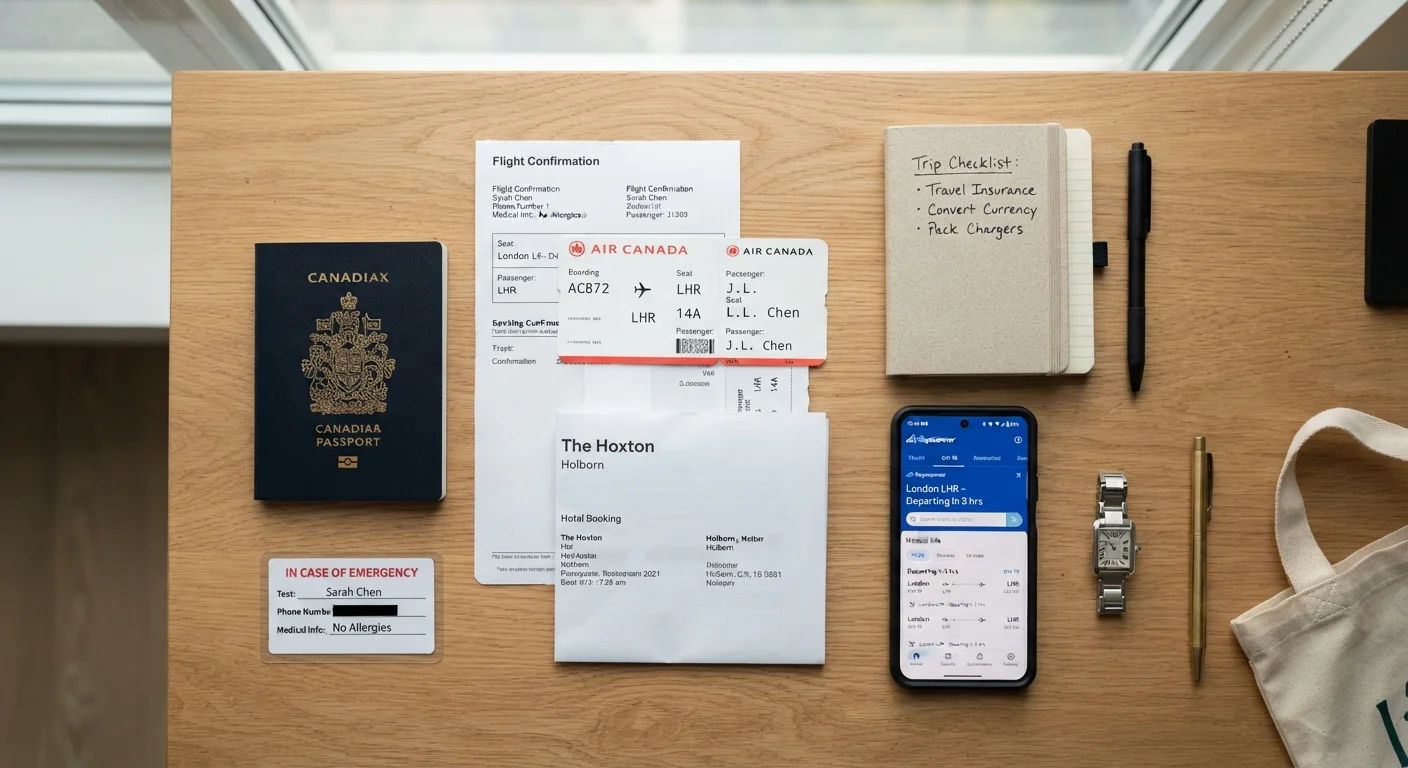
Photo: SummarizedReads.net | Just Read It! editorial
—— In This Article
Why Preparation Matters Before a Crisis Hits
Most travel disruptions — a lost passport, a medical incident, a missed connection — aren't inherently catastrophic. What turns them into real ordeals is scrambling for information under stress. Experienced travelers minimize that scramble by building a simple emergency reference system before they leave home.
This isn't about worst-case paranoia. It's about spending 30 minutes before departure so that, if something goes sideways, you already know who to call, what to show, and what steps to take next. See our pre-trip checklist for the broader set of tasks to complete before you leave.
| U.S. Embassy information source | U.S. Department of State (travel.state.gov) (Official resource for U.S. citizens abroad) |
| Formats for emergency contact list | At minimum: digital copy + physical paper card |
| Documents to digitally back up | Passport, ID, insurance, bookings, contacts |
| Local emergency number | Varies by country — verify before you travel (Not always 911 outside the U.S.) |
| Travel insurance emergency line | Available 24/7 on most policies — store separately from policy docs |
The Core Contact List Every Traveler Should Carry
A reliable emergency contact list covers four categories of people and institutions:
- A home-based contact — someone who knows your itinerary and can act on your behalf (notify family, contact your bank, or coordinate with a consulate).
- Your nearest U.S. Embassy or Consulate — the primary resource for Americans in serious trouble abroad, including lost passports, arrest, or medical emergencies. Embassy contact information is available through the U.S. Department of State website.
- Your travel insurance provider's emergency line — most policies include a 24-hour assistance number; keep it separate from your policy documents in case those are lost.
- Your bank and card issuers — international collect numbers for reporting lost or stolen cards. The number on the back of your card won't work from every country.
Store this list in at least two formats: a notes app or cloud document (accessible from any device) and a small paper card tucked into your bag or money belt. If your phone dies or is stolen, the paper copy becomes essential.
Visa and Entry Requirements: Always Verify Officially
Entry requirements — including visas, vaccinations, and travel authorizations — change regularly and vary by destination and passport type. This article does not list specific requirements. Always verify current rules through the official government sources for your destination country and check the U.S. Department of State's country information pages before you travel.
Documents to Carry and Documents to Back Up
Certain documents should be on your person or in your carry-on at all times. Others are best kept as verified digital copies stored somewhere you can access without your primary device.
Emergency passport
A temporary travel document issued by a U.S. Embassy or Consulate to replace a lost or stolen passport. It typically has a shorter validity period and is intended to get you home or continue essential travel.
Travel insurance emergency line
A dedicated phone number provided by travel insurance policies for urgent assistance abroad, often available around the clock. It can help coordinate medical care, translate, or connect you with local resources.
Consular services
Support provided by a country's embassy or consulate to its citizens abroad. For U.S. travelers, this includes help with lost passports, legal trouble, medical emergencies, and contacting family.
Digital document backup
Scanned or photographed copies of important documents stored in a secure cloud location, email, or encrypted app. These copies don't replace originals but can help verify identity or speed up replacement processes.
Physical documents to keep accessible
- Passport (original)
- Visa documents or entry permits where required
- Travel insurance card or policy summary with emergency contact number
- Any required vaccination records (verify requirements with official sources before travel)
- Hotel or accommodation confirmation with address
Digital backups to store securely
- Scanned or photographed passport data page
- Driver's license or secondary ID
- Insurance policy documents
- Flight and accommodation booking confirmations
- Emergency contact list
Cloud storage services allow you to access copies from a borrowed device. For added security, consider password-protecting any folder containing sensitive documents — and review digital security habits for travelers before accessing sensitive files on public networks.
Your Basic Emergency Action Plan
Having a written plan — even a simple one — removes decision fatigue in stressful moments. Consider thinking through these scenarios before you depart:
- Lost or stolen passport: Report to local police first (you'll need a report number), then contact the nearest U.S. Embassy or Consulate. Your digital backup of your passport data page will speed up the emergency passport process.
- Medical emergency: Know the local emergency number for your destination (it isn't always 911). Your travel insurance emergency line can often help coordinate hospital admission and communicate with your insurer. Review what to discuss with your doctor before departure — including any prescription documentation you should carry.
- Missed connection or significant delay: Contact your airline directly; airlines typically have rebooking obligations under various circumstances. Your travel insurance may cover additional costs depending on your policy terms.
- Lost wallet or cards: Call your bank's international number immediately to freeze accounts. Your home contact can also help if you need funds transferred.
For a complete pre-departure framework, the full trip planning guide walks through contingency planning alongside all other preparation steps.

Travel Editorial Team
Travel Editorial Team is the collective byline for our editorial team and contributor network. Articles published under this byline or an editorial pen name are researched, written, and reviewed according to our editorial standards for clarity, consistency, and independence before publication.
View author profile