
Seasonal Car Maintenance: Preparing for Weather Changes
A practical checklist covering what to inspect and address before summer heat and winter cold arrive—so your car isn't caught off guard when conditions shift.
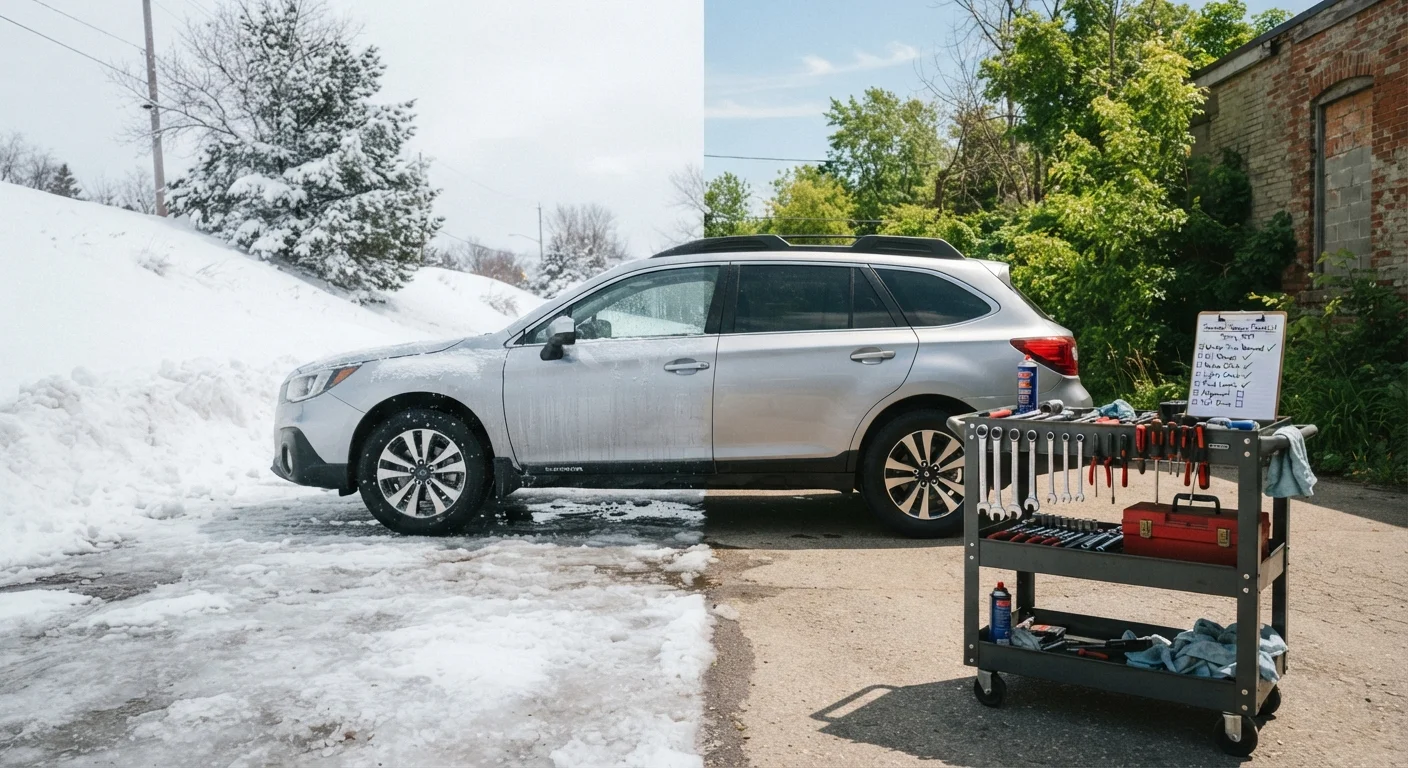
Photo: SummarizedReads.net | Just Read It! editorial
—— In This Article
Key Takeaways
- Battery performance drops significantly in cold weather-test yours before winter arrives.
- Tire pressure fluctuates roughly 1 PSI for every 10°F change in temperature.
- Coolant and wiper fluid needs change between summer and winter formulations.
- Brakes, belts, and hoses face added stress from extreme heat and freezing temps.
- A twice-yearly seasonal check can catch small issues before they become costly repairs.
Why Seasonal Prep Is Worth the Time
Weather transitions are among the most stressful periods for a vehicle. Rapid temperature swings cause fluids to thicken or thin, rubber components to contract and crack, and battery chemistry to slow. Neglecting seasonal prep doesn't just risk inconvenience-it can lead to preventable mechanical failures and unexpected repair bills.
This checklist is organized into two seasonal windows: preparing for summer heat and preparing for winter cold. You don't need to tackle both at once-work through the relevant section as conditions shift. For drivers heading into a long drive after seasonal prep, see our pre-road-trip check guide for additional vehicle inspection tips.
Summer Prep: Heat and High-Demand Systems
Winter Prep: Cold-Weather Reliability
Year-Round Checks (Do at Both Transitions)
Tools and Resources You'll Need
Most of these checks require only basic supplies and about an hour of your time. A few items are worth having on hand before you start-especially if you plan to handle fluid top-offs yourself. That said, any task involving brake components, suspension, or electrical systems should be handled by a qualified mechanic if you're not confident in your ability to do it safely.
Tire pressure gauge
Used to check tire pressure against the manufacturer's recommended PSI on the door placard.
Flashlight or work light
Helps you inspect hoses, belts, and undercarriage components in low-light conditions.
Battery tester or multimeter
Measures battery voltage to identify a weakening battery before it fails-especially important before winter.
Coolant tester or refractometer
Checks the freeze point and concentration of your antifreeze mixture.
Owner's manual
Provides vehicle-specific fluid specs, tire pressure targets, and service interval requirements.
Don't Skip Brake and Suspension Checks
Brake and suspension components directly affect your safety and the safety of others on the road. If you notice grinding sounds, pulling to one side, or a spongy brake pedal, have a qualified mechanic inspect these systems before driving further. General maintenance guides can inform you about what to look for, but hands-on diagnosis of braking issues should be left to a professional.
What to Know Before You Begin
Your owner's manual is the most reliable reference for service intervals, fluid specifications, and tire pressure targets specific to your vehicle. General guidance here reflects common maintenance practice, but your car's requirements may differ by make, model, and age. For a broader look at how seasonal upkeep fits into your car's overall service history, the car maintenance schedule guide breaks down what each milestone actually covers.
Fluid condition is one of the most telling indicators of seasonal readiness. Our guide to the six fluids your car relies on explains what to look for when checking coolant, brake fluid, and others. And if your vehicle is approaching a major mileage milestone, what your car needs at 30k, 60k, and 100k miles outlines which components typically require attention at each stage.
Consult Your Owner's Manual First
Fluid types, oil viscosity grades, and tire pressure specs vary significantly between vehicles. Using the wrong specification-such as an incompatible coolant type or incorrect oil weight-can cause engine damage. Always cross-reference any seasonal maintenance action with your specific vehicle's owner's manual or consult a licensed mechanic if you're uncertain.

Auto Editorial Team
Auto Editorial Team is the collective byline for our editorial team and contributor network. Articles published under this byline or an editorial pen name are researched, written, and reviewed according to our editorial standards for clarity, consistency, and independence before publication.
View author profile