
DIY Versus Store-Bought: Making Sense of Homemade Skincare
Homemade masks and scrubs can save money, but they're not always safer or more effective. Here's an honest look at both approaches.
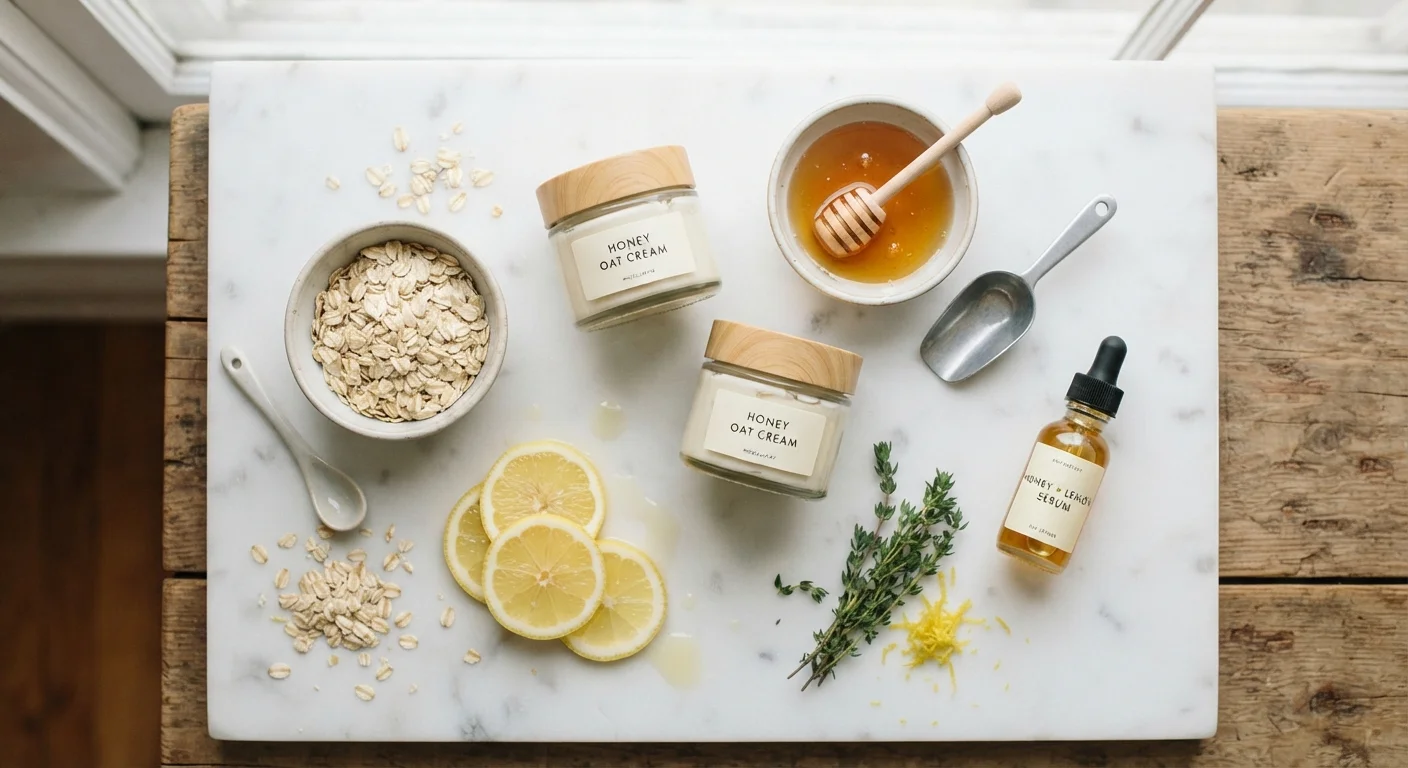
Photo: SummarizedReads.net | Just Read It! editorial
—— In This Article
Key Takeaways
- DIY skincare can reduce costs, but homemade formulas lack the stability and safety testing of store-bought products.
- Many kitchen ingredients have skin-irritating pH levels or allergens that aren't obvious without testing.
- Store-bought products often deliver more reliable, evidence-backed results for active ingredients like retinoids or SPF.
- A hybrid approach - DIY for simple steps, store-bought for actives - is often the most practical middle ground.
- Always patch-test any new product, homemade or commercial, before applying it to your full face.
Lower cost per use for simple formulas
Basic ingredients like oats, honey, and plain oils cost a fraction of comparable commercial products and can be sourced from any grocery store.
Full ingredient transparency
When you make something yourself, you know exactly what's in it - useful for people managing specific known allergies to common preservatives or fragrances.
Avoids unnecessary additives when formulated simply
A plain oat soak or unfragranced oil doesn't require stabilizers, preservatives, or synthetic fragrance - keeping the formula genuinely minimal.
Flexible customization for your preferences
You can adjust texture, scent (using whole ingredients rather than fragrance oils), or concentration based on what feels comfortable on your skin.
No stability or preservation testing
Homemade formulas without preservatives can harbor bacteria and mold within days, particularly anything water-based or made with fresh produce.
Active ingredient concentrations are uncontrolled
Without lab measurement, there's no way to know if an active compound like a natural acid is present at a helpful concentration or an irritating one.
pH mismatches can damage the skin barrier
Ingredients like lemon juice or baking soda sit far outside skin-safe pH ranges, and repeated use can disrupt the barrier and increase sensitivity.
Natural allergens are common and often overlooked
Essential oils, citrus zest, nut oils, and even honey contain known allergens that can trigger contact dermatitis in sensitive individuals.
Cannot safely replicate regulated products like sunscreen
SPF claims require standardized lab testing; homemade sunscreen substitutes offer no reliable protection and create a false sense of safety.
Why the DIY Skincare Conversation Has Real Stakes
The appeal of homemade skincare is easy to understand: you control the ingredients, you spend less, and you sidestep the long, unpronounceable ingredient lists on commercial labels. Social media has amplified this appeal, turning honey masks and sugar scrubs into household staples. But "natural" and "safe" are not the same thing, and neither are "cheap" and "effective."
This isn't a scare piece about kitchen experiments. It's an honest breakdown of where DIY approaches genuinely serve you - and where they quietly fall short. If you're building or refining a routine, our guide to starting a bare-bones skincare routine covers which steps are truly essential before adding any extras, DIY or otherwise.
"Natural" Doesn't Mean Hypoallergenic
Many plant-derived ingredients - including essential oils, citrus extracts, and nut-based oils - are among the most common causes of contact dermatitis documented in dermatology research. The source of an ingredient (lab vs. garden) has no bearing on whether your immune system will react to it. Patch testing is essential regardless of how "clean" a formula appears.
The Real Advantages of DIY Skincare
Homemade skincare does have legitimate benefits - they just tend to be narrower than enthusiasts suggest.
Lower cost per use for simple formulas
Basic ingredients like oats, honey, and plain oils cost a fraction of comparable commercial products and can be sourced from any grocery store.
Full ingredient transparency
When you make something yourself, you know exactly what's in it - useful for people managing specific known allergies to common preservatives or fragrances.
Avoids unnecessary additives when formulated simply
A plain oat soak or unfragranced oil doesn't require stabilizers, preservatives, or synthetic fragrance - keeping the formula genuinely minimal.
Flexible customization for your preferences
You can adjust texture, scent (using whole ingredients rather than fragrance oils), or concentration based on what feels comfortable on your skin.
Simple DIY formulas - a spoonful of plain yogurt as a brief soothing mask, or finely ground oats mixed with water for a gentle rinse - involve minimal risk and cost very little. For body care in particular, where skin is generally less reactive than facial skin, DIY can be a reasonable money-saver. Our Budget-Friendly Body Care Handbook explores which body-care ingredients offer real value on a tight budget.
Where DIY Skincare Falls Short
The limitations of homemade formulas are more significant than most tutorials acknowledge, and they matter more the closer you get to your face.
No stability or preservation testing
Homemade formulas without preservatives can harbor bacteria and mold within days, particularly anything water-based or made with fresh produce.
Active ingredient concentrations are uncontrolled
Without lab measurement, there's no way to know if an active compound like a natural acid is present at a helpful concentration or an irritating one.
pH mismatches can damage the skin barrier
Ingredients like lemon juice or baking soda sit far outside skin-safe pH ranges, and repeated use can disrupt the barrier and increase sensitivity.
Natural allergens are common and often overlooked
Essential oils, citrus zest, nut oils, and even honey contain known allergens that can trigger contact dermatitis in sensitive individuals.
Cannot safely replicate regulated products like sunscreen
SPF claims require standardized lab testing; homemade sunscreen substitutes offer no reliable protection and create a false sense of safety.
One of the most commonly overlooked risks involves pH. Healthy skin maintains a slightly acidic surface (roughly pH 4.5-5.5). Lemon juice, a popular DIY recommendation, sits around pH 2 - acidic enough to disrupt the skin barrier and cause photosensitivity. Baking soda, another DIY staple, is alkaline and can strip the skin's protective layer. These aren't theoretical risks; dermatologists routinely see irritation and post-inflammatory hyperpigmentation traced back to kitchen ingredients used without understanding their chemistry.
For anyone interested in exfoliation specifically, the difference between approaches matters considerably - see our breakdown of physical vs. chemical exfoliation for a clearer picture of what each method actually does to skin.
What Store-Bought Products Actually Do Better
Commercial formulas earn their place for a specific reason: consistency. Skincare chemists spend significant time ensuring that active ingredients are stable, present at effective concentrations, and buffered to a skin-safe pH. A vitamin C serum, for example, requires a carefully controlled pH and an oxidation-resistant delivery system to remain effective - conditions that are very difficult to replicate at home.
pH 2
Approximate acidity of lemon juice
Skin's ideal surface pH sits around 4.5-5.5; lemon juice applied directly sits well outside this safe range and can compromise the skin barrier.
~72 hrs
Shelf life of unpreserved water-based DIY formulas
Without antimicrobial preservatives, water-containing homemade products can develop bacterial growth within a few days of preparation.
Sun protection is the clearest example of where DIY simply cannot compete. Sunscreen efficacy is regulated, meaning the SPF number on a bottle reflects standardized lab testing. There is no reliable way to make an effective sunscreen at home. If daily SPF is part of your routine - and dermatologists broadly agree it should be - understanding what SPF numbers actually mean is worth your time before choosing a product.
For those on a tight budget, the goal isn't to buy more commercial products - it's to spend wisely on the ones that genuinely do work better. Our guide to separating skincare essentials from the extras can help you identify which categories are worth the spend.
A Practical Middle Ground
The most sensible approach for most people isn't fully DIY or fully commercial - it's knowing which category each step belongs in.
- Low-risk DIY candidates: Plain oil cleansing (coconut, jojoba, or mineral oil), oat-based soothing rinses, simple hair masks with pantry staples like olive oil or honey.
- Better left to formulated products: Chemical exfoliants (AHAs, BHAs), retinoids, vitamin C serums, sunscreen, and anything treating an active skin condition.
Whatever you use - homemade or store-bought - patch testing on a small skin area and waiting 24-48 hours before full application remains a non-negotiable step. Reactions can come from natural ingredients just as easily as synthetic ones.
Building consistent habits matters more than the price tag on any single product. Reliable cleansing, moisturizing, and daily sun protection will do more for your skin long-term than any DIY trend.
This article is for general informational purposes only and is not a substitute for advice from a qualified dermatologist or healthcare professional. If you have a skin condition or concerns about a specific ingredient, consult a licensed provider before use.

Beauty Editorial Team
Beauty Editorial Team is the collective byline for our editorial team and contributor network. Articles published under this byline or an editorial pen name are researched, written, and reviewed according to our editorial standards for clarity, consistency, and independence before publication.
View author profile