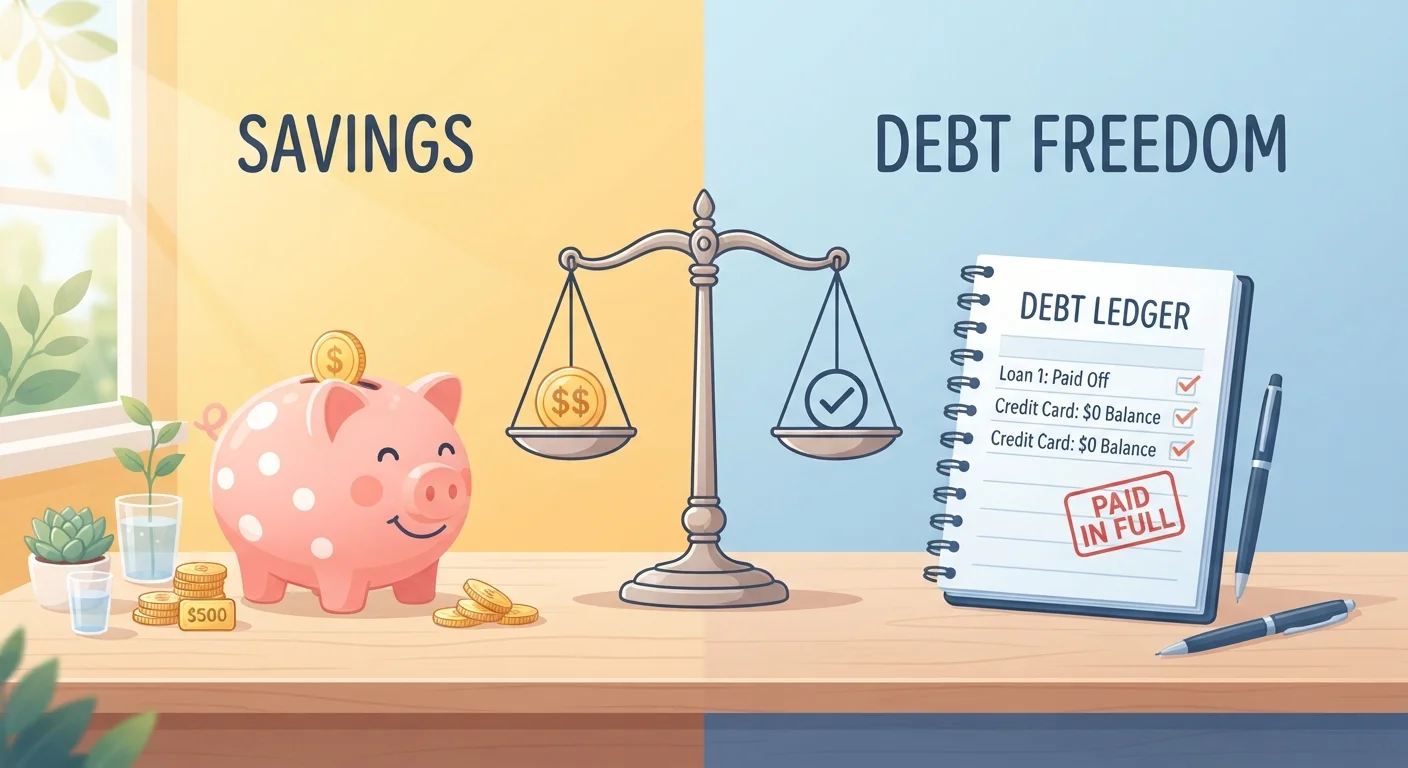
Debt Consolidation: What It Means, How It Works, and When It Makes Sense
Debt consolidation can simplify repayment and sometimes reduce interest costs — but it's not without trade-offs. An educational overview.
Photo: SummarizedReads.net | Just Read It! editorial
—— In This Article
Key Takeaways
- Debt consolidation combines multiple debts into one loan or payment, simplifying your monthly obligations.
- It may lower your interest rate, but only if your credit score qualifies you for better terms.
- Extending your repayment term can reduce monthly payments while increasing total interest paid over time.
- Consolidation does not erase debt - the balance must still be repaid in full.
- It works best when paired with a spending plan that prevents new debt from accumulating.
- Consult a licensed financial professional before making decisions based on your specific situation.
How Debt Consolidation Actually Works
When you consolidate debt, you take out a new loan - or use another financial product - to pay off existing balances. From that point forward, you make payments only on the new account. The mechanics vary by method:
- Personal consolidation loans: A lender provides a lump sum you use to pay off existing debts. You then repay the loan in fixed monthly installments over an agreed term, typically at a fixed interest rate.
- Balance transfer cards: You move credit card debt to a new card, often with a promotional 0% APR period. If the balance isn't cleared before the promotional period ends, a higher rate applies.
- Home equity loans or HELOCs: Homeowners can borrow against their home's equity to pay off unsecured debt. The rates are often lower, but this converts unsecured debt into debt backed by your home - meaning the stakes for missed payments are higher.
- Debt management plans (DMPs): Offered through nonprofit credit counseling agencies, a DMP is not technically a loan. The agency negotiates reduced interest rates with your creditors and you make one monthly payment to the agency, which distributes funds accordingly.
Each approach has different eligibility requirements, costs, and risk profiles. Understanding those distinctions matters as much as understanding the concept itself. See our full breakdown of how carrying debt compounds over time for useful context.
The Potential Benefits - and the Real Trade-Offs
20%+
Average credit card APR in recent years
The Federal Reserve tracks average credit card interest rates; rates have exceeded 20% in recent periods, making high-interest debt expensive to carry long-term.
1 payment
Payments managed after consolidation
Consolidating four or five debts into a single loan replaces multiple due dates and minimum payments with one predictable monthly obligation.
Varies
Interest savings - depends on rate and term
Whether consolidation saves money depends on the gap between old and new rates and how long the repayment term extends - there is no universal outcome.
Consolidation can offer genuine advantages, but those advantages depend heavily on the terms you qualify for and how you manage debt going forward.
Potential benefits
- Simplified repayment: One payment instead of five removes the risk of missing a due date on a forgotten account.
- Possible interest savings: If your new rate is meaningfully lower than your existing rates, you may pay less interest over the life of the debt.
- Predictable payments: Fixed-rate installment loans give you a set payoff date and consistent monthly amount, which helps with budgeting.
Real trade-offs to weigh
- Longer repayment timeline: A lower monthly payment often means a longer term. That can mean more total interest paid - even if the rate is lower.
- Upfront costs: Origination fees, balance transfer fees, or closing costs can offset potential savings. Calculate the break-even point before committing.
- Credit impact: A hard inquiry and new account can cause a temporary credit score dip. Closing old accounts after consolidating can also affect your utilization ratio and credit history length - see our explainer on the pros and cons of closing an old credit card.
- Risk of repeat debt: Paying off credit cards through consolidation leaves those cards open. Without a spending plan, it's possible to accumulate new balances and end up with more debt than before.
When Consolidation Makes Sense - and When It Doesn't
“Debt consolidation can be a legitimate tool for managing multiple obligations - but it works best when it's paired with changes in the behavior that created the debt in the first place. The loan restructures the problem; it doesn't eliminate it.”
— Consumer Financial Protection Bureau, U.S. federal agency focused on consumer financial protection and education
Debt consolidation is a tool, not a solution in itself. It tends to work well when three conditions are in place:
- You have multiple high-interest debts - particularly credit card balances - that are genuinely difficult to manage separately.
- You qualify for a meaningfully lower interest rate, which requires a solid credit profile. Lenders offer their best rates to borrowers who already present lower risk.
- You have a realistic plan to stop adding new debt - whether that means adjusting spending habits, building a small emergency fund, or reworking your budget.
It's worth comparing consolidation with other structured repayment approaches. The debt avalanche and snowball methods require no new loan and can be highly effective if you have the discipline to stick with them. Some people also find they can save and repay debt simultaneously, which consolidation alone doesn't address.
Run the Full-Cost Math First
Before committing to any consolidation product, calculate the total amount you'll repay over the life of the new loan - not just the monthly payment. Include any origination fees or transfer fees in that calculation. A lower monthly payment that costs more in total isn't necessarily a better deal.
Debt consolidation is generally not the right move if your credit score is too low to qualify for a better rate than you currently have, if the fees outweigh the savings, or if the underlying spending pattern hasn't changed. In those cases, a credit counselor or licensed financial adviser can help you assess alternatives, including a DMP or targeted repayment strategies. The balance between emergency savings and debt repayment is also part of the broader picture worth thinking through.
This article is for general informational and educational purposes only and does not constitute personalized financial, legal, or tax advice. Consult a qualified financial professional before making decisions about your own debt situation.
Frequently Asked Questions

Finance Editorial Team
Finance Editorial Team is the collective byline for our editorial team and contributor network. Articles published under this byline or an editorial pen name are researched, written, and reviewed according to our editorial standards for clarity, consistency, and independence before publication.
View author profile