
Why Your Refrigerator Is Working Harder Than It Should
Overworked fridges wear out faster and cost more to run. Discover the everyday habits and placement mistakes that quietly drain efficiency.
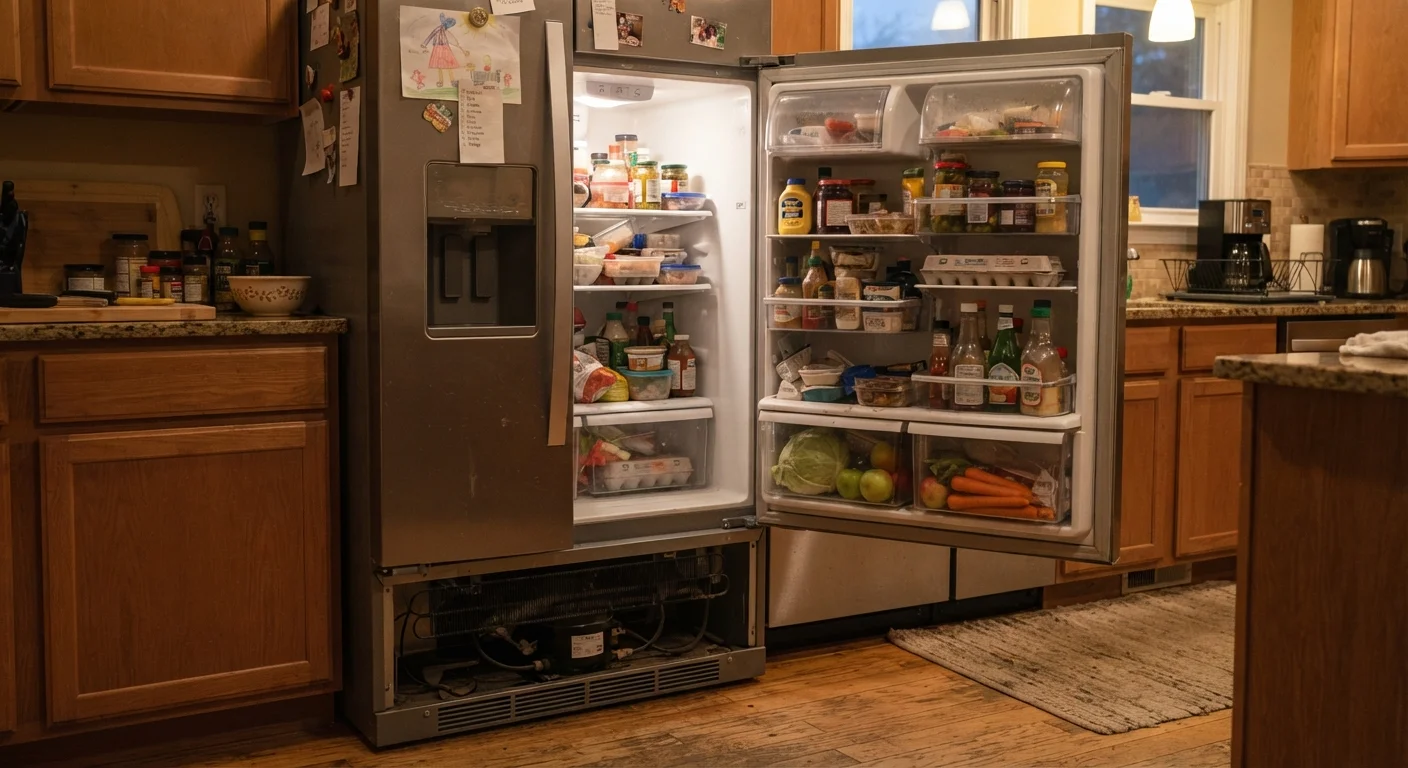
Photo: SummarizedReads.net | Just Read It! editorial
—— In This Article
Key Takeaways
- Poor placement near heat sources forces your fridge to work significantly harder to maintain safe temperatures.
- Dirty condenser coils are one of the most common causes of reduced refrigerator efficiency and shortened lifespan.
- Overpacking or underpacking your fridge disrupts airflow and makes the compressor cycle more frequently.
- Worn or damaged door gaskets allow cold air to escape, adding strain to the cooling system every hour of every day.
- Simple maintenance habits can meaningfully extend your refrigerator's lifespan and lower your electricity bill.
Why Refrigerator Efficiency Matters More Than You Think
Your refrigerator is the only appliance in your home that runs 24 hours a day, 365 days a year. That constant operation means even small inefficiencies compound over time - quietly inflating your electricity bill and shortening the appliance's life. According to the U.S. Department of Energy, refrigerators account for a notable share of household electricity use, and an overworked unit can use significantly more energy than a well-maintained one of the same size.
Understanding what makes a fridge work harder than it should is the first step toward protecting both the appliance and your budget. For a broader look at how running costs add up, see our breakdown of hidden appliance running costs.
Placing the refrigerator next to a heat source such as an oven, dishwasher, or direct sunlight from a window.
Why it happens: Kitchen layouts often prioritize convenience and counter space over appliance placement logic, leading homeowners to position the fridge wherever it fits.
Neglecting to clean the condenser coils, which accumulate dust and pet hair over time.
Why it happens: Condenser coils are hidden - either at the back or underneath the unit - so most people never think to clean them. There is no visible reminder, and the decline in performance is gradual.
Overpacking the interior so tightly that air cannot circulate freely between shelves and compartments.
Why it happens: It feels economical to keep the fridge full, and many people load it without considering that cold air needs room to move.
Leaving the door open longer than necessary, or opening it repeatedly without a clear purpose.
Why it happens: Standing in front of an open fridge while deciding what to eat is a common habit that lets a significant amount of cold air escape with each occurrence.
Ignoring a worn or damaged door gasket - the rubber seal that runs around the door's perimeter.
Why it happens: Gasket wear is gradual and subtle; a slightly imperfect seal is easy to overlook until the fridge starts running almost constantly.
How to Keep Your Refrigerator Running at Its Best
Most of the fixes for an overworked fridge are low-cost and require no special tools. Cleaning condenser coils - typically located on the back or underneath the unit - takes about 15 minutes with a coil brush or vacuum attachment, and is recommended roughly once or twice a year. Checking and replacing a door gasket is a straightforward DIY task for most models; replacement gaskets are widely available through appliance parts suppliers.
Do Not Attempt Refrigerant or Compressor Repairs Yourself
If your refrigerator is not cooling at all, makes loud grinding or clicking noises, or you suspect a refrigerant leak, contact a licensed appliance technician. Refrigerant handling is regulated and requires certified professionals. Attempting these repairs without proper training and equipment is unsafe and may violate local regulations.
For placement, the general guidance is to leave at least one to two inches of clearance on the sides and top of the unit, and three to four inches at the back. If your fridge is built into cabinetry, confirm that there is adequate ventilation as specified in the manufacturer's documentation.
Maintaining the right internal temperature - typically 35-38°F for the refrigerator compartment and 0°F for the freezer - keeps the compressor from cycling unnecessarily. An inexpensive appliance thermometer can confirm your settings are accurate, since built-in dials are not always precise.
Consistent small habits make a measurable difference over the years. Our guide on appliance maintenance tasks most people keep putting off covers these steps in more detail, and our article on getting the most out of every appliance you own offers practical efficiency habits across your whole home. If you notice unusual sounds, excess frost, or the motor running almost continuously, consult our appliance troubleshooting basics before booking a service call.

Home Editorial Team
Home Editorial Team is the collective byline for our editorial team and contributor network. Articles published under this byline or an editorial pen name are researched, written, and reviewed according to our editorial standards for clarity, consistency, and independence before publication.
View author profile