
Comparing Services vs. Comparing Products: Why the Methodology Differs
Products have specs; services have terms, reliability, and support. The criteria for a fair side-by-side comparison are fundamentally different.
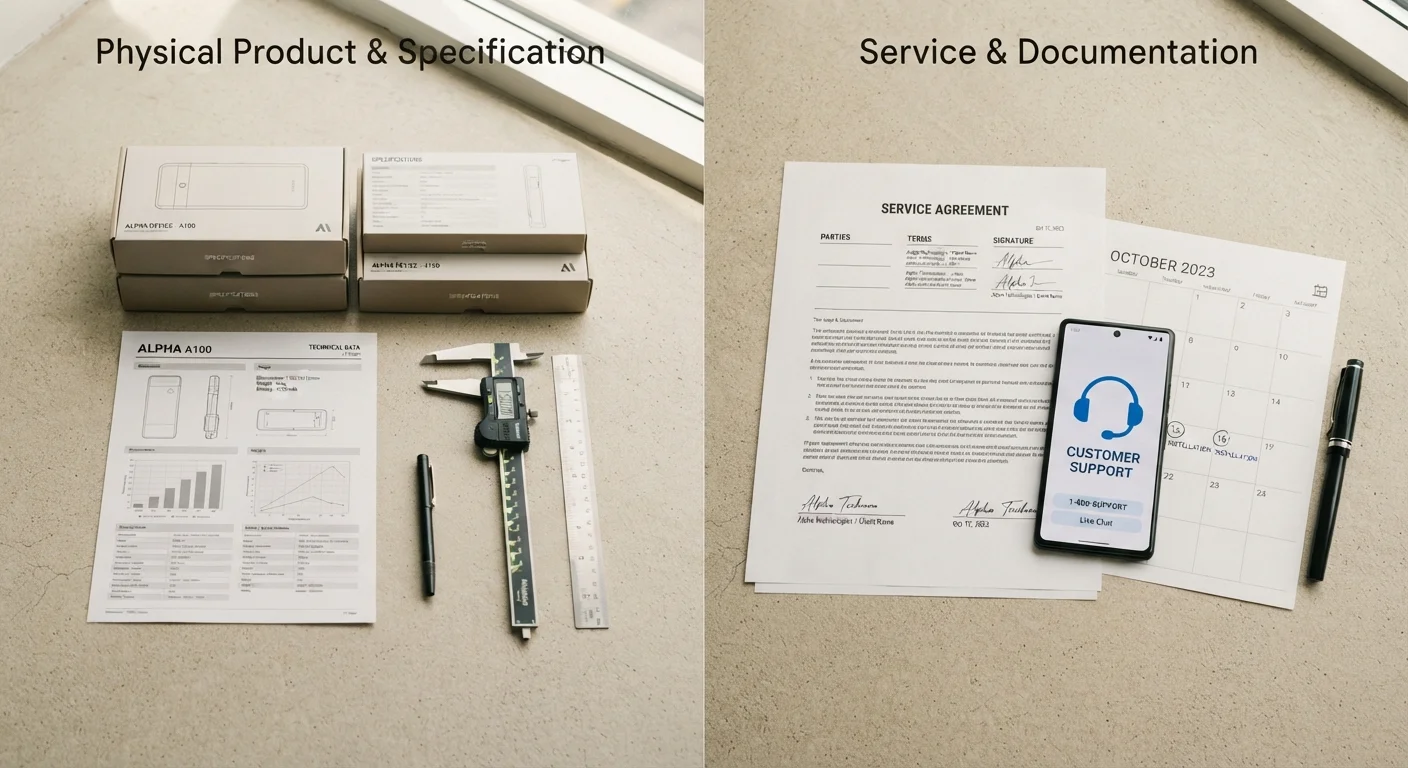
Photo: SummarizedReads.net | Just Read It! editorial
—— In This Article
Key Takeaways
- Products are compared on measurable specs; services require evaluating reliability, terms, and support quality.
- A service's stated price is rarely its true cost — contract length, exit fees, and SLAs matter equally.
- Consistency over time is the key metric for services; a single review snapshot is often misleading.
- Applying a product comparison framework to services will systematically undervalue the wrong options.
- Build separate criteria lists before comparing — one for products, one for services.
Why the Same Comparison Template Fails Both Categories
Most comparison guides treat products and services as interchangeable: list the options, line up the features, pick a winner. That works reasonably well when you're comparing two laptops. It fails almost completely when you're comparing two internet service providers or two home warranty plans.
The core difference is tangibility. A product is a fixed object with measurable attributes — storage capacity, weight, battery life, dimensions. A service is a promise of ongoing performance. You can verify a laptop's RAM before you buy it; you cannot verify whether a service provider will answer your support call in under two minutes until you're already a customer.
Before you compare anything, it helps to establish a clear baseline of your actual requirements — the criteria that matter most differ dramatically between these two categories. Skipping this step is why so many comparisons produce confident-sounding conclusions that unravel within months.
Start with a Separate Criteria List for Each
Before opening any comparison site, write down your criteria for the product and the service independently. Product criteria should include specifications, compatibility, and total cost. Service criteria should cover contract length, support channels, and cancellation terms. Mixing them into one list is where most comparisons go wrong from the start.
How to Compare Products: Specs, Total Cost, and Hidden Variables
Product comparisons have a relatively structured methodology. Start with hard specifications — the attributes that are objectively measurable and verifiable. Then layer on total cost of ownership, which includes running costs, consumables, and maintenance — factors that rarely appear in side-by-side marketing materials.
Warranty terms and compatibility are two of the most commonly skipped dimensions. As our related analysis explains, hidden variables like warranty scope and compatibility requirements frequently change which option is genuinely better value.
When reading reviews, resist the pull of star averages. Rating distributions and review recency tell a more accurate story than a headline score. Also watch for cognitive traps: anchoring and decoy pricing are routinely built into product comparison contexts to nudge your choice.
| Criterion | Product Comparison | Service Comparison | |
|---|---|---|---|
| Primary data source | Manufacturer specs, lab tests | SLAs, contract terms, user forums | |
| Price metric | Total cost of ownership | True monthly cost after fees and lock-in | |
| Quality indicator | Measurable performance attributes | Consistency of delivery over time | |
| Risk factor | Compatibility and warranty gaps | Exit fees and auto-renewal clauses | |
| Review type to prioritize | Verified, detailed long-term reviews | Longitudinal community feedback | |
| Most overlooked variable | Running and maintenance costs | Support accessibility and response time |
How to Compare Services: Reliability, Terms, and Exit Conditions
Service comparisons require a fundamentally different set of criteria. The advertised monthly price is usually the least important number on the page. What matters more:
- Contract length and auto-renewal clauses: A cheaper monthly rate locked into a 24-month contract can cost more than a pricier month-to-month option when early termination fees are factored in.
- Service Level Agreements (SLAs): For services like internet, cloud storage, or home security monitoring, SLAs define what the provider is actually committing to — uptime guarantees, response times, and compensation if they miss those targets.
- Support accessibility: The channel, hours, and average resolution time of customer support are often the deciding factor in long-term satisfaction, yet they almost never appear in a standard feature grid.
- Cancellation and exit terms: How difficult is it to leave? Data portability, notice periods, and refund policies are essential criteria, not fine print.
Consistency of performance over time — not peak performance — is the metric that separates good services from poor ones. Seek out longitudinal reviews and community forum discussions, not just launch-day coverage. If no review site covers your exact use case, you can construct a structured comparison using publicly available information.
Building a Dual-Framework Approach
When a purchase combines both elements — say, a device bundled with a subscription plan, or a home appliance sold alongside an extended service contract — the right approach is to evaluate each component independently using its own framework, then recombine the findings.
Treat the product component with a spec-and-cost lens. Treat the service component with a contract-and-reliability lens. Only after both assessments are complete should you weigh the bundle's overall value. Bundled pricing often makes one component look artificially attractive while obscuring the true cost of the other.
It's also worth applying this dual-framework thinking when comparing generic versus name-brand products that come with accompanying service or warranty differences — sometimes the brand premium is really paying for a service component, not a better product.
Bundled Pricing Often Obscures True Service Costs
When a product is sold alongside a service plan, the bundle price is frequently structured to make the monthly service fee look negligible. Always calculate the full cost of the service component over its minimum term independently. A low upfront product price combined with a mandatory multi-year service contract can significantly exceed the cost of a pricier standalone product with no service obligation.

Shopping Editorial Team
Shopping Editorial Team is the collective byline for our editorial team and contributor network. Articles published under this byline or an editorial pen name are researched, written, and reviewed according to our editorial standards for clarity, consistency, and independence before publication.
View author profile